



Welcome to Nepal and Bhutan Classic Adventure, an immersive and unforgettable journey across the roof of the world. This unique program showcases two iconic Himalayan regions: Bhutan and Nepal, each with its own unique culture, landscapes, and timeless charm.
This trip offers the perfect mix of immersive adventure and peaceful moments.
Explore the busy, historic streets of Kathmandu. Trek through the quiet, beautiful peaks of the Annapurna mountains. Enjoy an incredible mountain flight takes you straight into Bhutan—a place that feels like a real-life fairy tale.
Get ready for a journey you will never forget.
Overview
Designed for travelers seeking both active adventure and profound cultural discovery, this itinerary seamlessly pairs a classic Himalayan trek with an exploration of ancient living heritage
Kathmandu and Annapurna trek
First, you’ll dive into the colorful, bustling energy of Kathmandu. It’s a city packed with hidden temples and sacred Buddhist sites right off the lively streets. Next up is fly to Pokhara, and head out on a fabulous three-day trek into the Annapurna foothills. It is an unforgettable trail where the mountain views, terraced green farmlands, and the incredibly warm local communities captivates every traveller.
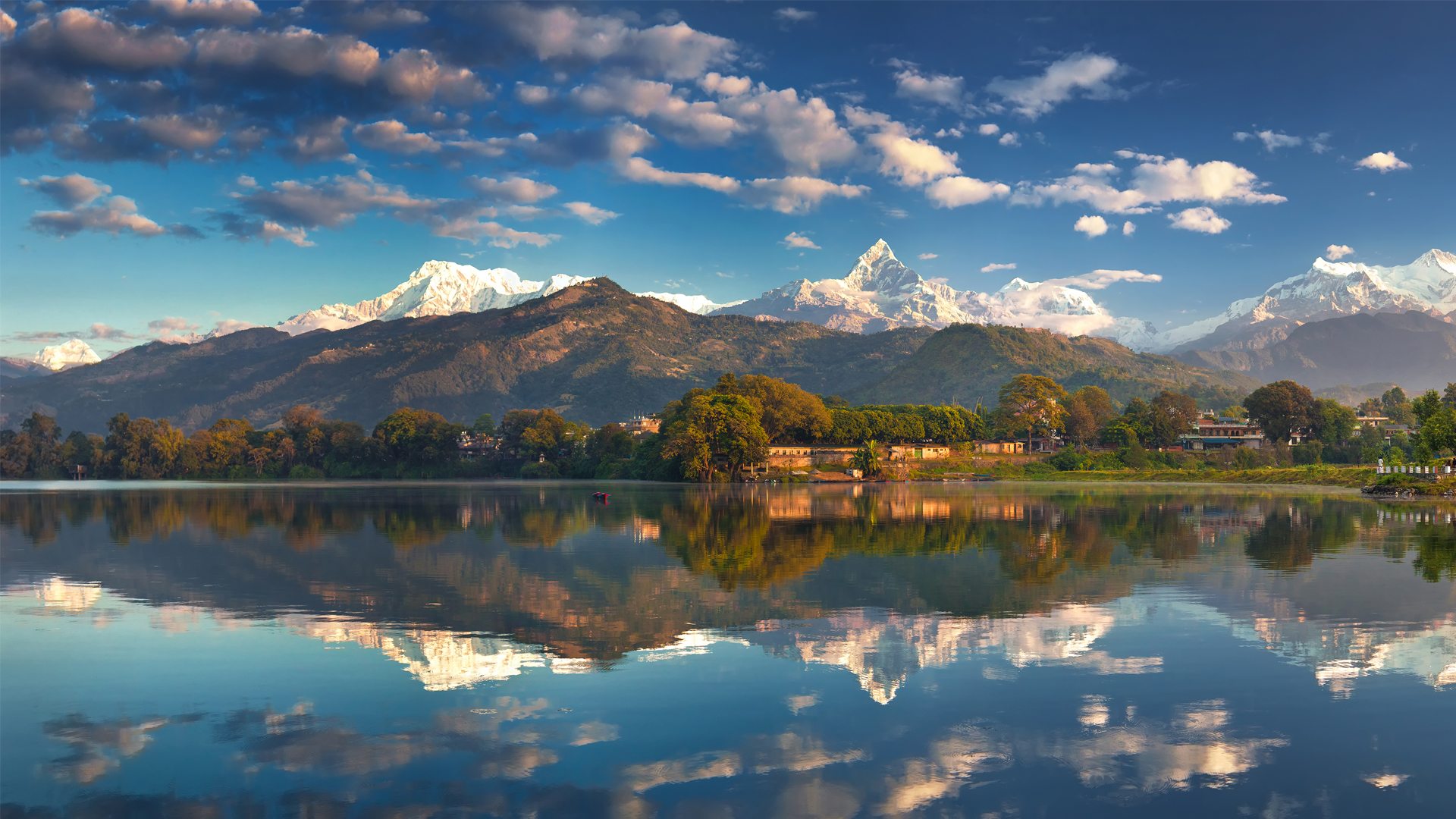
After the trek, spend a day at Pokhara, Nepal’s ultimate city for adventure and relaxation, known for its stunning lakeside scenery.
Fly back to Kathmandu and spend the afternoon exploring the capital’s legendary secrets—from hidden courtyard shrines to the majestic, carved-wood palaces of ancient kings.
Mountain flight and Bhutan
Next, board an incredible mountain flight to Bhutan, cruising right past five of the highest peaks on Earth- Everest, Kanchendzong, Lhotse, Makalu and Cho Oyu
Your destination is Bhutan, the famous “Land of Happiness.” Traveling here feels like stepping straight into a fairy tale. You’ll explore a beautiful countryside filled with pine-scented hills, ancient monasteries, and majestic fortresses.
Bhutan: The World’s Most Fascinating Kingdom
Bhutan may be small, but it constantly inspires the rest of the world with its extraordinary, forward-thinking policies. Here is a glimpse inside this Himalayan wonderland:
Happiness Over Money: It is the only country that measures progress through Gross National Happiness (GNH)rather than financial wealth (GDP). Every government policy must put the well-being of its citizens first.
The Planet’s Only Carbon-Negative Nation: By constitutional law, at least 60% of Bhutan must remain forested forever. Because its lush trees absorb more pollution than the country produces, Bhutan is proudly carbon-negative.
It truly is a real-life fairy tale—and it’s no wonder Bhutan has become the ultimate bucket-list getaway for travelers and celebrities alike!
Highlights
- Explore Kathmandu city with its ancient Hindu and Buddhist temples
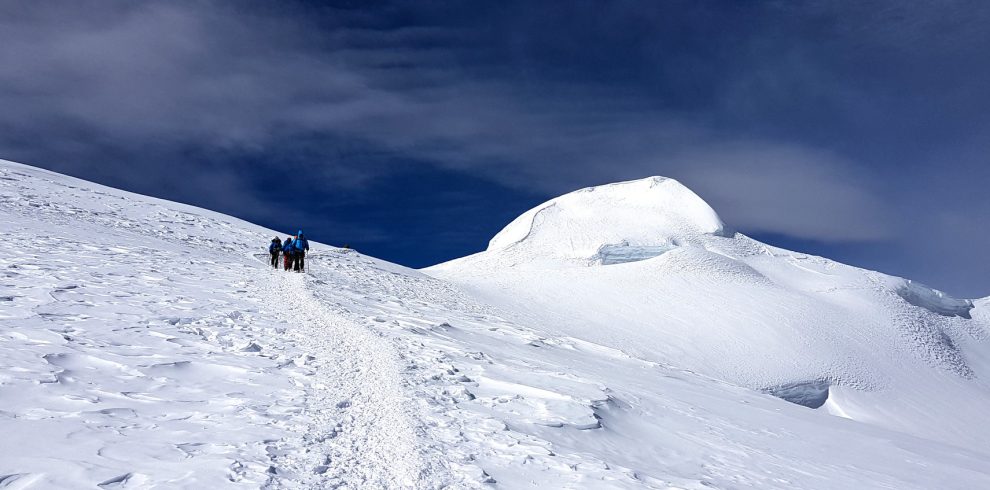
- Embark on a three-day, immersive trek through the spectacular foothills of the Annapurna range
- Explore Pokhara- known for its spectacular scenery and adventure activities
- Mountain flight to Bhutan- You can see 5 of the world's 6 highest mountains viz. Mt. Everest, Mt. Kanchendzonga, Mt, Lhotse, Mt Makalu, and Mt Cho Oyu
- A 6-day, 5-night journey into Bhutan, uncovering the secrets of this extraordinary kingdom
Itinerary
- Elevation of Kathmandu: 1340m
- Drive to Hotel: 20 mins
- Accommodation: Hotel Yak and Yeti
Welcome to Nepal! Upon landing at Tribhuvan International Airport, you will be met by our representative and transferred through the bustling streets of Kathmandu to your hotel. In the evening, gather for a welcome dinner featuring authentic Nepalese cuisine and a brief orientation about the spectacular journey ahead.
Kathmandu, the capital city of Nepal was once thought to be the fabled and inaccessible Shangri-La. It is now a hub for independent travelers as well as a growing vacation spot catering to all budgets. The city with a population of 2.5 million stands at an elevation of approximately 1,400 meters (4,600 ft) in the bowl-shaped Kathmandu Valley of central Nepal. It is surrounded by four major hills: Shivapuri, Phulchoki, Nagarjun, and Chandragiri. Kathmandu was ranked third among the top 10 travel destinations on the rise in the world by TripAdvisor and ranked first in Asia.
- Flight Time: 25 minutes
- Drive Time & Distance: 2.5 to 3 hours | ~55 km
- Trek Time & Distance: 1 to 1.5 hours | ~3.5 km
- Elevation of Ghandruk: 1950m
- Accommodation: Mountain Lodges of Nepal Ghandruk
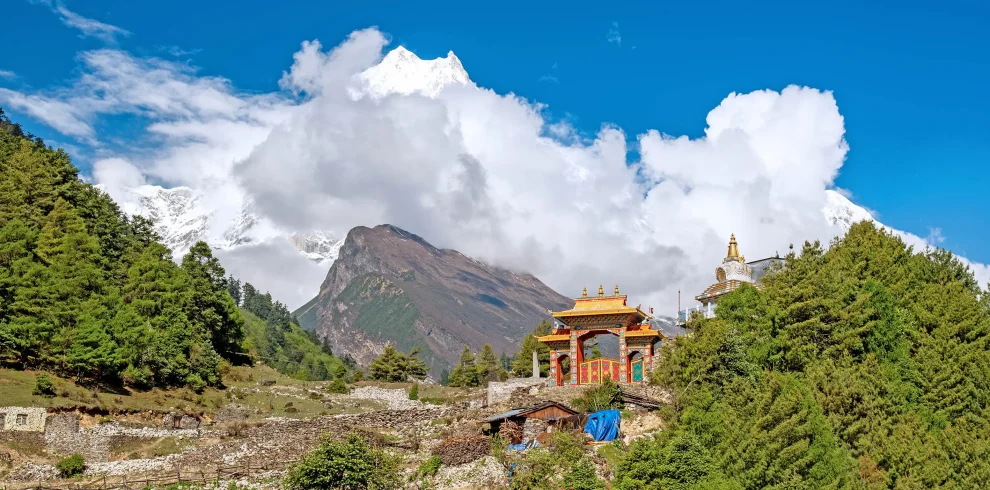
An early morning transfer to the airport for a scenic flight to Pokhara. The flight offers your first panoramic views of the Annapurna and Dhaulagiri ranges. Upon arrival, a private Jeep drive you along winding mountain roads to Kimche, the starting point of your trek. From Kimche, it is a short, steady uphill climb on stone steps to Ghandruk, a beautiful, terraced Gurung village known for its cultural museum and sweeping views of Annapurna South and Machapuchare (Fishtail).
Trek Time & Distance: 4 to 5 hours | ~8 km
Elevation of Landruk: 1600m
Accommodation: Mountain Lodges of Nepal, Landruk
Included Meals: Breakfast, Lunch, Dinner
Wake up to a stunning sunrise over the peaks. Today's trail begins with a steep descent through terraced farmlands down to the Modi Khola River valley. After crossing a suspension bridge, the trail climbs steadily on stone steps up the opposite side of the canyon to Landruk. Landruk is a picturesque village inhabited by the Gurung and Magar communities.
Trek Time & Distance: 5 to 6 hours | ~12 km
Elevation of Dhampus: 1700m
Accommodation: Mountains Lodges of Nepal, Dhampus
Today features one of the most beautiful walks of the trek. Enjoy a gentler pace as the trail winds past beautifully terraced farmlands and traditional houses. Later, the trek climb gradually through lush rhododendron, oak, and orchid forests up to Pothana, where w stop for lunch. After a scenic lunch stop, the trail follows a gentle downhill arriving at the scenic ridge village of Dhampus. The views of the entire Annapurna range from here are spectacular.
Trek Time & Distance: 1.5 to 2 hours | ~4.5 km
Drive Time & Distance: 30 minutes | ~15 km
Elevation of Pokhara: 830m
Accommodation: Hotel Barahi
Your final morning on the trail is an easy, scenic descent down stone steps through shady forests and small villages until you reach the roadside at Phedi. Your car will be waiting to drive you back to Pokhara. Check into your lakeside hotel. After lunch, spend the afternoon exploring Lakeside Pokhara—perfect for a boat ride on Fewa Lake, shopping, or relaxing at a cafe.
- Flight Time: 25 minutes
- Accommodation: Hotel Yak and Yeti
After a relaxing morning in Pokhara, fly back to Kathmandu. Upon arrival, check into your hotel. Later your city guide will take you to explore some of the Kathmandu Valley's most iconic UNESCO World Heritage Sites. You will visit the peaceful white dome of Boudhanath Stupa, the heart of Tibetan Buddhism in Nepal and Pashupatinath temple, Nepal’s most sacred Hindu temple complex.
- Flight Time: 1 hour
- Elevation of Paro: 2200m
- Drive Time & Distance: 1 to 1.5 hours | ~50 km
- Elevation on Thimphu: 2335m
- Accommodation: Hotel Druk
Early morning transfer to airport to board your flight to Paro. The Kathmandu-Paro flight is widely considered one of the most spectacular mountain flights in the world as it cruises past five of the world's highest mountains- Mount Everest, Mt Kanchenjunga, Mt Lhotse, Mt Makalu and Mt Makalu. After landing at Paro, clear customs and meet your Bhutanese guide. You will take a scenic drive along the river to Thimphu, the capital city. In the afternoon, begin exploring with a visit to the National Memorial Chorten and visit the Simply Bhutan living museum.
Accommodation: Hotel Druk
Spend the day diving deeper into the unique culture of Bhutan's capital. Visit the massive Buddha Dordenma (Buddha Point), a giant golden statue overlooking the valley. Then visit the Nunnery, the National Library, Handicraft market and the Centenary Farmers Market to see locals trading traditional goods.
- Drive Time & Distance: 2.5 to 3 hours | ~75 km
- Elevation of Punakha: 1200m
- Accommodation: RKPO Green Resort
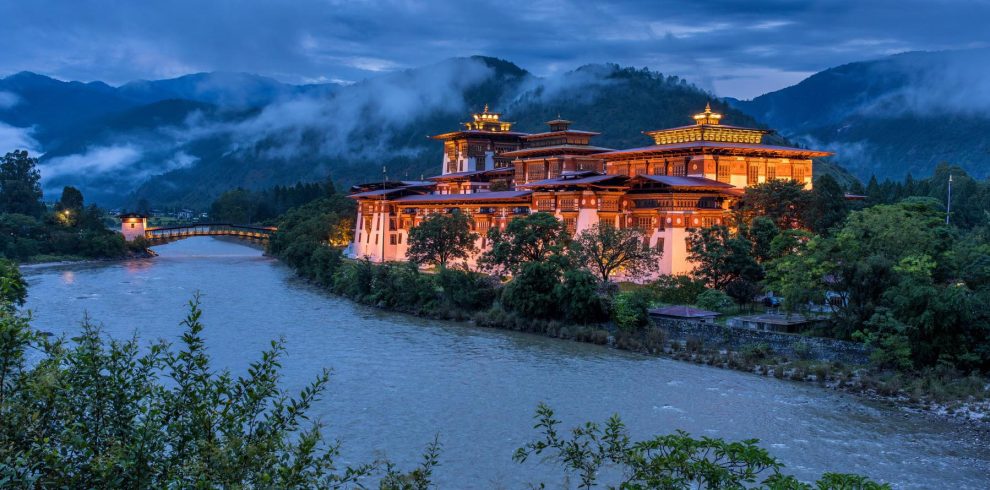
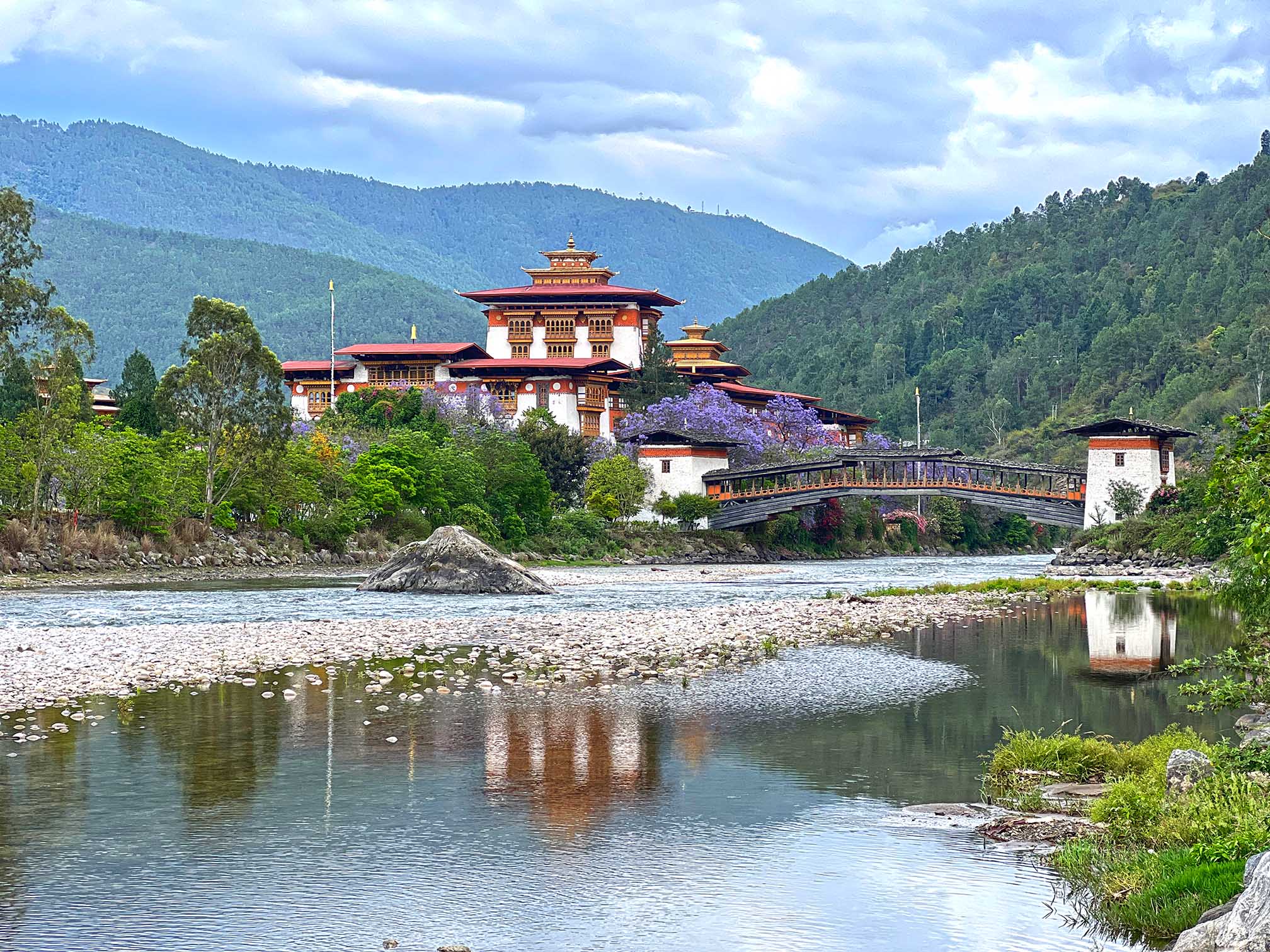
Depart Thimphu for a scenic drive to Punakha. Along the way, you will cross the Dochula Pass (3100m), framed by 108 memorial chortens. On a clear day, this pass offers a breathtaking, wide-angle view of the Eastern Himalayas. Descend into the warm, subtropical valley of Punakha and visit the stunning Punakha Dzong, architecturally celebrated as the most beautiful fortress in Bhutan, built at the junction of two rushing rivers.
Drive Time & Distance: 3.5 to 4 hours | ~115 km
Elevation of Paro: 2200m
Accommodation: Tashi Namgay Resort
Retrace your route back over the Dochula Pass to Paro. In the afternoon, explore the Paro Rinpung Dzong, and Kyichu Lhakhang- one of Bhutan’s oldest temples built in the 7th century.
Trek Time & Distance: 5 to 6 hours round-trip | ~6.5 km
Elevation of Taktsang Monastery- 3120m
Accommodation: Tashi Namgay Resort
The iconic Tiger's Nest is the crown jewel of Bhutanese travel. An early morning start takes you to the trailhead for the hike up to Taktsang Monastery (Tiger’s Nest). Perched precariously on a sheer cliff face, this sacred site is where Guru Rimpoche is said to have flown on the back of a tigress. The hike up is challenging but deeply rewarding, winding through pine and rhododendron forests draped with prayer flags.
After the hike, return back to your hotel. Later in the afternoon take a stroll through the quaint, colorful streets of Paro town to browse for local handicrafts.
- Flight Time: 1 hour
- Accommodation: Hotel Yak and Yeti
Bid farewell to Bhutan as you board your morning flight back to Kathmandu. The rest of the afternoon is yours for last-minute souvenir shopping in Thamel or relaxing. In the evening, celebrate the conclusion of your dual-kingdom adventure with a farewell dinner at a premium restaurant.
Your Himalayan journey comes to a close today. You will be provided with a transfer to the airport 4 hours prior to your departure flight time.
Cost Includes
- All International and domestic airport transfers and internal transportations in private tourist vehicle
- 3 nights hotel accommodation with breakfast at Hotel Yak and Yeti, Kathmandu
- Welcome and farewell dinner
- Half-day guided city tour
- Kathmandu Pokhara return flight
- 1 nights hotel accomodation with breakfast at Hotel Barahi, Pokhara
- Trekking Services (3-Day Annapurna foothills trek):
- Full board accomodation at Mountain Lodges of Nepal on the trail
- Professional team of English-speaking guide, porters, and sherpas
- Use of a personal trek pack: duffel bag, down jacket, and a sleeping bag with an inner liner.
- All meals during the entire trip in Nepal
- All necessary permits, including Annapurna Conservation Area fees
- Staff insurance and local government fees and service charges.
- International return flights between Kathmandu and Paro
- Sustainable development fee, government taxes, and official tourist service charges.
- Bhutan visa fees
- English speaking Bhutanese tour guide
- Transportation: All internal travel via a private tourist vehicle.
- Entry fees for all monuments and museums listed in the itinerary.
- 2 nights hotel accommodation in Thimphu: The Druk Hotel or equivalent
- 1 night hotel accommodation in Punakha: RKPO Green Resort or equivalent
- 2 nigh hotel accommodation in Paro: Tashi Namgya Resort or equivalent
- All meals (breakfast, lunch, dinner, plus tea and snacks); a welcome dinner at a local farmhouse featuring traditional folk dances.
Cost Excludes
- Personal accident and rescue insurance. You must provide your own rescue insurance
- Mineral water, beer, soft drinks and extra tea/coffee outside of normal meal times.
- Private room accommodation unless a single supplement is paid.
- Optional tips to guides and porters.
- Nepal Visa
- Helicopter evacuation in the unlikely situation, although we do arrange for it and make the necessary documents so that you can claim from your insurance.
About Nepal
Nepal, a tiny country, nestled in the Himalayas between India and China, is one of the most diverse and fascinating countries in the world. Covering an area of only 147,181 sq. km, Nepal encompasses the world’s highest mountains and the deepest valleys as well as low elevation rain forest. Although the width of the country is only 200Km North to South, Nepal has the highest altitude variation of any country on earth, from 20m above sea level to 8848m above sea level (Top of Everest). The country is divided in to 3 elevation Zones viz. the low Terrain, the midhill region and the high Himalayas, which contains 1/3 of the Himalayan range with 9 of the world’s highest mountains. This wide diversity of landform gives Nepal an incredible wealth of flora and fauna. Nepal is not only famous for its landscape but also renowned for the friendliness of its people.
The people of Nepal are as variable and intriguing as the country’s geography. There are more than 37 ethnic groups with their own language and culture. Hinduism is the official religion, which the majority of the people practice. Many people throughout the country are Buddhist and the two religions have co-existed in harmony over the ages. A small number of people practice Christianity and Islam. In 2016- Nepal has been listed as the No 1 travel destination in the world!
Nepal at a glance:
- Longitude: 26’12’ North to 30’27’ NorthLatitude: 80 degree 4′ East to 88 degree 12′ East
- Population: 24 million
- Capitol: Kathmandu Area: 147,181 sq. km.
About Bhutan
Bhutan , officially the Kingdom of Bhutan, is a landlocked country in the eastern end of Himalayas, between the Tibet Autonomous Region of China and India. Bhutan’s landscape ranges from heavily forested foothills and subtropical plains in the south and a rugged and mountainous landscape with snow-capped peaks and glacier covered terrain in the north, where some peaks exceed 7,000.
Besides the stunning natural scenery, Bhutan is known for her strong sense of culture and tradition that binds the kingdom. Perched high in the Himalayas, it is the world’s last remaining Buddhist Kingdom and the only Vajrayana Buddhist nation in the world. The profound teachings of this tradition remain well preserved and exert a strong influence in all aspects of life. Due to its pristine environment and harmonious society, the tiny Kingdom of Bhutan has been called “The Last Shangrila.”
It has developed the philosophy of Gross National Happiness, where development is measured using a holistic approach of well-being, not just based on gross domestic product. The Government of Bhutan provides free education and, though rudimentary, free medical care to its citizen. The sale of tobacco products is banned and smoking in public areas is a fine able offense.
In 2008, Bhutan made the transition from absolute monarchy to constitutional monarchy and held its first general election. Major sources of income are tourism, hydroelectric power and agriculture. Bhutan has long maintained a policy of strict isolationism and only a limited number of tourists are allowed each year.
Bhutan at a glance:
- Area: 38,394 km2
- Population: 742,737
- Capital: Thimphu
- Currencies: Bhutanese ngultrum, Indian rupee
- Official language: Dzongkha Language
- Government: Unitary state, Constitutional monarchy, Parliamentary system
A Day on Your Trek
Morning Routine
- 6:00 – 6:30 AM: Your day starts with a hot cup of tea brought to your room.
- Washing
- Packing: Pack your gear into your duffel bag and daypack.
- Breakfast: Head to the lodge’s dining room for a hearty breakfast.
On the Trail
- Morning Hike: We hit the trail and walk for about 3 to 4 hours.
- Lunch Break: We stop for a 90-minute lunch. This gives you time to rest and lets the staff eat and pack up.
- Afternoon Hike: We walk for another 3 to 4 hours, usually wrapping up the day by 4:00 PM.
Evening Relaxing
- Arrival: When you reach the new lodge, hot tea, coffee, and snacks will be waiting for you.
- Free Time: Your guide will often organize fun side trips or walks in the afternoon.
- 7:00 PM: Dinner is served.
Staff
- Guide: They are experts in the local nature and history, and are highly trained in first aid, altitude sickness, and safety.
- Sherpas: Your trail guides. They lead the way and also help you tackle difficult sections of the trek.
- Porters: The hardworking team that carries your heavy duffel bags from lodge to lodge.
Our Promise to Porters: We care deeply about our porters. We provide them with premium winter gear—including Gore-Tex suits, boots, and gloves—and strictly limit their bags to a humane maximum of 25 kg. You can trek with peace of mind knowing your team is well looked after!
Weather:
Oct/Nov and March/April
On the trek daytime the Max temp can be around 15C to 20C and the Min temp can be 5C to 10C
It is generally clear in the morning with afternoon intermittent cloud.
This is general information and it could vary.
Recommendations for things you should bring:
Clothing:
Head:
- Warm woolen hat
- Sunhat
- UV shield/ Category 2 sunglasses
- Headlamp with extra batteries
- Bandana or head scarf, also useful for dusty conditions and to protect the back of your neck from sunburn
Upper Body:
- 2 – 3 cotton t-shirts or long sleeve shirt for city wear
- 2 polypropylene or wool mix t-shirts
- 1-2 polypropylene or wool mix long sleeve t-shirts
- 1 long sleeve thermal underwear shirts, lightweight preferably woolen
- 1 polar fleece jacket, OR Primaloft/ Down light weight jacket
- Gore-Tex jacket with hood, waterproof and breathable
Hands:
- 1 pair light weight wind stopper gloves
Lower Body:
- 1 pair walking shorts
- 1 pair walking trousers for trekking
- 1 to 2 pair trouser/ skirt for city wear
- 1 pair stretchable running trouser for evening wear at lodges
- 1 pair lightweight thermal bottoms
Feet:
- 1 pair trekking /walking boots with good ankle support
- 1 pair trainers, running shoes and/or sandals for city wear and in lodges
- 3- 4 pair light weight preferably wool socks
- 2 pair of liner socks. Polypropylene or wool
Rucksack and Travel Bags:
- 1 medium rucksack (20-25 litres)
- We provide you 1 big duffle bags.
- Small padlocks for duffel kit bags.
Assesories:
- 1 small roll of repair tape, 1 sewing repair kit
- Camera
- Nylon stuff sacks for food and gear storage, large Ziplocs are useful also
- 1 Water bottles (1 litre)
- Books, playing cards
- Adequate amount of batteries
Health and trouble free holiday
There are no compulsory vaccinations required for entering Nepal. However please consult a doctor for vaccination against Typhoid, Meningitis, polio, and hepatitis. If you have special dietary requirements or allergies, please through your agent, give us a list of what you can and can’t eat so that we can provide proper food for you.
If you are undergoing a course of prescription medicine, please ensure that you have sufficient supplies for the entire holiday. Some types of drugs including antimalarials have side effects at high altitude; therefore please consult your doctors regarding these drugs. The places you trek are mosquito free and there has been no report on malaria in Kathmandu for the past couple of decades.
Insure yourself
We highly recommend you to take a comprehensive Personal Travel Insurance before leaving home. This should cover for your loss of baggage, airline delays, sickness and accidents. And it should also cover you for Emergency Helicopter Evacuation.
Money Matters
The ideal currency to bring with you is USD. You can also draw cash from ATM machines which are easily available at all places except on the trek.
Your trip is all inclusive- hotels, transportation, meals, etc. Your expenditure will be only of personal nature.
Tipping
Although tipping is entirely optional and personal matter the following is recommended as a guideline
In Kathmandu: for bellboys, waiters and porters 50 to 100 Nepali Rupees
For the trip: We will collect the tip at the beginning of the trip so that you dont need to keep arranging money for the tips for different places. From this pot we will give tips to he driver, the trekking staff, your guide and driver in Bhutan.
The recommended amount for the entire trip is 200 USD/ person
Some Do’s and Don’ts
Nepalese and Bhutanese people treat visitors as special guests. Although they will never rebuke you publicly for unknowingly offending them, we must consider their culture.
While in Nepal and Bhutan please observe the following:
- Full or partial nudity is not accepted
- Over display of affection between men and women, especially in temples and monasteries are discouraged
- Please remove your shoes before entering monasteries and temples
- Never point the soles of your feet at a person or shrine
- Many Hindu temples are closed to non-Hindus. Please ask before entering
- Locals walk around the Mani walls and Stupas in a clockwise direction as a respect and they expect you to do the same although it is not compulsory
- Please dress modestly while entering fort and monasteries in Bhutan. Shorts and hats are not allowed inside monasteries and forts.
- Smoking is strictly prohibited in public places in Bhutan.
“TODAY IS YOUR DAY! YOUR MOUNTAIN IS WAITING, SO… GET ON YOUR WAY!”
DR. SEUSS