About Ladakh
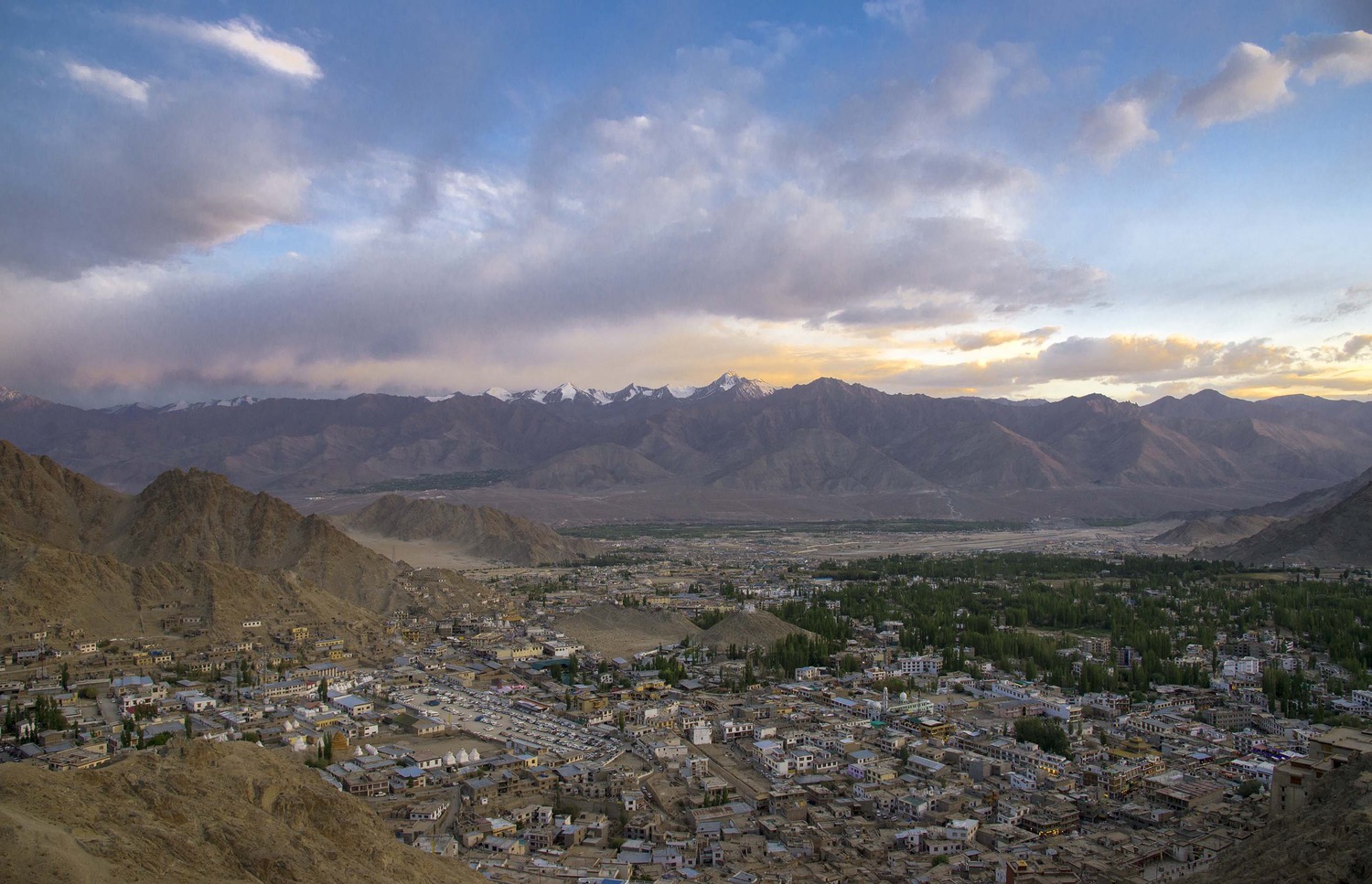
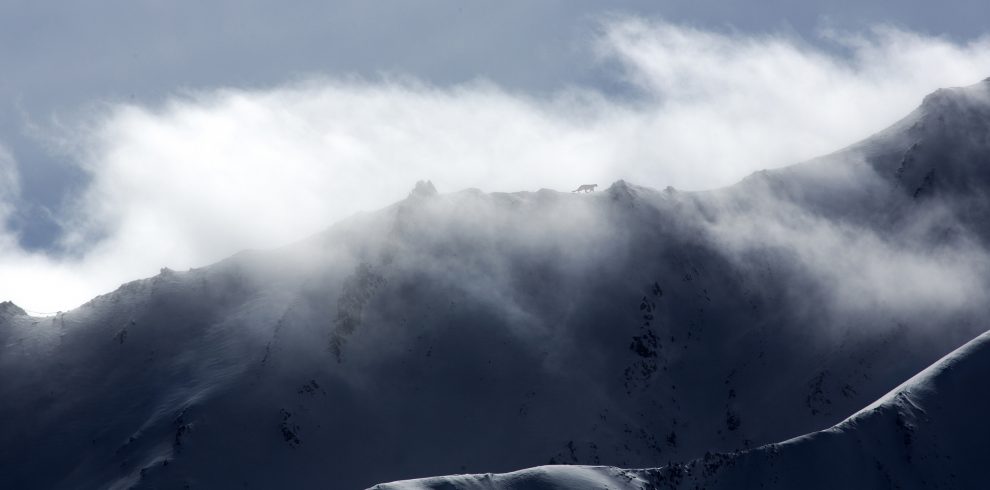
Ladakh, known as “The Land of High Passes,” is a remote territory in Northern India. It sits cradled between four great mountain ranges: the Karakoram, Himalayas, Ladakh, and Zanskar. Leh is its largest city and joint capital, resting at 3,500 meters.
People have lived in these mountains since ancient times. Buddhism arrived from Kashmir in the 2nd century. Later in 842, a Tibetan prince founded the first Ladakhi dynasty. This tied the region’s culture closely to Tibet, earning Ladakh its nickname: “Little Tibet.”
Today, Leh and Kargil are the main hubs. Most locals share Tibetan heritage, though Kashmiri influences have shaped the region for centuries. Tibetan Buddhism is the primary religion, alongside strong Muslim communities near Kargil and a small Christian community in Leh.
High-Altitude Safety & Acclimatization
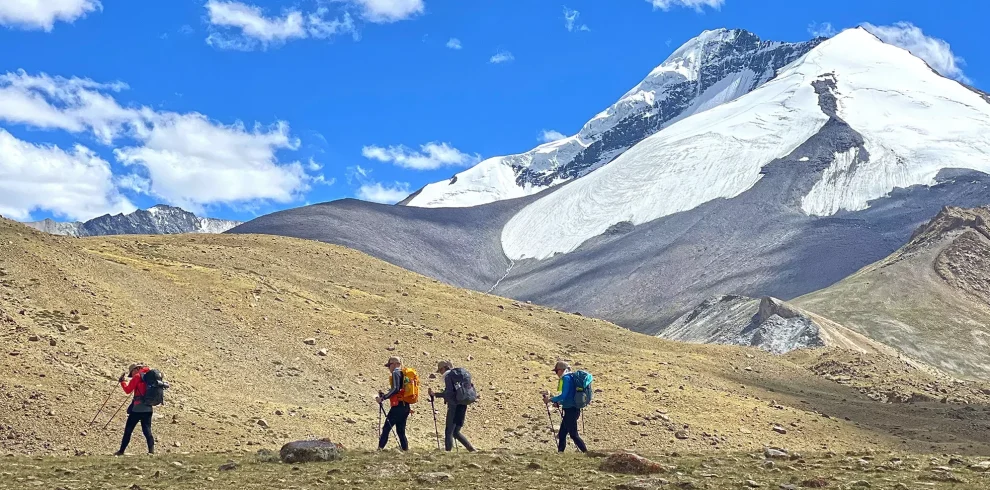
Climbing a technical 7,000m peak requires patience. Our itinerary ascends gradually to ensure proper, safe acclimatization.
What’s Normal: Mild headaches and shortness of breath during exertion are normal at high altitudes.
Our Protocol: Your Guide, qualified and experienced in wilderness first aid and high altitude sickness, is trained to spot early signs of Acute Mountain Sickness (AMS). If severe symptoms occur, immediate descent is mandatory, and the leader’s decision is final.
Key Rules: Hydrate constantly (2-3 liters per day), ascend slowly, listen to your body, and never self-medicate without informing your Guide first.
Rest assured, our team is with you every step of the way to manage your safety.
Staff
Expedition Leader
Your safety and success rest in expert hands. Trained in high-altitude medicine, wilderness first aid, and complex mountain rescue, our leaders blend deep technical skill with a passion for local heritage, wildlife, and conservation.
High-Altitude Climbing Sherpas
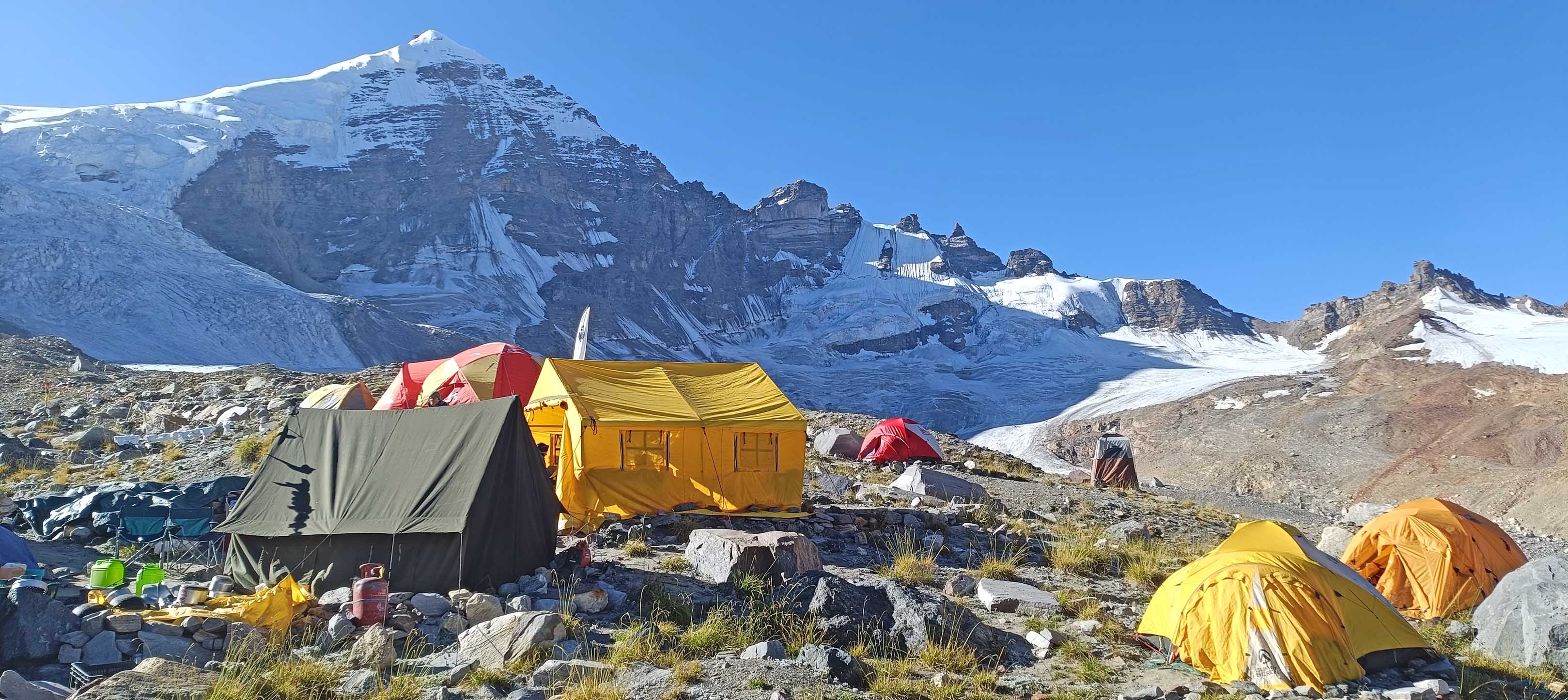
The backbone of every Himalayan Summit! These legendary mountaineers scout the terrain, fix lines through technical ice, pitch high camps, carry essential gear, and cook hot meals to fuel your summit push.
Base Camp Chef
Mastering culinary magic in the wild. Our chef serves delicious, calorie-dense meals prepared with strict hygiene standards to keep you fueled, healthy, and high-spirited throughout the climb.
Mountain Porters
The unsung heroes of the lower valley. On this expedition we use local porters from the village of Tongol. They power the expedition’s backbone, moving heavy gear up to Base Camp so you can focus on pacing and acclimatization.
Weather:
Mid June till Mid September
On the trek at lower altitude 3500m (Leh and Suru Valley): During daytime the Max temp can be around 20C to 30C and the Min temp can be 10C to 15C.
Base Camp: Day time temperature can be between 15C to 20C in direct sun. Nighttime temperature can drop to 5C to 10C
Higher Camps: Daytime Max temp can be between 5C to 10C in direct sun. Nighttime temperature can be drop to -5C to -10C
Summit day: You can expect between -10C to -15C plus wind chill factor depending on the wind speed.
Please note that this is just general information and it could vary.
Packing list
Clothes:
Head
- Warm hat wool or synthetic that covers your ears
- Balaclava
- Sunhat
- Glacier sunglasses Category 4 with side shields, 1 pair ski goggles (optional)
- Headlamp with extra batteries
- Bandana or head scarf, also useful for dusty conditions
Hands
- 1 pr. lightweight poly-liner gloves
- 1 medium weight wind stopper gloves, preferable waterproof.
- 1 pair down mittens
Upper Body
- 2 cotton t-shirts
- 2 to 3 polypropylene t-shirt/ trekking shirts
- 2 to 3 long sleeve thermal underwear shirts, light to medium weight and preferably wool mix
- 2 heavy wool thermal underwear
- 1 polar fleece jacket/ or pullover
- 1 Micro Down Jacket or light weight Primaloft Jacket.
- Gore-Tex jacket with hood, waterproof and breathable
- 1 Down Jacket – Please note: You may use our complimentary HiOnLife Adventures Down Jacket.
Lower Body
- 1 pair walking shorts
- 1 to 2 pair walking trousers light weight
- 1 pair light comfortable trouser for evening wear at camp
- 2 pair lightweight woolen thermal leggings
- 2 pair heavy or expedition weight woolen thermal leggings
- 1 pair Gore-Tex trousers, Waterproof/breathable with side zips
- 1 pair Medium weight Down or Primaloft trouser
Feet
- 1 pair treking /walking boots with good ankle support
- 1 pair trainers, running shoes and/or sandals
- 1 pair down booties (optional)
- 1 pair climbing boot preferably for 7000m+ (La Sportiva G2, Scarpa Phantom 6000 OR similar) – You can bring an 8000m expedition boots if you are preparing for future 8000m climbs.
- 3 pair light to medium weight trekking socks, preferably wool mix
- 3 pair of liner socks, woolen mix
- 2 pair heavy/ expedition weight woolen socks
Sleeping
- 1 down sleeping bag (rated to minimum Comfort -15C Centigrade or -0 F). Please note: You may use our complimentary Hi On Life Adventures sleeping bag rated to comfort -15C.
Rucksack and Travel Bags
- 1 medium rucksack (40-50 litres)
- Small padlocks for duffel kit bags.
Please note: We provide you 2 big duffle bags of 100 liters capacity each.
Personal Food for camps beyond Advanced Base Camp.
We provide food at higher camps, which are a mix of porridge, noodles, cheese, dry fruits, biscuits, canned meat and fish. Nevertheless, we ask each member to bring your daily snacks. In addition, we recommend you to bring 6 to 8 packets of Turmat or equivalent quality freeze dried food of your choice of flavour.
Assesories
- Sitting pad to sit on while taking a rest during the trek
- Nylon stuff sacks for food and gear storage, large Ziplocs are useful also
- At least 2 Water bottles (1 liter), should hold boiling hot water
- Hand sanitizers
- Sunscreen minimum 30 SPF
- Zinc paste for lips and nose (optional)
- Couple of hand and toe warmers (optional)
- Walking poles
- 1 plastic cup and spoon
- 1 small folding knife
- 1 small roll of repair tape, 1 sewing repair kit
- Adequate amount of batteries
- Toiletries – Please note: we provide adequate amount of toilet paper rolls.
Healthy and trouble free holiday
It is not compulsory to take any vaccination to travel to India. However, please consult a doctor for vaccination against Typhoid, Meningitis, Polio, and Hepatitis. If you have special dietary requirements or allergies, please give us a list of what you can and can’t eat so that we can provide proper food for you. If you are undergoing a course of prescription medicine, please ensure that you have sufficient supplies for the entire holiday. Ladakh is mosquito free, therefore you don’t need anti-malaria pills. If you are traveling to other parts of India before or after the expedition, please consult your doctors regarding anti-malaria pills..
Expedition Insurance
Hi On Life Adventures follows the “No Insurance = No Expedition” policy! We recommend you to take a comprehensive Personal Travel Insurance before leaving home. This should cover for your loss of baggage, airline delays, sickness, and accidents. It should cover all incurring costs for evacuations.
Budget and expeditures
The ideal currency to bring with you is USD or Euro. You can exchange them in Delhi or Leh. You can also draw money from ATM machines in New Delhi or Leh. The exchange rate is 1 USD = 95 Indian Rupees approx. (subject to change)
All meals are fully included throughout the trip. Depending on your flight schedule, a couple of lunches in Delhi may be on your own account. Each meal costs around 8 to 10 USD in Delhi.
Gratuities for the Expedition Crew
Our mountain staff work tirelessly to ensure your safety, comfort, and summit success. Tipping forms an important part of the mountain crew’s income and is the best way of showing your gratitude for their hard work and role for a successful expedition.
Summit Bonus for Climbing Sherpa and Base Camp staff: 700 USD per person.
Some Do’s and Don’ts
Ladakhki people treat visitors as special guests. Although they will never rebuke you publicly for unknowingly offending them, we must consider their culture.
While in Ladakh please observe the following:
- Full or partial nudity is not accepted.
- Over display of affection between men and women, especially in temples and monasteries are discouraged.
- Please remove your shoes before entering monasteries and termples.
- Never point the soles of your feet at a person or shrine.
- Locals walk around the Mani walls and Stupas in a clockwise direction as a respect and they expect you to do the same although it is not compulsory.
- Please ask before taking pics of a person or his/her child
Some useful tips while traveling in Delhi
Dress code: Dress sensibly and don’t walk around alone at night. For men knee length shorts and t shirts and sandals are best to cope up with the heat but in some temple and mosques you need to wear long trousers. For women it would be wise to cover up and dress modestly to avoid unwarranted advances. Light cotton trousers or knee length skirts are ideal and avoid bare back dresses.
Personal space: The concept of personal space is almost nonexistent in almost all over India. Whether you’re standing in a queue or walking in a crowded Bazaar, get used to moving shoulder-to-shoulder.
People in North India tend to stare a lot: Please don’t be offended because most of them do this out of curiosity. Easy way to deal with this is to not make direct eye contact with strangers and passersby. Get used to it and don’t let this make you uncomfortable.
Bargaining skills: In shopping malls the prices are fixed and you cannot bargain. However, in rest of your shopping adventure, it is inevitable that you will be exploited to a certain degree, the simple fact is that most vendors know you have money. Skillful bartering takes practice- a beginner’s rule of thumb is to cut the
starting price in half and then work your way to a middle ground.
Beware of Pickpockets: The streets of Delhi can become very crowded, exposing you up to a risk of being easily pick-pocketed. Keep your money in your money belt or in a forward facing backpack to avoid any thieves. If you need to take money out of your wallet, it is best to find a quiet spot and do it quickly to avoid being robbed.
Beggars: You will likely see things that strike your emotional core, but it is important to realize that these are deep rooted problems with no easy fix. Moreover if you give money to one beggar, within secs you will find yourself surrounded by a dozen other beggars from children to adults. Also keep in mind that beggar mafias control much of the inner city.
Street Hawkers: When you walk out of the sightseeing points you will meet several hawkers trying to sell you small souvenirs from pics and all sorts of things. Do not engage in a bargain or converstation unless you really want to buy them. They can be very pushy sometimes.
Go With the Flow: Despite the fact that the cities in India can be tiring with all the staring, crowded streets, beggars, pestering hawkers’ etc. try not to care about the small stuff. If you get caught up and stress about the little things, you will miss out on the bigger picture, which is that you are in one of the most distinctive and important cities in the world. The city will often come to feel like another planet entirely.
“TODAY IS YOUR DAY! YOUR MOUNTAIN IS WAITING, SO… GET ON YOUR WAY!”
DR. SEUSS