Rumtse to Tsomiriri trek – Most scenic trek in Ladakh
18
Days
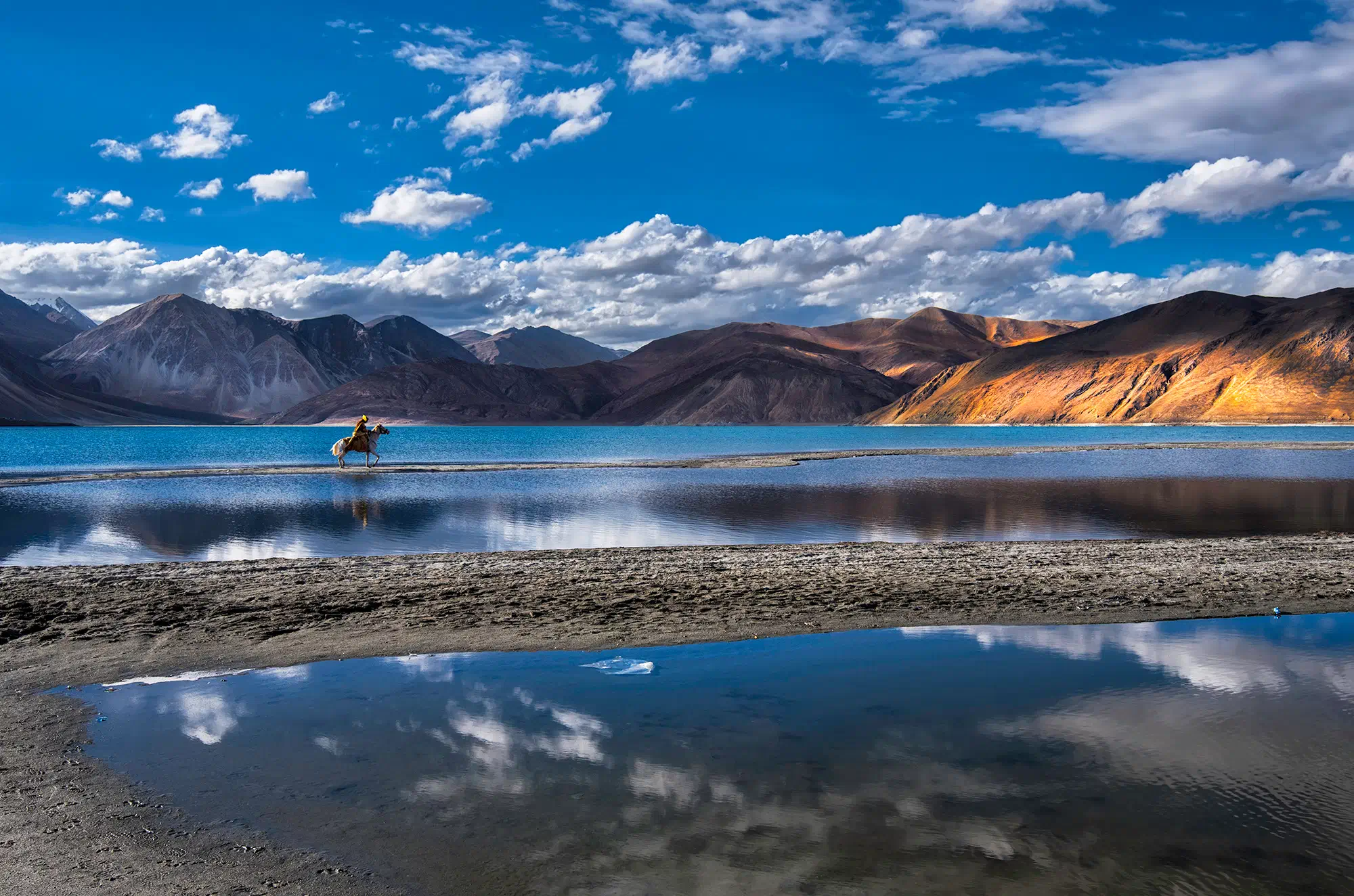
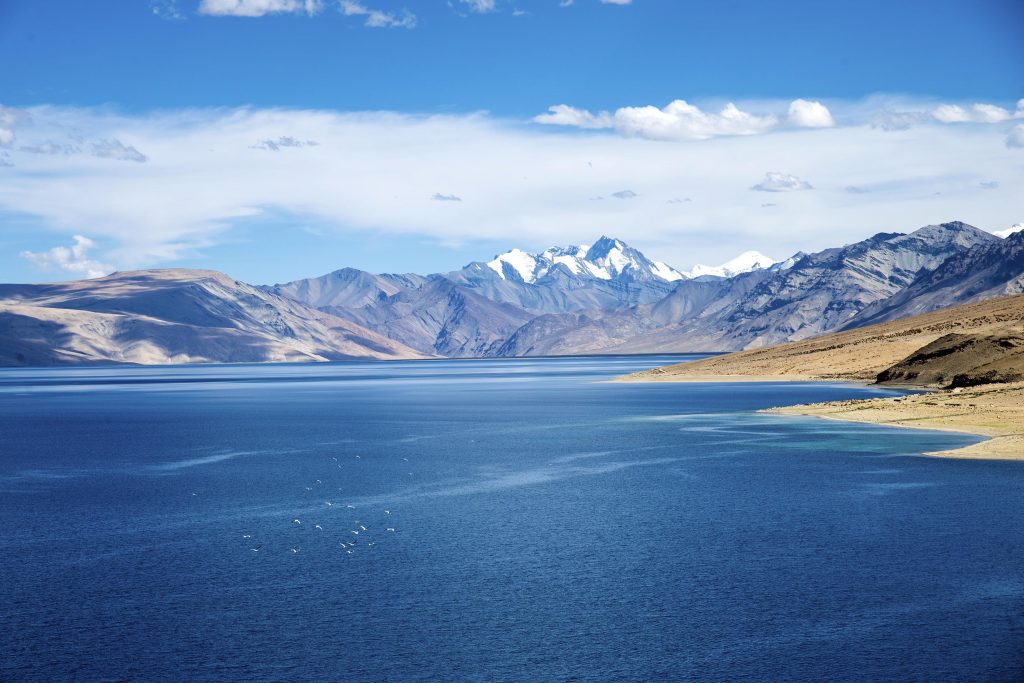
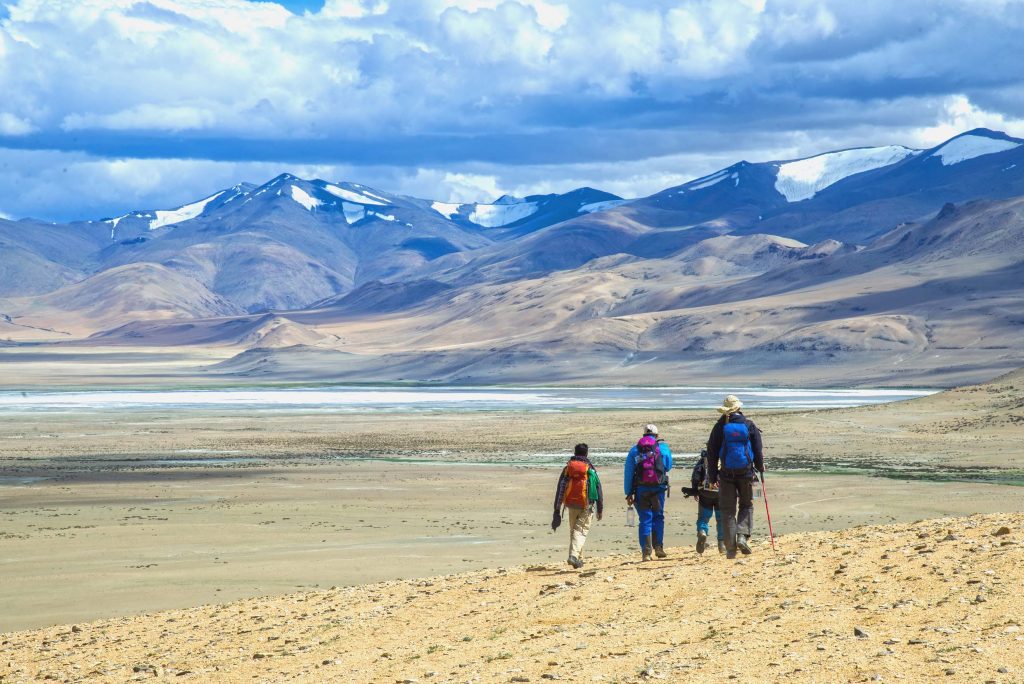
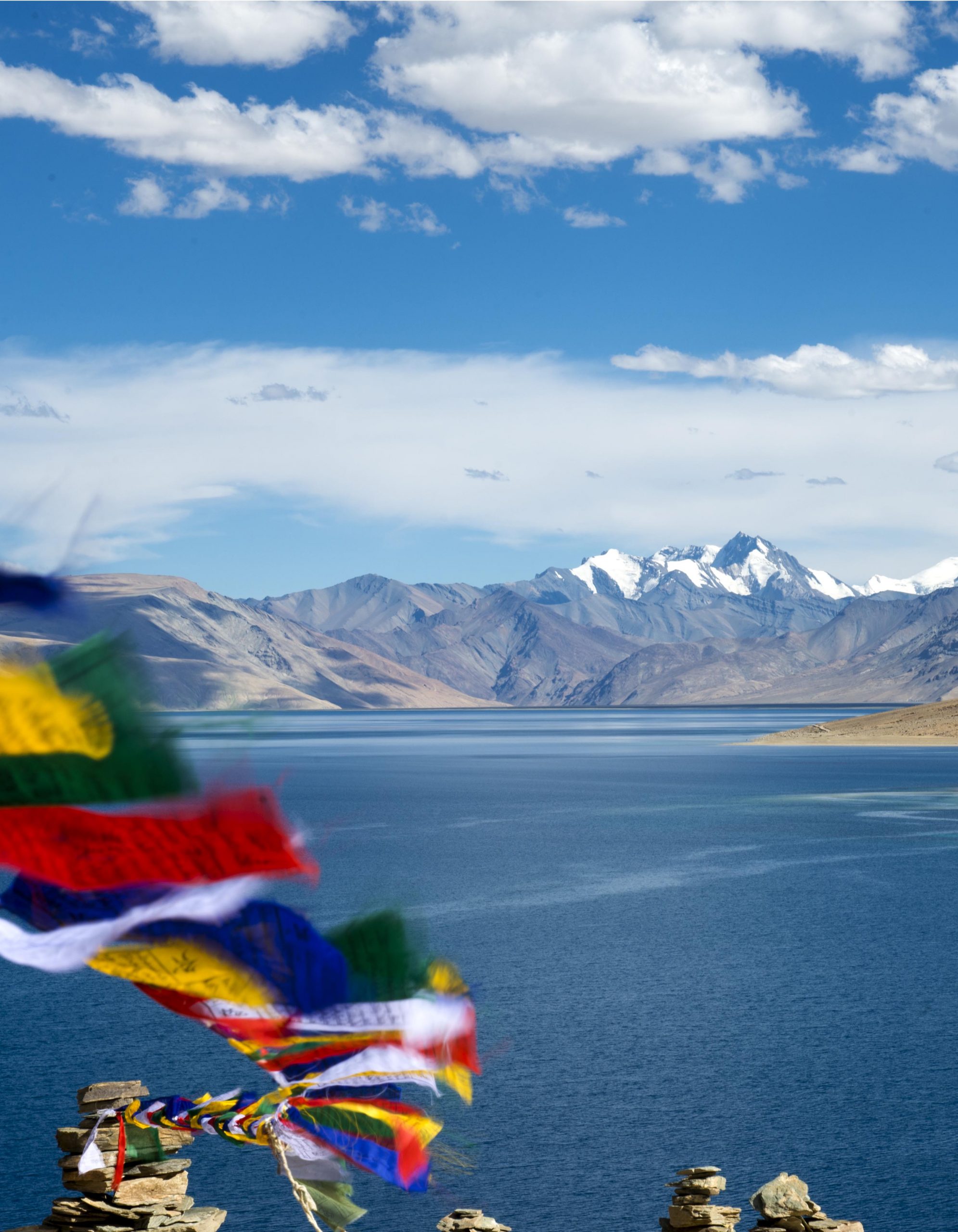
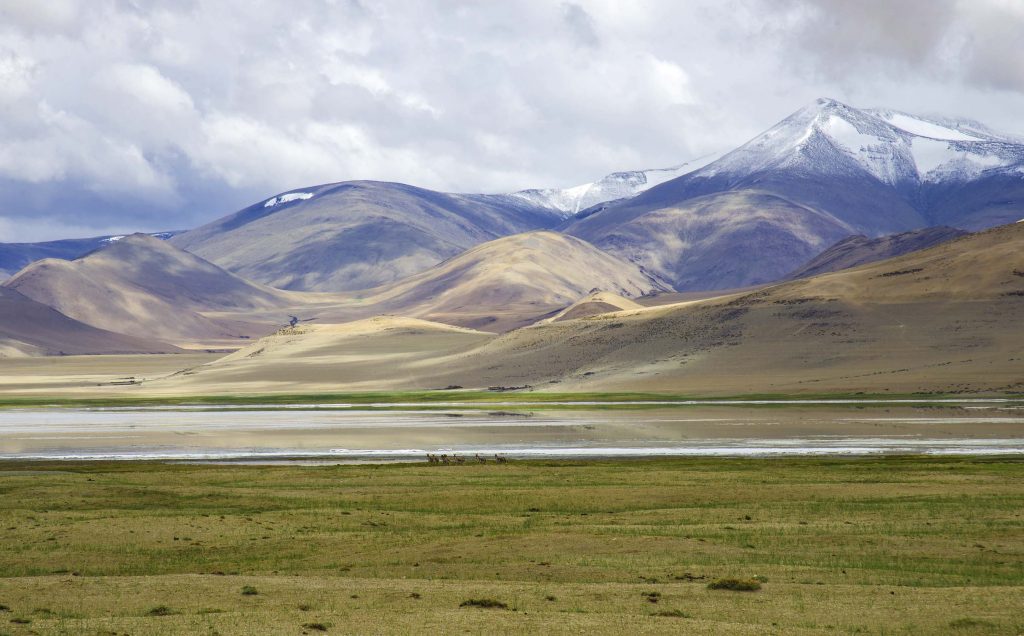
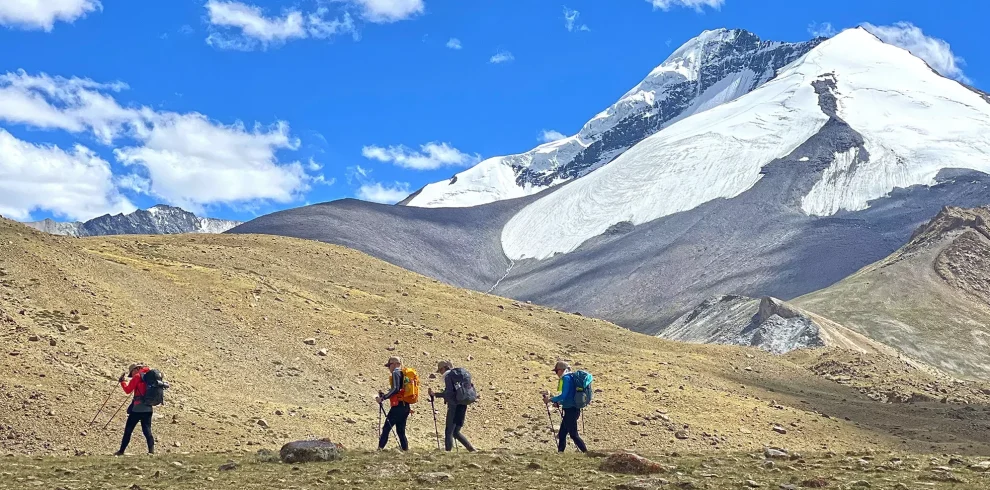
Step into the vast, untouched wilderness of the Changthang Plateau on the Rumtse to Tsomoriri trek. This trek takes you across rolling mountain passes and the shimmering turquoise shores of Tso Kar and Tso Moriri lakes.
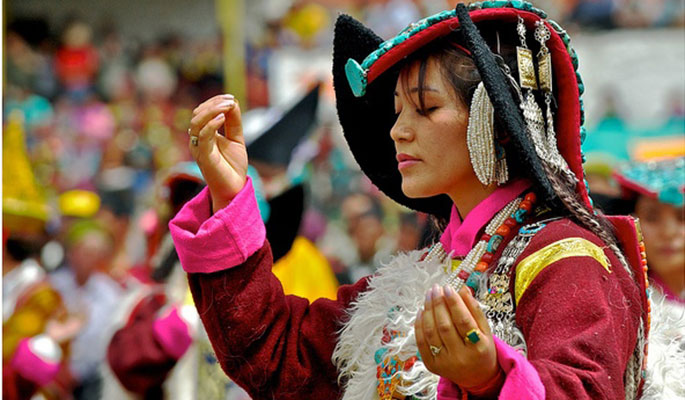
Often described as the Ladakh Nomad trek, this route offers a rare opportunity to meet the Nomadic Changpa herdsmen. Witness the nomadic way of life that has remained unchanged for centuries.
Off the Beaten track
Rumtse to Tsomoriri trek is listed in Times Travel as an offbeat and mesmerizing trek. This journey is designed for the seasoned adventurers who are looking for something beyond the standard trekking trails.
Ready to trade the crowded trails for the untouched stillness of the Changthang plateau? Join us this season on our Rumtse to Tsomoriri trek for an unforgettable adventure
Who is Rumtse to Tsomoriri trek for?
Experienced High-Altitude Trekkers: This is not a “starter” trek, because the route spends several days consistently above 4,500m—and crosses multiple high passes.
Explorers who love of Solitude & Wilderness: For several days you will not find any human settlement.
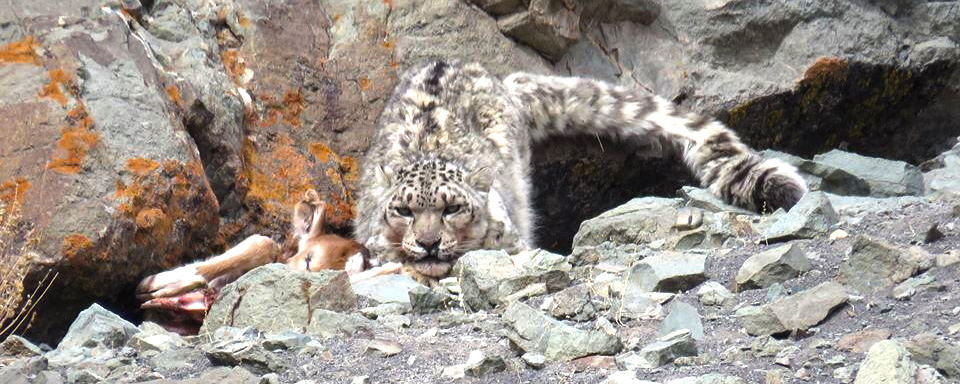
Bird watchers and wild animal lovers: Home to Snow leopard, Tibetan wolf, Eurasian lynx, Tibetan Argali, Kyang (wild ass), Black-necked cranes (endangered species), Bar-headed Geese and Brown-headed Gulls and many more.
Cultural Explorers: It’s an immersive experience in the culture of the Changpa Nomads.
The Rumtse to Tsomoriri trek is an extraordinary journey into the heart of the Changthang Plateau.
Setting the stage- Ancient monasteries and acclimatization
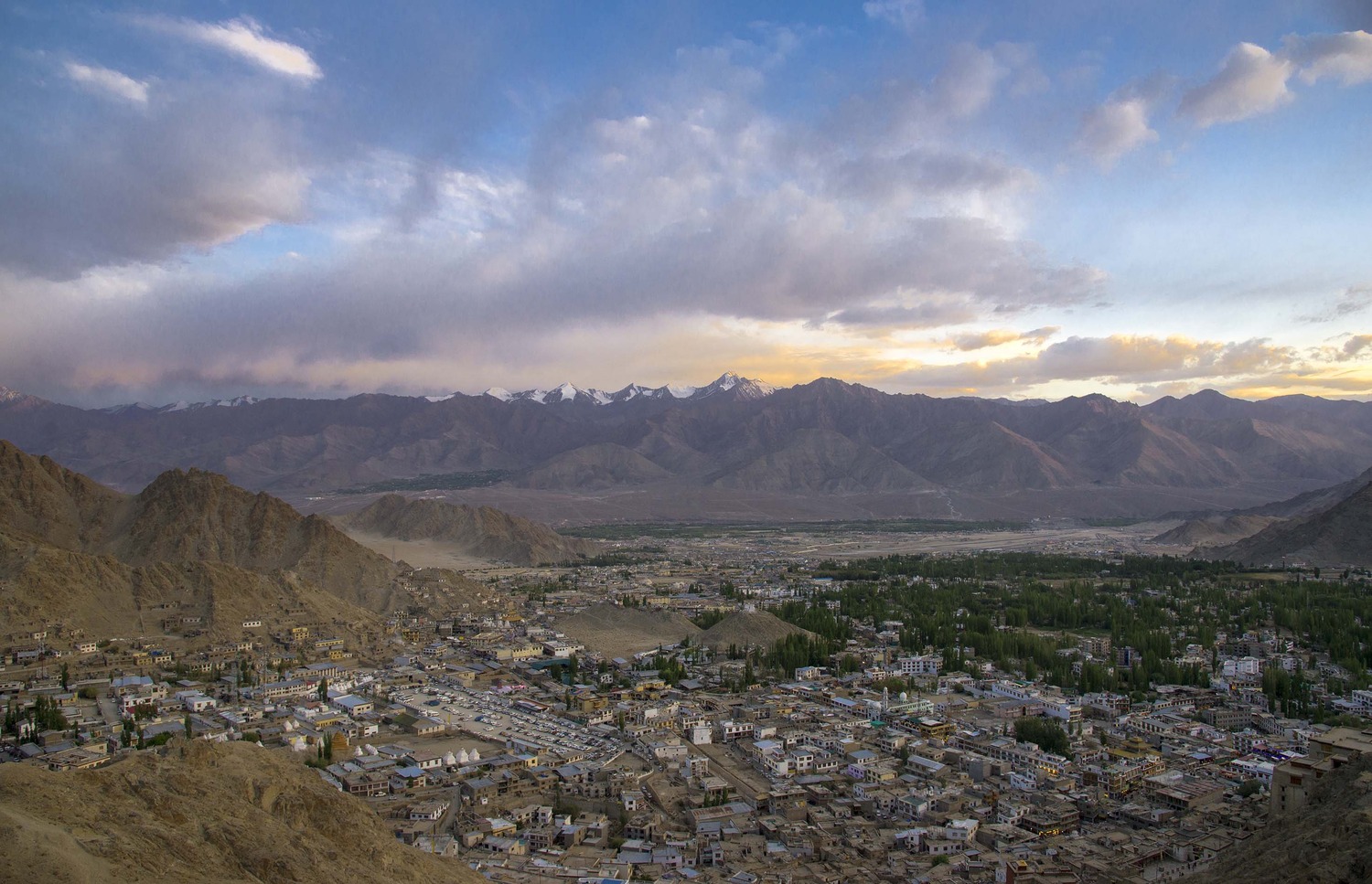
We beginning with a scenic flight from Delhi into the Ladakhi capital of Leh. To ensure adequate acclimatization, we start with four relaxed days to let your body find its rhythm in the thin Himalayan air.
We’ll spend this time wandering through the ancient monasteries around Leh. Additionally, we take a gentle preparatory hike from Likir to Yangthang. This is the perfect way to prepare for Rumtse to Tsomoriri trek while soaking in the local culture.
The trek to Changthang: The Soul of Ladakh
Once fully acclimatized, we drive to Rumtse to begin the trek through mesmerizing and uninhabited valleys. This is a landscape of pure, untouched nature where human encounters are rare, but wildlife sightings are frequent.
Wildlife encounters in Rumtse to Tsomoriri trek
Keep an eye for Tibetan wolves, Eurasian lynx, Marmots, Tibetan Argali, Blue sheep and Kyang (wild ass). After crossing two high passes, we reach the shimmering salt waters of Tso Kar Lake, once a vital hub for the historic Trans-Himalayan salt trade. This lake is also the nesting grounds for several species of birds
Birdwatching at Tso Kar Lake
Tso Kar Lake is a world-renowned birding destination, recently designated as a Ramsar Wetland of International Importance. Because it is a rare wetland system consisting of both saltwater (Tso Kar) and freshwater (Startsapuk Tso), it attracts a diverse range of high-altitude and migratory species. We have strategically included a day for bird watching on this Rumtse to Tsomoriri trek.
The marshy shores of Tso Kar lake is a critical breeding ground for the endangered Black-necked Crane.
Commonly Sighted Bird Species
Waterbirds: Bar-headed Goose, Ruddy Shelduck (Brahminy Duck), Great Crested Grebe, Brown-headed Gull, and Common Tern.
Waders & Shorebirds: Lesser Sand Plover, Common Redshank, and Northern Pintail.
Ground Birds: Tibetan Snowcock, Himalayan Snowcock, Tibetan Partridge, and the elusive Tibetan Sandgrouse.
Birds of Prey: Golden Eagle, Bearded Vulture (Lammergeier), Himalayan Griffon, and the Saker Falcon.
Small High-Altitude Birds: Horned Lark, Tibetan Snowfinch, Robin Accentor, Hume’s Short-toed Lark, and the White-winged Redstart.
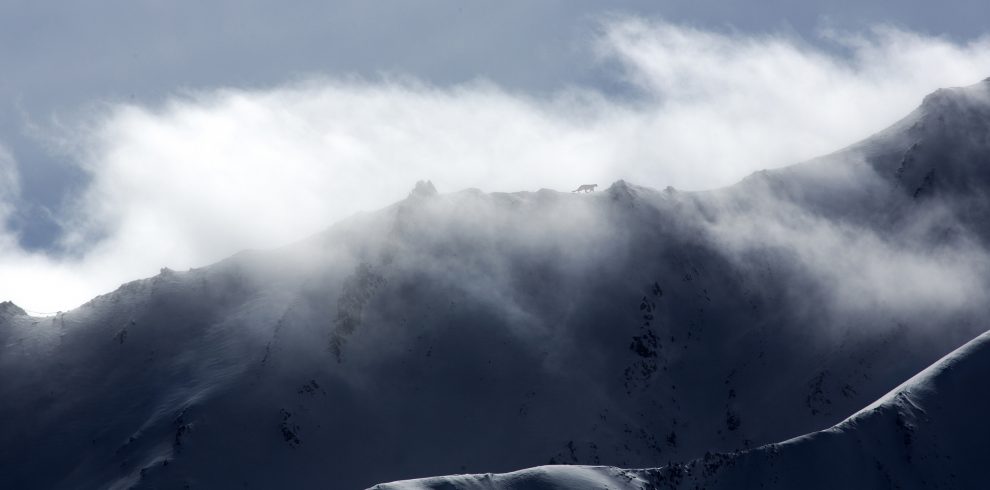
As we continue the Rumtse to Tsomoriri trek, we venture deeper into a wilderness of outlandish landscapes and high mountain passes. Although it is rare to encounter Snow Leopard in the summer, this plateau is home to these elusive cats.
Camping under the clearest canopy on Earth- The Changthang Night Sky
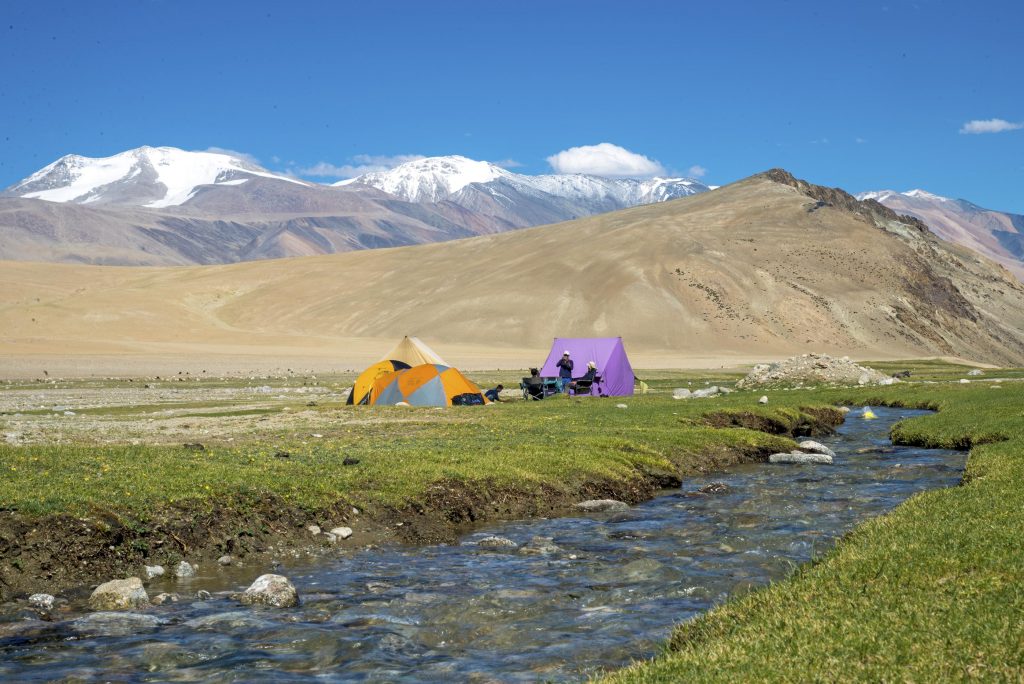
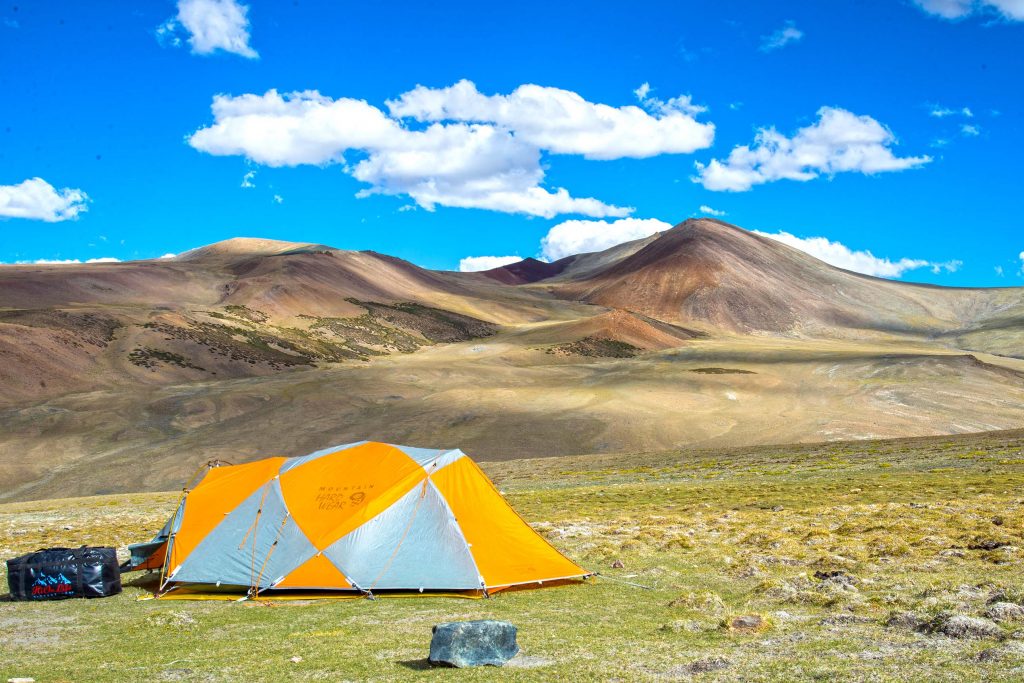
The Changthang Plateau is renowned for having some of the clearest night skies on Earth. The camp sites are extraordinarily beautiful on the entire Rumtse to Tsomoriri trek. You’ll spend your nights under the brilliant glow of the Milky Way, with billions of stars stretching from horizon to horizon.
Encounters with the Last of the Changpa Nomads
We will also get occasional opportunities to visit the camps of the local nomads to witness their traditional way of life. The trek concludes at the village of Korzok on the banks of the breathtaking Tso Moriri Lake, before we make our final drive back to Leh.
Spread over 120 square kilometres, Tso Moriri is the largest high-altitude lake that is entirely within India.
Cross through seven mountain passes,
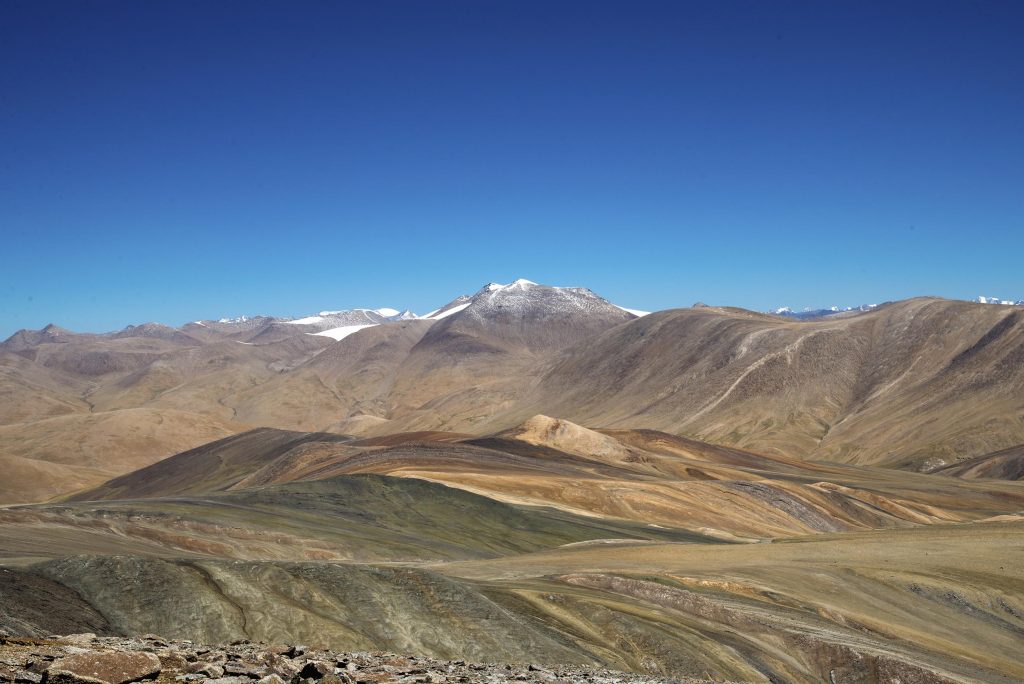
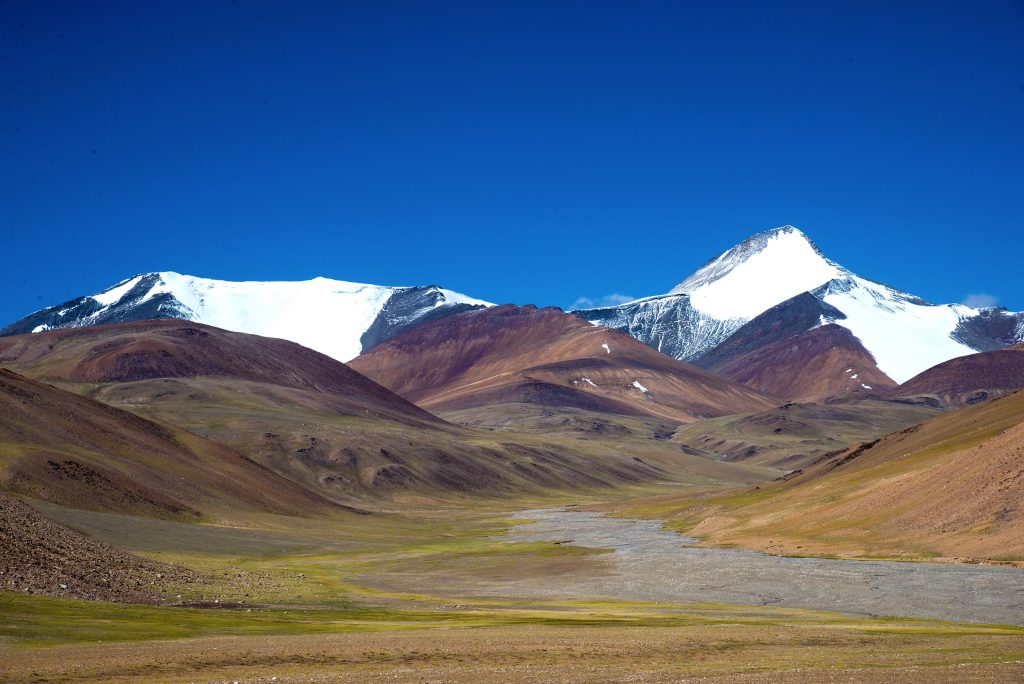
Outlandish landscapes of Changthang Plateau.
The Rocky Mountains that constantly change its colours as the day progresses.
The home to Changpa nomads- It is an experience to see them camping with their livestock and to interact with them.
Peaceful and serenely beautiful camping grounds of Kyamar, Tisaling and Rachungkharu.
Home to some of the rare species of wildlife including Snow Leopard, Kyang (wild ass), Black Necked Cranes, Himalayan Ibex and several other species of brids and animals.
Itinerary
Day 1 :
Arrive New Delhi/ Transfer to domestic terminal and fly to Leh
Fly Delhi to Leh: 1 hour, 30 mins
Altitude of Leh: 3,600m
Overnight hotel in Leh
Your Arrival in India
On arrival to Delhi, clear immigration and customs, look for the friendly face of our representative at the Main Exit, holding a Hi On Life Expeditions signboard. We will then take a short, 20-minute drive to the domestic terminal for your flight to the mountains.
The Journey to Leh
The early morning flight to Leh is one of the most spectacular mountain flights in the world. As you soar over the Himalayan giants, have your camera ready—the approach into the Indus Valley is breathtaking.
A Note on Security
Leh is a strategically sensitive area, therefore security at both Delhi and Leh airports is very thorough.
Baggage Allowance
The limit for the Delhi–Leh flight is 15kg per person. If you’ve packed a bit extra, don’t worry—excess baggage is usually around $7 USD per kilo.
Ease Into the Altitude
Upon landing at Leh, our team will greet you and transfer you to your hotel. Since we are starting at 3,600m, the most important part of your first day is acclimatization.
Our golden rule is: Relax, hydrate, and move slowly. We recommend drinking plenty of water and keeping your activity to a minimum. A gentle stroll to the nearby local shops is perfect, but the goal is to let your body naturally adjust to the thin, crisp mountain air.
Day 2 :
Sightseeing in Leh- Visit Hemis and Thiksey monastery / Overnight hotel
Max ltitude : 3500m
Total driving distance: 90 Kms
Sightseeing duration with drives: 5 to 6 hours
Overnight hotel in Leh
Hemis Monastery
Today, we delve into the spiritual heart of Ladakh. We begin with a scenic 40km drive to Hemis Monastery, which is tucked away in a hidden gorge. Hemis is the wealthiest and most influential monastery in the region. Belonging to the Drukpa lineage, it was famously re-established in 1672 by the "Lion King" of Ladakh, Sengge Namgyal. Walking through its grand courtyards, you’ll feel the weight of centuries of Tibetan Buddhist history and art.
Thiksey Monastery
We then drive to Thiksey Monastery. Perched dramatically on a hilltop, Thiksey is a masterpiece of the Gelug sect. It is often called the "Mini Potala" due to its striking resemblance to the Potala Palace in Lhasa, Tibet. It stands as the largest and most iconic landmark in central Ladakh. The views of the Indus Valley from its upper terraces are simply breathtaking.
The afternoon is yours to enjoy at your own pace. You can enjoy a quiet tea on the roof top restaurants at the Leh market just wander through the market.
Day 3 :
Drive to Likir and trek to Yangthang
Drive distance: 55 kms | Time: 90 mins hours one way
Trek: 3 hours
Max altitude range: 3800m
Overnight hotel in Leh
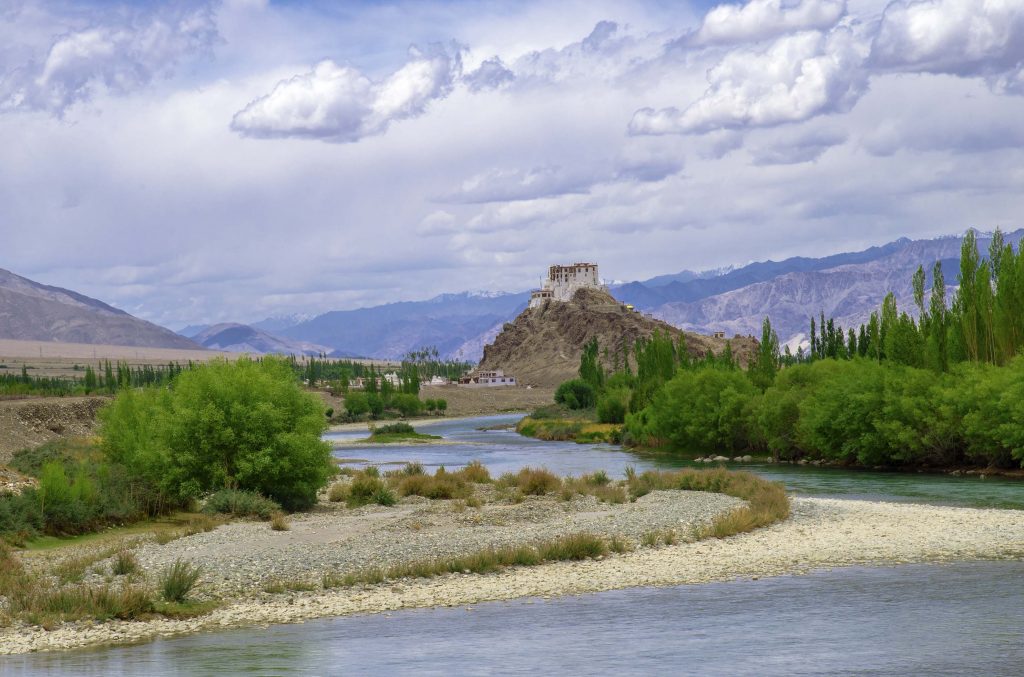
Today is a beautiful blend of a road trip and our first taste of the trail. We begin by driving along the banks of the Indus River—a journey that offers some of the most iconic riverside views in the region—until we reach the majestic Likir Monastery.
Acclimatization trek
Our trek begins gently along a mountain road leading toward the Phobe La (3,580m). From the pass, we leave the roads behind and step onto an "off-the-beaten-path" trail. After crossing a river, we begin a steady climb through the valley to reach the summit of Charatse La (3,700m). From this vantage point, the landscape opens up beautifully before we begin our descent into Yangthang. Yangthang is a beautiful Ladakhi agricultural village, where the green of the fields contrasts sharply with the high-desert mountains.
After taking some time to soak in the rural charm of Yangthang, we’ll meet our vehicles for the scenic drive back to Leh. Arriving by late afternoon, you'll have plenty of time to rest and enjoy a warm evening in town.
Day 4 :
Drive Leh- Rumtse
Drive : 76 Kms | 1 hour 40 mins
Altitude of Rumtse: 4150m
Overnight camping
We leave the Indus Valley behind and drive toward the small village of Rumtse. The scenery shifts from lush riverbanks to deep canyons. Rumtse will be our first day of camping.
Day 5 :
Trek Rumtse – Kyamar
Trek duration: 4 to 5 hours- of 9.5 km
Altitude of Kyamar: 4383m
Overnight camping
We begin with following a stream through a vibrant, willow-lined valley. As the trail climbs, the green fades into the "rainbow mountains" of Rumtse—stark, colorful mineral ridges. The Changpa nomads are known to camp here during summer. We will camp on a beautiful lush green grounds beside a stream. Overnight camping.
Day 6 :
Trek Kyamar – Kyamar La – Mandachalan La – Tisaling
Trek duration: 15 km | 8 hours
Altitude Kyamar La: 5070m
Altitude: Mandalachen: 5200m
Altitude Tisalaing: 4800m
Overnight camping
A challenging day crossing two major passes. From the summit of Mandachalan La, the view opens up to the vast Changthang Plateau.
We descend into the high alpine meadows of Tisaling. Himalayan Ibex, Marmot and Wild hare are often seen here. Tisaling below which is beautiful high altitude grassland.
Day 7 :
Trek Tisaling – Shibuk La – Pongunagu (Tso Kar campsite)
Trek duration: 15 km | 6-7 hours,
Altitude Shibuk La: 5290m
Altitude Riyul: 4600m
Overnight camping
We begin with a gentle climb and then steepen gradual to the pass. It is about 2 hours to reach the top of Shibuk La.
After crossing the Shibuk La, we catch our first glimpse of the Tso Kar basin. We descend toward the saltwater lake, where the white salt crust on the shores contrasts beautifully with the turquoise water. Keep your binoculars ready for the rare Black-necked Crane.
Day 8 :
Trek Pongunagu to Nuruchen
Trek duration: 16 km | 6-7 hours
Altitude: 4585m to 4650m
Overnight camping
Today is a relatively easy day for trekking. The trail follows an easy but dusty jeep leading to Tso Kar lake. Along the salty shores of the lake, we can often see some of the endangered migratory birds like the black necked cranes and Brahmini ducks. This is the best place to see the Kyang (Tibetan Wild Ass) galloping across the flats.
We camp near the small nomadic settlement of Nuruchen.
Day 9 :
Trek Nuruchen – Horlam La – Rachungkaru
Trek duration: 9 km | 4 hours
Altitude Horlam la: 4970m
Altitude Rachungkaru: 4925m
Overnight camping
Another fairly easy day. We cross the gentle Horlam La and enter a valley often dotted with the black yak-hair tents of the Changpa nomads. From the top of the pass, we descend to campsite of Rachungkaru-the grassy marshes of Spanglung Serpa river basin. We spend the evening sharing the landscape with these resilient high-altitude herders and their vast flocks of pashmina goats.
Day 10 :
Trek Rachungkaru – Kyamayaru La – Gyamar La – Gyamalhoma
Trek duration: 13 km | 6 hours
Altitude Kyamayaru La: 5420m
Altitude Gyamar La: 5400m
Altitude Gyamalhoma: 5150m
Overnight camping
One of the most scenic days. We cross two high passes that offer sweeping views of the Zanskar range. We descend into the lush grazing grounds of Gyamalhoma, a remote valley where wolves and blue sheep are known to roam. Our campsite is across the river, which is a beautiful pasture ground frequented by Changpa yak herders.
Day 11 :
Trek Gyamalhoma – Yarlung Nyau La – KarzokTrek Gyamalhoma – Yarlung Nyau La – Karzok
Trek distance: 14 km | 6 hours
Altitude Yarlung Nyau La: 5435m
Altitude Karzok: 4540m
Overnight camping
Extremely scenic walk today. Prepare to cross the final and the highest pass of the trek, the Yarlung Nyau La (5435m). As we reach the top, the first appearance of Tso Moriri lake that dominates the landscape. We descend to the village of Korzok, the only permanent settlement on the lake’s shore. There is an ancient 500-year-old Buddhist Monastery at Karzok. A beautiful campsite awaits us at the end of a long strenuous day.
Day 12 :
Korzok - Leh
Drive: 220 Kms | 7 hours
Overnight hotel in Leh
We drive back to Leh through the dramatic gorges of the mighty Indus, leaving behind the beautiful lake Tsomoriri. On arrival to Leh, we are transferred to our hotel. In the evening visit Leh market for final souvenir shopping.
Day 13 :
Leh - Delhi.
Leh to Delhi flight: 1 hour 25 min
Sightseeing duration: 3 hours
Overnight hotel in New Delhi
Early morning drive to the airport to catch early morning flight to Delhi. Once again prepare for an extensive security checks. Lithium Batteries (eg spare camera batteries) – must be in your checked luggage for the return flight from Leh back to Delhi. On arrival to New Delhi we are transferred to our hotel. In the afternoon we take a Rikshaw ride through the narrow lanes of Old Delhi- a “must do” fascinating trip.
Day 14 :
Departure- Trip ends
You will be transferred to Indira Gandhi International airport 4 hours before your flight departure time.
Price Includes
All International and Domestic airport transfers in Private A/C vehicle
All guided sightseeing tours in Delhi, Ladakh and Agra in Private A/C vehicles
5 Star hotel accommodations on BB plan on twin sharing basis in New Delhi and Agra
Welcome dinner in one of the finest authentic Indian dining in Delhi
3 Star category hotel in Leh on full board
All Camping and Monasteries entrance fees
Wild life fee for the applicable area
Services of English speaking guide during trek only.
Cook and kitchen helpers
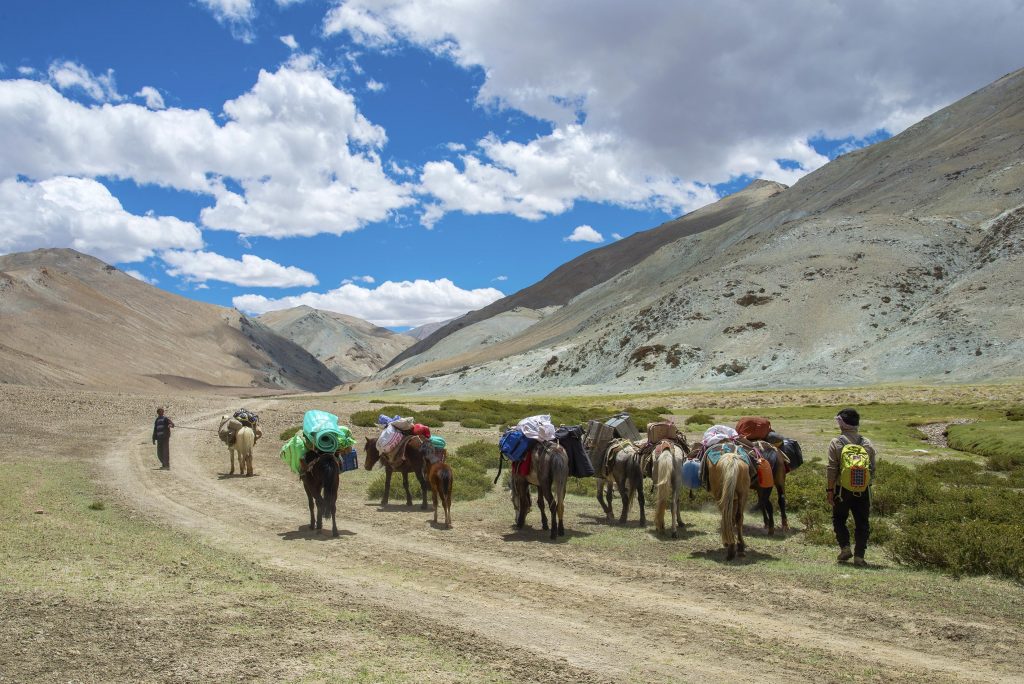
Horses and mules for carrying bags and camping gears
Comfortable North face VE 25 tents on twin share basis unless single supplement is booked
1 ridge mattress + 1 Exped Down mattress for each person.
Kitchen tent, Dining tent and Toilet tents
Table Chairs and all Kitchen materials.
All three times meals during trek. (Picnic at lunch time)
Hot beverages with biscuits and snacks on arrival to camp
Use of personal trekking pack consisting of a duffle bag, sleeping bag, sleeping bag liners, and down jacket.
Private room accommodation in Delhi and Leh unless a single supplement is paid.
Staff tipping
Indian Visa
Telephone, laundry, mineral water, soft drinks and alcoholic beverages.
Emergency rescue evacuation cost if needed
All other personal nature expenses.
About India
India, officially Republic of India, is the seventh largest country in the world by area. It also has the second largest population in the world with over a billion people, and prides in being the largest democracy on Earth. It is an extremely diverse country, with vast differences in geography, climate, culture, language and ethnicity across its expanse.
The earliest archaeological traces are from 7000 BC in Mehrgarh, which grew to be the “Indus Valley Civilization”, which is one of the earliest civilizations in the world. By 3300 BC, this civilization had well-planned towns and well-laid roads.
India’s culture and heritage are a rich combination of the past and the present. It offers the visitor a view of fascinating religions and ethnography, a vast variety of languages with more than 438 living languages, and monuments that have been present for thousands of years.
From the tallest mountain range in the world, Himalaya, to sun washed beaches, dense sub-tropical jungles to deserts, tranquil temples and rich architectural ancient monuments to frenetic bazaars, lantern lit villages to software supreme cities, India has it all. There’s simply no other word that captures the enigma that is in India. With an ability to aspire, frustrate, thrill and confound all at once, India presents an extraordinary spectrum of encounters for the traveler. India also boasts on having one of the wildest and largest culinary varieties in the world, each region presenting their own specialty. This is one country that will definitely jostle your entire being. It’s a place that fires the imagination and stirs the soul like nowhere else on earth.
India at a glance:
Area: 3,287,590 Sq Kms
Population: 1.2 billion
Capital city: New Delhi
About Ladakh
Ladakh, “The land of high passes”, is a region in the Indian state of Jammu and Kashmir. Although, rock carvings found in many parts of Ladakh indicate that the area has been inhabited from Neolithic times, not much is known about Ladakh before the 1st century. During the 2nd century when much of eastern Ladakh and western Tibet was still practicing the Bon religion, Buddhism started to spread into western Ladakh from Kashmir. In 842 Nyima-Gon, a Tibetan royal prince annexed Ladakh after the break-up of the Tibetan empire, and founded a separate Ladakhi dynasty. During this period, Ladakh acquired a predominantly Tibetan population. Also known as “Little Tibet” Ladakh’s culture and history are closely related to that of Tibet.
The largest town in Ladakh is Leh, followed by Kargil. Ladakhis are Tibetan-Mongoloid in appearance although traces of Kashmiri Moslem influence can also be seen. The predominant religion in Ladakh is the Tibetan form of Buddhism, although Islamic influences are found from the Kashmir Valley as far as Kargil, and there are some Christian families in Leh.
Some interesting facts about Ladakh
Ladakh is the highest settlement in India. The fields at Korzok, on the Tso-moriri Lake, at 4,600m are widely considered to be the highest cultivated lands in the world.
A Bailey bridge between the Suru River and Dras River in Ladakh, is the highest bridge in the world at an altitude of 5,602m.
Only place in India where twin humped Bactrian camels can be found.
Ladakh is home to the mystical Magnetic Hill, which is a so-called “gravity hill”. The alignment of the road with the slope of the background can give the illusion that cars are able to drift upwards.
The Pangong lake in Ladakh is one of the highest salt lakes in the world
Kadakh is also home to some of the rare species of wildlife including Snow Leopard, Kyang (wild ass), Black Necked Cranes, Himalayan Ibex and several other species of brids and animals.
Recommended preparation:
Stamina is essential, as walking days are long. We recommend previous trekking experience, preferably at altitude. Walking or jogging 45 mins to 1 hour for at least two times a week on undulating terrain or on a tread mill with inclined angle for at least 3 months prior to departure. Cycling is recommended. Long day hikes on weekends with a daypack in variable weather conditions is also recommended.
A Day On Your Trek
Although each day is different, considering the weather, general pace of the group and length of the days walk, in general your day begins with a wake up tea at around 6 to 6:30 in the morning. You will then be provided with a bowl of warm water for washing. Then you will need to pack your duffel bag and your daypack and come to the dining tent for breakfast.After breakfast we will hit the trail and usually walk for about 3 to 4 hrs before we stop for lunch. Lunches are usually picnic packed lunch. We allow you about an hour rest during lunch, which will also give enough time for the staff to prepare lunch, wash dishes and have their lunch and pack. Usually after 3 to 4 hrs of walking we finish the days walk by 4 PM. Tea/ Coffee and snacks will be served on arrival to the camp. Your Group Leader will often organize side trips in the afternoon.
Your dinner will be served around 7 PM.
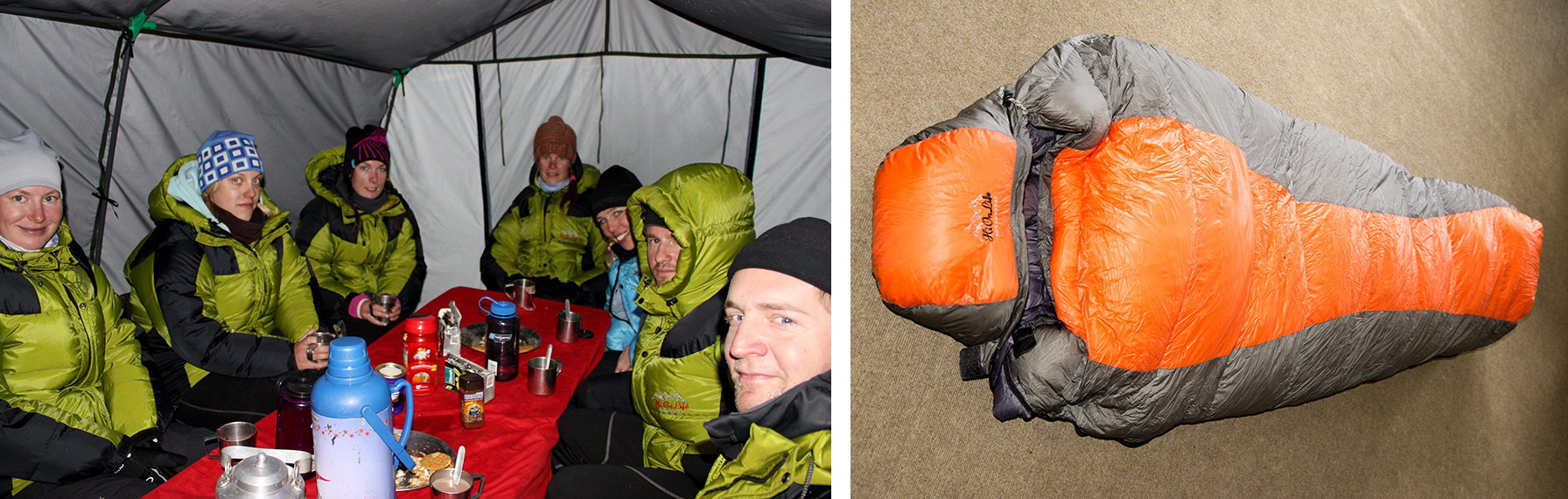
Mess tent
Food and water
The cook and the kitchen crew prepares hot food which is normally a very balanced diet comprising of fresh vegetables and breads, to pastas and sandwiches and occasionally even cakes and pizzas. Breakfasts are usually bread eggs and cereals, and lunch and dinner are a three course meals. We make sure that you get the required amount of carbohydrates and proteins and vitamins as you burn a lot of calories walking uphills, so plenty of vegetables, canned meat and fish and eggs and cereals are carried.We provide boiled and treated water 4 times a day.
High Altitude
On this trek you will be going up to 5400m, so it is very important to understand the affects of altitude. The greatest provocation is going too high too fast. Hi On Life Adventures’s itinerary has been carefully designed to minimize the effects of altitude. We ascend slowly and surely allowing enough time for safe acclimatization.Headaches and breathlessness are common at altitude which in itself is nothing to worry about. In rare cases, this may worsen to Acute Mountain Sickness (AMS), so a close watch is kept on all trekkers by the group leader who is trained to recognize the symptoms of AMS which are severe headaches, nausea, lethargy, loss of appetite serious breathlessness even at rest. If any trekkers show such signs they will be descended to relatively lower and safer altitude. The Group Leader’s decision on evacuating such person to a safe altitude is final. Do not medicate yourself without first informing your group leader. Going to altitude slowly with adequate rest and adequate intake of fluid (3 to 4 litres per day), you will most likely have no problems apart from breathlessness on hills which is completely normal as the percentage of Oxygen in the air is relatively lower to that at sea level. The most important thing is not to worry about altitude because our team is there to take care of you.
Staff
Group leader: your most important member of your staff. Our Group leaders are highly trained in all aspects of the trek, conservation, first aid specializing on
altitude sickness, emergency procedures and have extensive knowledge of the natural history of the area.
Sirdar: His job is to manage and organize staff duties, select and organize campsites. He is responsible for the actual operation of the trek.
Sherpas: Their job is to lead your way and distribute equal loads to the porters and also help clients and other staff when need arises.
Porters: They are responsible to transport your duffle bags and their job finishes once they reach the designated lodge. Our porters are provided with Gore-Tex suits, trekking boots, gloves, hats, socks, snow gaiters and snow goggles. Most importantly, we regulate them on a 25 Kg carrying load. Our clients can therefore feel comfortable knowing that our porters are working in a good humane condition.
Please note: In our Ladakh trips, we do not use porters, instead we have mules and horses to carry the gears.
Weather
The best time for this trek is June till August. It is summer time in Ladakh and the temperatures are pleasant at high altitude. However, below 4000m it can be soaring 28 C in the sun. Another typical thing about the climate in Ladakh is that the temperature varies enormously. It can be 28 C+ on a sunny day and within an hour the temperature could drop below 10 C if it gets cloudy. At altitudes above 4500m the night time temperatures could drop just below freezing.
Recommendations for things you should bring:
Water bottle: 3 bottles min 1 liter each, should be able to hold hot water)
Day pack: medium size 35-40 liters
Sunglasses: Poloroid/ UV protection 2-4
Duct tape: Small roll for emergency fixing of torn jacket/ sleeping bags etc.
Stuff bags: Small stuff bags or plastic bags to organize you duffle bag
Money belt
Toiletries: Your essentials. We provide toilet papers
Towel: Quick dry travel towel
Torch: Preferably head lamp
Penknife
Disposable lighter
Sewing kit
Medical kit: As per your prescriptions. It should be noted that the group leader will be carrying a first aid kit.
Optional
Walking sticks ( highly recommended)
Cameras
Knee guard for those with bad knees.
Daytime snack (chocolates/ dry fruit trail mix)
Clothing
Trousers: 2 lightweight for easy walking and 1 warmer for colder days preferable wind/water proof, 1
stretchable running trousers
Shorts: 1 (Not too high cut revealing ones)
T-shirts: 2 light cotton or preferably polypropylene
Full sleeves T- shirts: 2 preferably poly propylene or wool.
Hats: 1 Sunhat and 1 woollen one for colder days
Buff (cover for your mouth and keeps your neck warm)
Gloves: 1 warm woollen/ fleece and 1 medium weight Gore-Tex
Thermal underwear: 2 pair light weight tops and trousers, preferably woollen, and 1 pair medium weight
Socks: At least 4 pairs (both thin and thick woollen ones)
Jackets: 1 fleece/ wool and 1 Gore-Tex wind/waterproof. Please note that we provide down jackets.
Walking boots: Preferably waterproof
Gym shoes/sandals For evenings
For every trek we provide these extremely warm down jacktes and -10C to -20C down sleeping bags depending on altitude
For every trek we provide these extremely warm down jacktes and -10C to -20C extreme temperature down sleeping bags depending on altitude.
Healthy and trouble free holiday
Please consult a doctor for vaccination against Typhoid, Meningitis, polio, and hepatitis. If you have special dietary requirements or allergies, please give us a list of what you can and can’t eat so that we can provide proper food for you. If you are undergoing a course of prescription medicine, please ensure that you have sufficient supplies for the entire holiday. Some types of drugs including antimalarias have side effects at high altitude; therefore please consult your doctors regarding these drugs. The places you trek are mosquito free and there has been no report on malaria in Ladakh and you do not spend a lot of time in the low
lands of India.
Insure yourself:
We highly recommend you to take a comprehensive Personal Travel Insurance before leaving home. This should cover for your loss of baggage, airline delays, sickness, and accidents. It should cover all incuring costs for evacuations.
Money Matters
The ideal currency to bring with you is USD or Euro. You can exchange them in Delhi or Leh. You can also draw money from ATM machines in New Delhi or Leh.The exchange rate is 1 USD = 62 Indian Rupees approx. (subject to change)
In Delhi and Agra: During the entire trip the only meals that you need to pay for are 3 dinners and 2 to 3 lunches depending on your time of departure flight. Delhi has a wide variety of restaurants with a very wide range of price. Depending on where you eat, each meal will cost anything between 5 to 25 USD + drinks. Plus 20 to 30 USD for your taxis if you wish to go around the city.
On trek: Basically there are no place where you can spend money on the trek. However, in few places you might find small tea shops that sells cold drinks, chocolates etc. It is recomended to bring around 5 USD per day. This money is chocolates, soft drinks and beers etc and also for small donations in the monasteries.
Tipping
Although tipping is entirely optional and personal matter the following is recommended as a guideline
In Delhi and Leh: for bellboys, waiters and porters 50 to 100 Indian Rupees
On the trek: At the end of the trek it is a customary to tip the field staff. The recommended amount is 100-150 USD depending on group size. The Group leader will collect the tip and then split it between the staff and put it in envelops so that the trekkers can give it to the staff during the “Farwell Ceremonies”. Please note- the Group Leader is not included in this tip. If you want to tip the Group Leader, you can do it seperately.
Some Do’s and Don’ts
Ladakhki people treat visitors as special guests. Although they will never rebuke you publicly for unknowingly offending them, we must consider their culture.
While in Ladakh please observe the following:
Full or partial nudity is not accepted.
Over display of affection between men and women, especially in temples and monasteries are discouraged.
Please remove your shoes before entering monasteries and temples.
Never point the soles of your feet at a person or shrine.
Locals walk around the Mani walls and Stupas in a clockwise direction as a respect and they expect you to do the same although it is not compulsory.
Please ask before taking pics of a person or his/her child
Some useful tips while travelling in Delhi and Agra
Dress code: Dress sensibly and don’t walk around alone at night. For men knee length shorts and t shirts and sandals are best to cope up with the heat but in some temple and mosques you need to wear long trousers. For women it would be wise to cover up and dress modestly to avoid unwarranted advances. Light cotton trousers or knee length skirts are ideal and avoid bare back dresses.
Personal space: The concept of personal space is almost nonexistent in almost all over India. Whether you’re standing in a queue or walking in a crowded Bazaar, get used to moving shoulder-to-shoulder.
People in North India tend to stare a lot: Please don’t be offended because most of them do this out of curiosity. Easy way to deal with this is to not make direct eye contact with strangers and passersby. Get used to it and don’t let this make you uncomfortable.
Bargaining skills: In shopping malls the prices are fixed and you cannot bargain. However, in rest of your shopping adventure, it is inevitable that you will be exploited to a certain degree, the simple fact is that most vendors know you have money. Skillful bartering takes practice- a beginner’s rule of thumb is to cut the
starting price in half and then work your way to a middle ground.
Beware of Pickpockets: The streets of Delhi can become very crowded, exposing you up to a risk of being easily pick-pocketed. Keep your money in your money belt or in a forward facing backpack to avoid any thieves. If you need to take money out of your wallet, it is best to find a quiet spot and do it quickly to avoid being robbed.
Beggars: You will likely see things that strike your emotional core, but it is important to realize that these are deep rooted problems with no easy fix. Moreover if you give money to one beggar, within secs you will find yourself surrounded by a dozen other beggars from children to adults. Also keep in mind that beggar mafias control much of the inner city.
Street Hawkers: When you walk out of the sightseeing points you will meet several hawkers trying to sell you small souvenirs from pics and all sorts of things. Do not engage in a bargain or converstation unless you really want to buy them. They can be very pushy sometimes.
Go With the Flow: Despite the fact that the cities in India can be tiring with all the staring, crowded streets, beggars, pestering hawkers’ etc. try not to care about the small stuff. If you get caught up and stress about the little things, you will miss out on the bigger picture, which is that you are in one of the most distinctive and important cities in the world. The city will often come to feel like another planet entirely.
“TODAY IS YOUR DAY! YOUR MOUNTAIN IS WAITING, SO… GET ON YOUR WAY!”
DR. SEUSS