
Kang Yatze II Expedition- Your First 6,000m Milestone
The journey to the summit of Kang Yatze II (6,250m) is the quintessential “First Himalayan Summit” experience. It is designed specifically for the ambitious trekker who craves something more challenging than a standard walking holiday—a true high-altitude adventure that breaks the 6,000-meter barrier without requiring professional mountaineering expertise.
Acclimatization
Our journey begins in the storied capital of Leh. Over four carefully curated days, we immerse ourselves in the spiritual heart of Ladakh, visiting ancient monasteries and enjoying a scenic preparatory trek from Likir to Yangthang. This intentional pace ensures your body is perfectly tuned for the thin mountain air.
Through the Sacred Markha Valley
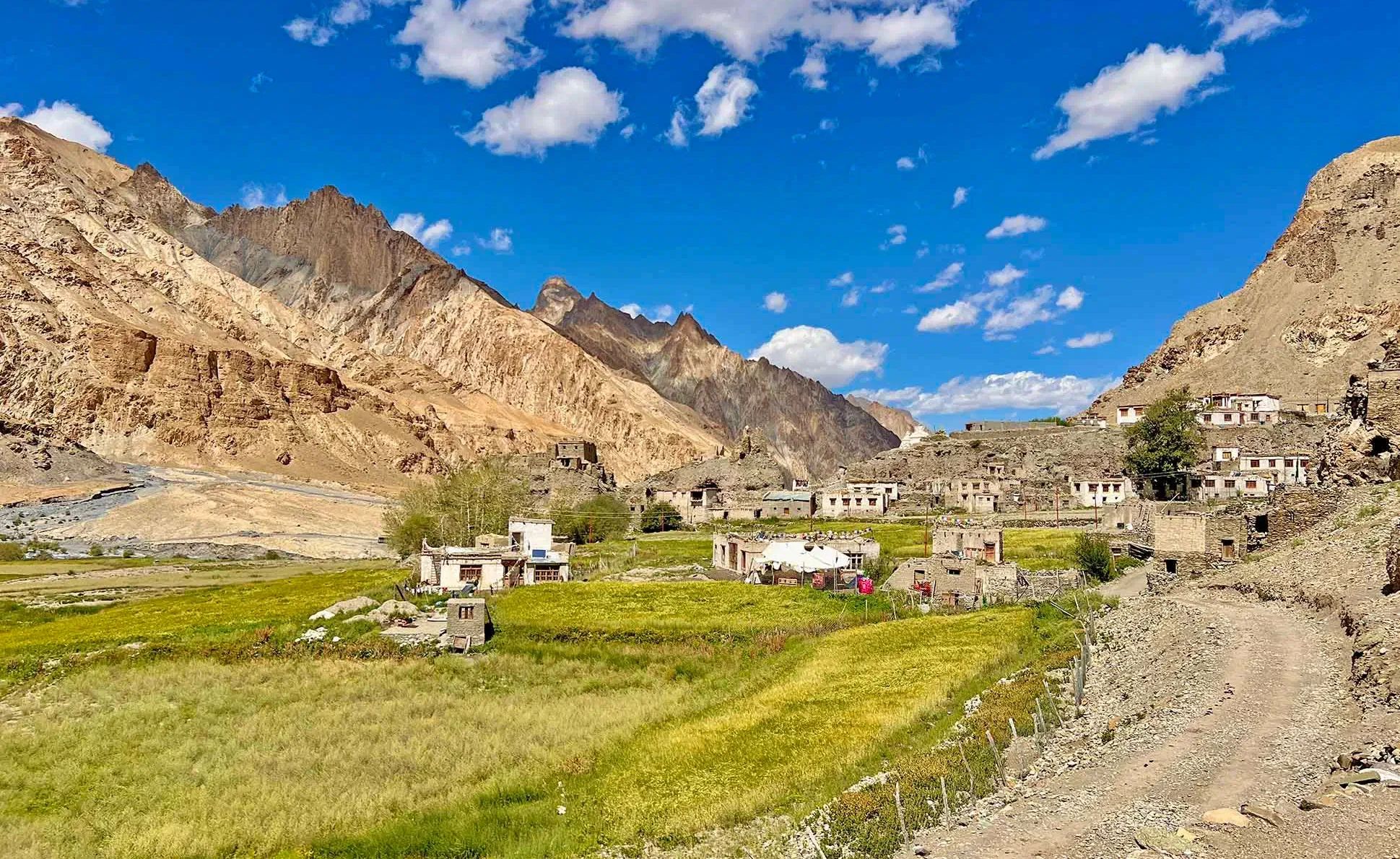
The approach to Base Camp is an adventure in itself. We traverse the legendary Markha Valley, a landscape of quaint villages, centuries-old monasteries, and prayer-inscribed mani walls. We gain altitude with mindful precision, moving through high-mountain meadows to reach the Kang Yatze Base Camp, golden Nimaling Plains—the breathtaking doorway to our summit attempt.
The Climb: Safe, Strong, and Sublime
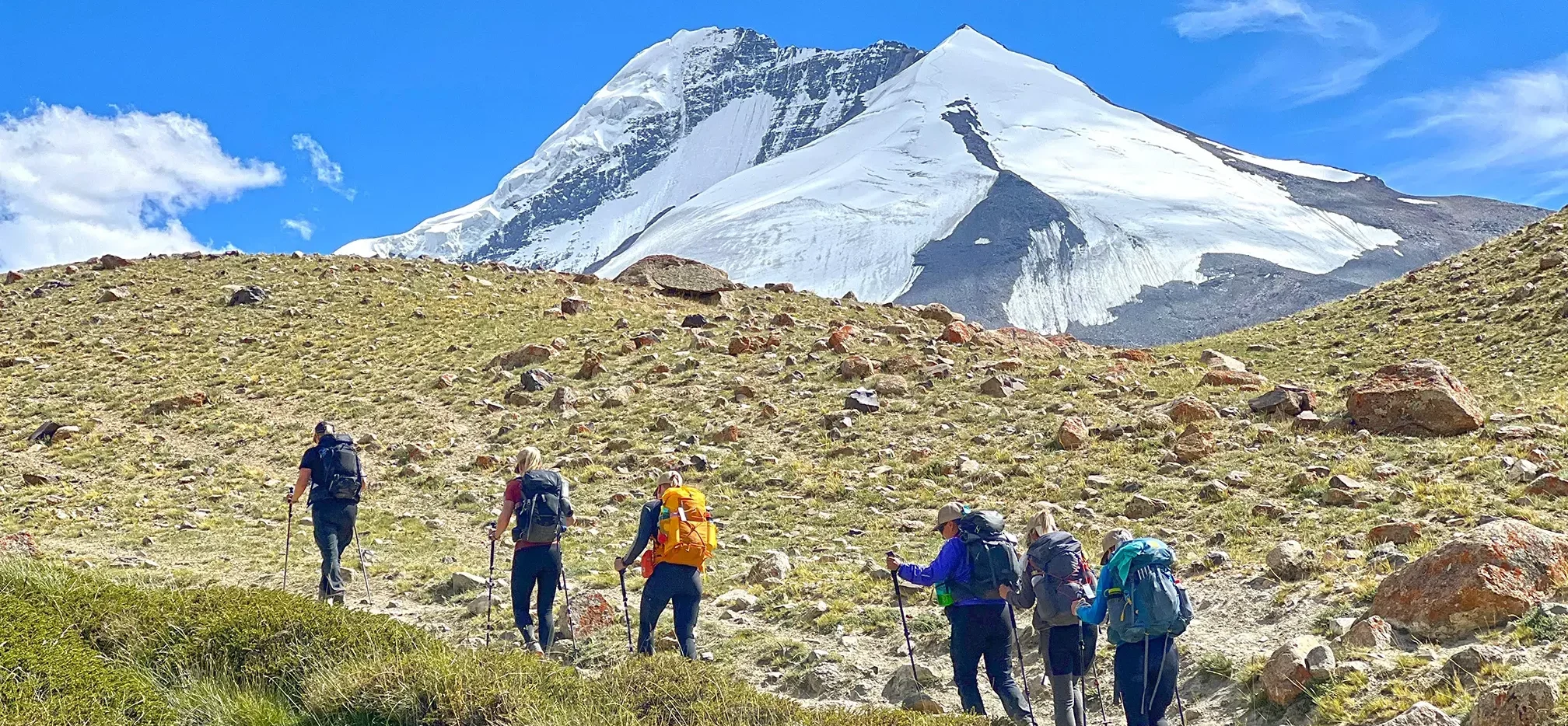
Kang Yatse II is a commanding, throne-shaped peak that dominates the skyline. While its main summit (6,400m) requires technical climbing, we focus on the western summit at 6,250m.
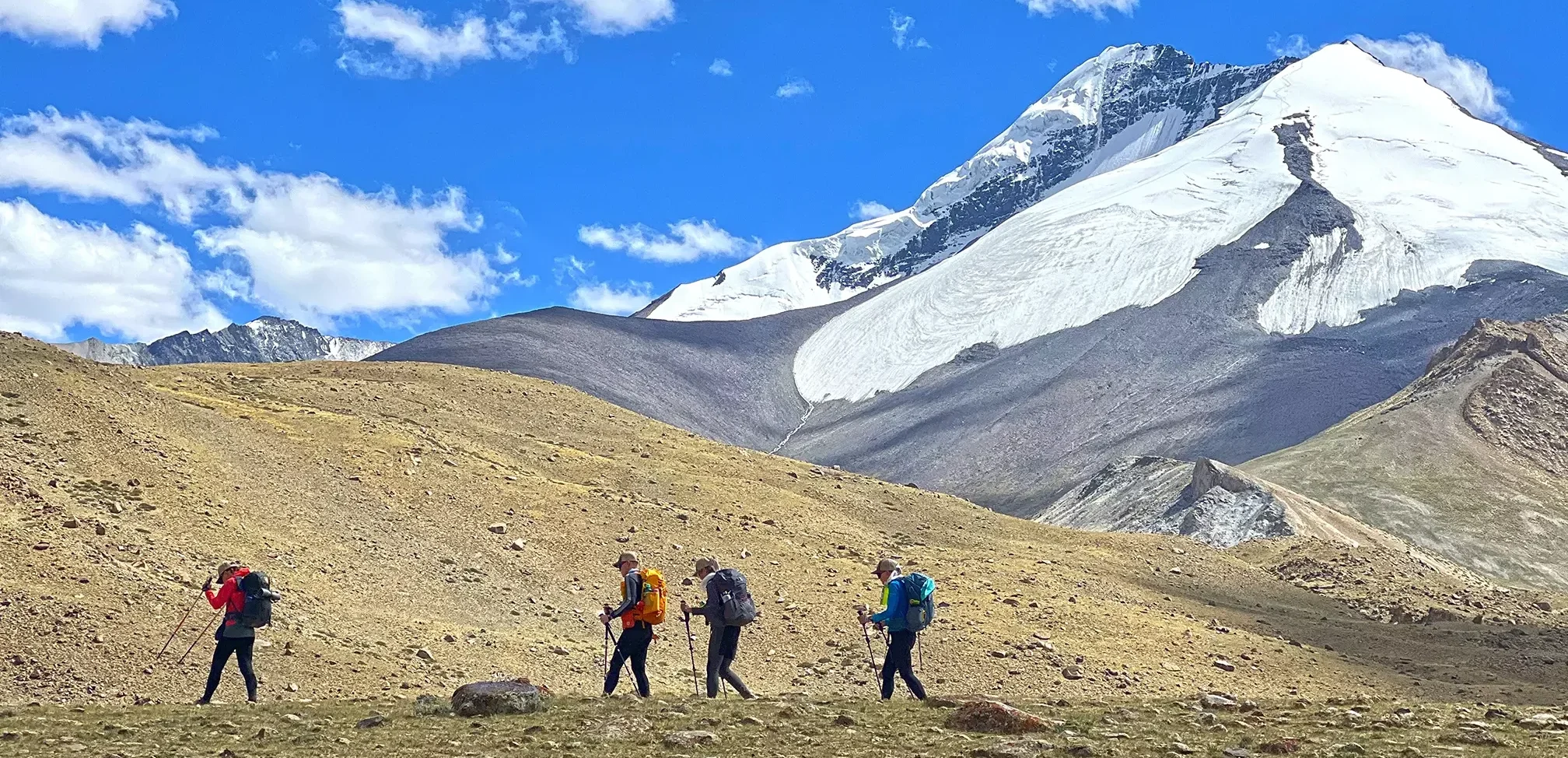
The Terrain: A safe, technically straightforward ascent involving 35-degree scree and snow slopes, culminating in a short, exhilarating ridge climb.
The Challenge: While the climb is non-technical, the 6,200m+ altitude provides a rewarding physical challenge. Previous crampon experience is a plus, but our expert team is there to guide those new to the craft.
The Summit Reward: The summit is a magnificent snow-dome offering a 360-degree views of the mountains surrounding you. On a clear day, the horizon unfolds to reveal the Nun Kun and Zanskar ranges to the West. To the Northwest, you can see views of the giants of the Karakoram—including K2, Broad Peak, and the Gasherbrum Massif.
Overview
Rising majestically above the Markha Valley, Kang Yatze II stands as a sentinel of the Ladakh Range. Kang Yatze at 6,250 meters, is the ultimate gateway for ambitious trekkers ready to step into the world of high-altitude mountaineering. Our expert guides will lead you to the summit of this magnificent peak with the highest safety standard.
While the peak is categorized as ‘trekking-peak,’ its sheer scale requires respect, precision, and a steady hand. Our expedition is designed with a heavy emphasis on proper acclimatization and professional mountain craft. From the lush pastures of the Markha Valley to the final snow-capped push under the stars, we provide a seamless, luxury-supported environment. For those looking to break the 6,000-meter barrier, Kang Yatse II remains the most iconic and rewarding trophy in the Ladakh Himalayas.
Kang Yatze Expedition is Graded II B- Read more about our Grading system
Highlights
- A superb introduction to Himalayan climb
- Climb a 6250m summit
- Experience the magical beauty of Markha valley trek
- Explore Leh
- Visit centuries old monasteries of Hemis and Thiksey
- Day hike through the beautiful villages in the Sham Valley
- Rickshaw ride through the narrow lanes of Spice market in Old Delhi
- Visit to Taj Mahal (add on)
Itinerary
- Fly Delhi to Leh: 1 hour, 30 mins
- Altitude of Leh: 3,600m
Your Arrival in India
On arrival to Delhi, clear immigration and customs, look for the friendly face of our representative at the Main Exit, holding a Hi On Life Expeditions signboard. We will then take a short, 20-minute drive to the domestic terminal for your flight to the mountains.
The Journey to Leh
The early morning flight to Leh is one of the most spectacular mountain flights in the world. As you soar over the Himalayan giants, have your camera ready—the approach into the Indus Valley is breathtaking.
A Note on Security
Leh is a strategically sensitive area, therefore security at both Delhi and Leh airports is very thorough.
Baggage Allowance
The limit for the Delhi–Leh flight is 15kg per person. If you’ve packed a bit extra, don’t worry—excess baggage is usually around $7 USD per kilo.
Ease Into the Altitude
Upon landing at Leh, our team will greet you and transfer you to your hotel. Since we are starting at 3,600m, the most important part of your first day is acclimatization.
Our golden rule is: Relax, hydrate, and move slowly. We recommend drinking plenty of water and keeping your activity to a minimum. A gentle stroll to the nearby local shops is perfect, but the goal is to let your body naturally adjust to the thin, crisp mountain air.
Overnight at Hotel Spic N Span (or similar).
- Altitude range : 3100m - 3500m
- Total driving distance: 90 Kms
- Sightseeing duration with drives: 5 to 6 hours
Today, we delve into the spiritual heart of Ladakh. We begin with a scenic 40km drive to Hemis Monastery, which is tucked away in a hidden gorge. Hemis is the wealthiest and most influential monastery in the region. Belonging to the Drukpa lineage, it was famously re-established in 1672 by the "Lion King" of Ladakh, Sengge Namgyal. Walking through its grand courtyards, you’ll feel the weight of centuries of Tibetan Buddhist history and art.
We then drive to Thiksey Monastery. Perched dramatically on a hilltop, Thiksey is a masterpiece of the Gelug sect. It is often called the "Mini Potala" due to its striking resemblance to the Potala Palace in Lhasa, Tibet. It stands as the largest and most iconic landmark in central Ladakh. The views of the Indus Valley from its upper terraces are simply breathtaking.
The afternoon is yours to enjoy at your own pace. You can enjoy a quiet tea on the roof top restaurants at the Leh market just wander through the market.
Overnight Hotel Spic N Span or similar
- Altitude range: 3500m- 3800m
- Drive distance: 55 kms | Time: 90 mins hours one way
- Trek: 3 hours
Today is a beautiful blend of a road trip and our first taste of the trail. We begin by driving along the banks of the Indus River—a journey that offers some of the most iconic riverside views in the region—until we reach the majestic Likir Monastery.
Our trek begins gently along a mountain road leading toward the Phobe La (3,580m). From the pass, we leave the roads behind and step onto an "off-the-beaten-path" trail. After crossing a river, we begin a steady climb through the valley to reach the summit of Charatse La (3,700m). From this vantage point, the landscape opens up beautifully before we begin our descent into Yangthang. Yangthang is a beautiful Ladakhi agricultural village, where the green of the fields contrasts sharply with the high-desert mountains.
After taking some time to soak in the rural charm of Yangthang, we’ll meet our vehicles for the scenic drive back to Leh. Arriving by late afternoon, you'll have plenty of time to rest and enjoy a warm evening in town.
Overnight Hotel Spic N Span or similar
- Elevation of Sara: 3360m
- Drive distance: 65 kms | Time: 3 hours
- Trek distance: 7 kms | Time: 2 hours
Today, our adventure truly begins. Our morning starts with a stunning drive to Sangam, near the village of Nimmo. Here, you will witness the spectacular sight of the emerald-green Indus River merging with the chocolate-brown waters of the Zanskar River. It is one of the most famous geographic landmarks in Ladakh.
Leaving the Indus behind, we follow the winding Zanskar River upstream, carving our way through deep, colorful canyons until we reach the village of Chilling. Here, we cross the powerful Zanskar and continue our drive toward Skiu. We drive just beyond Skiu for another 3 kilometers to our drop-off point. From here, we trade our vehicles for hiking boots. Our first day on the trail is a gentle introduction—a 7-kilometer walk designed to help you find your trekking rhythm and breathe in the fresh mountain air.
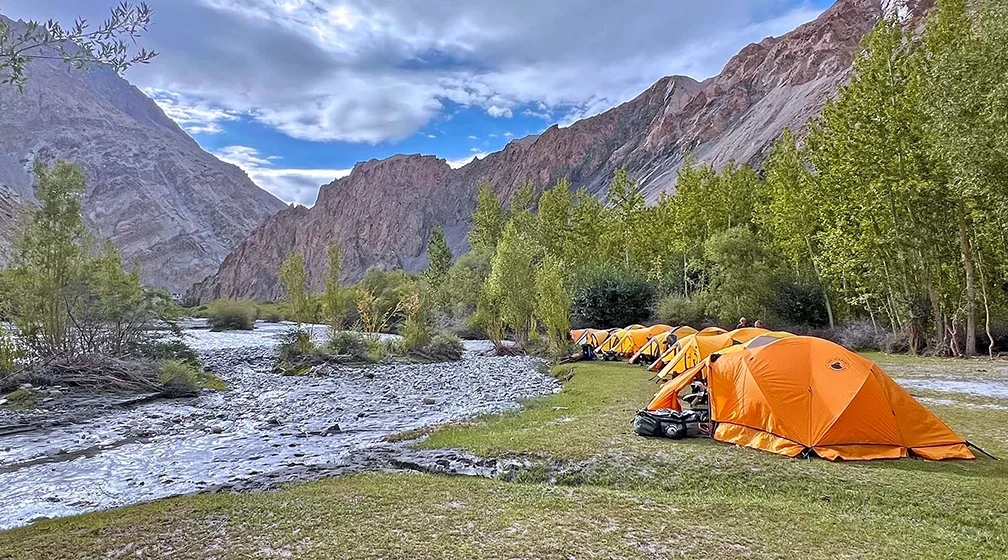
Upon reaching our first campsite, you will have a warm welcome by our staff with a warm drink and your tent waiting for you.
Overnight Camping
- Elevation of Markha: 3760m
- Trek Distance: 10 km | Time: 4 hrs
We follow the winding river as it carves its way through the landscape, leading us through small, traditional hamlets. The trail is relatively easy, allowing you to relax into your pace and enjoy the scenery.
Our destination is Markha, the largest village in the valley. With around 20 traditional households, it’s a bustling hub of mountain life. We will take some time to explore the ancient Gompa (monastery) and climb up to the ruined fort that stands above the houses. From these ruins, you’ll get a fantastic bird’s-eye view of the entire valley below.
Overnight Camping
- Elevation of Upper Hankar: 4,000m
- Trek distance: 11 km | Time: 5 hours
Today’s walk is a beautiful journey through the valley's most iconic landscapes as we follow the winding Markha River. We pass through fields of barley and ancient, crumbling forts perched high on the cliffs above. As we reach Upper Hankar, the valley begins to narrow, and the towering spire of Kang Yatse II makes its first dramatic appearance on the horizon. This is a gentle day designed to build your strength for the climb ahead.
Overnight Camping
- Elevation of Nimaling: 4700m
- Distance: 10 km | Time: 5–6 hours
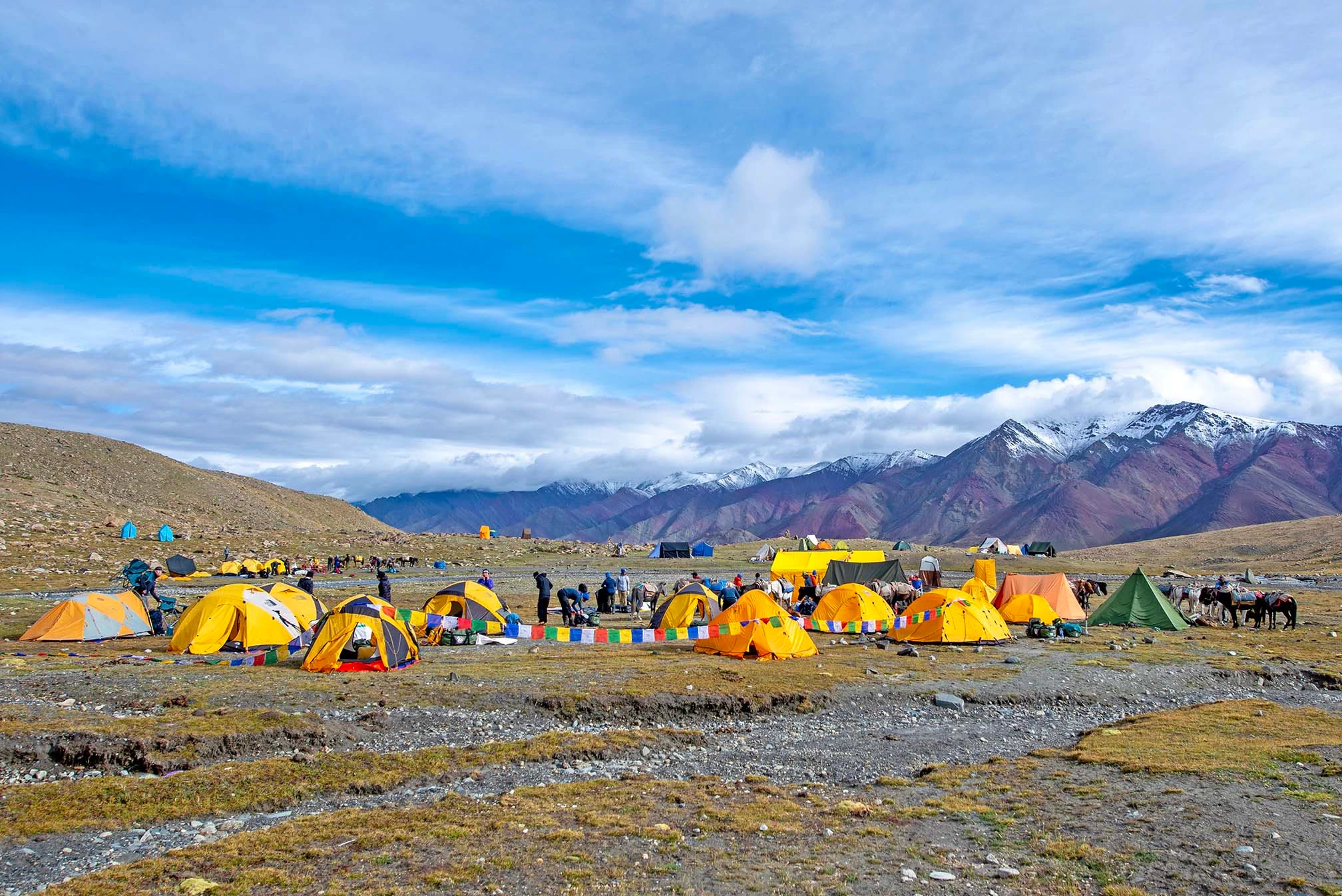
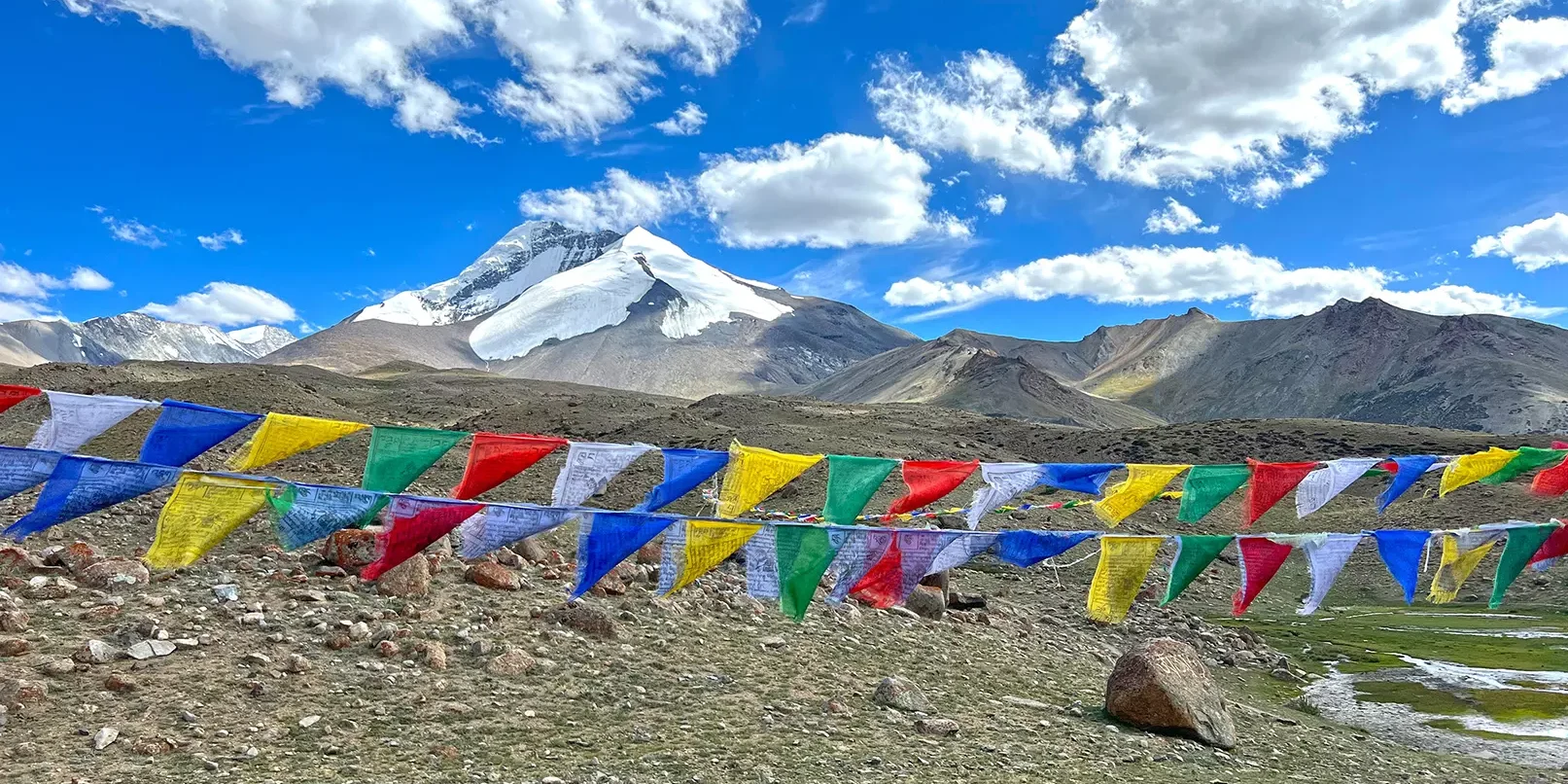
Today, we leave the riverbed behind and begin a steady climb toward the spectacular Nimaling Plains. This is one of the most beautiful high-altitude pastures in Ladakh, where local shepherds graze their yaks and sheep throughout the summer. The air becomes crisper as we reach 4,700m. The views of Kang Yatse from our camp at Nimaling are unparalleled.
Overnight Camping
- Elevation of Kang Yatze Base Camp: 5130m
- Distance: 5 km | Time: 2–3 hours
A short day today. We make a slow move from the main trekking trail to our Base Camp at the foot of Kang Yatze. We arrive early. After lunch you can set up your tent and arrange your climbing gears. Later in the afternoon you can take an acclimatization towards the trail to the summit of Kang Yatze II.
Overnight Camping
Today is all about building confidence and fine-tuning the details. After breakfast, we shift our focus from trekking to mountaineering.
The Gear Clinic
Our guides will lead a specialized, hands-on Gear Clinic right at Base Camp. We’ll organize your climbing kit and ensure everything is perfectly fitted. You will learn the essentials of glacier climbing, including:
- The Art of the Crampon: Learning the rhythmic "flat-foot" walk on snow and ice.
- Ice Axe Foundations: How to use your axe for balance and safety.
- Harness & Rope Skills: Familiarizing yourself with your safety equipment and summit protocols.
Active Acclimatization
After lunch, we’ll take a short, gentle hike to gain a little more height. This "climb high, sleep low" strategy is the secret to a strong summit push. It’s also the perfect chance to test your climbing boots before the summit push.
The Final Prep
We recommend packing your summit bag while the sun is still high and bright. Keep it light and focused—just the essentials. Following an early dinner, we’ll retire to our tents for some "mental rest." The goal is to get a few hours of sleep before our midnight wake-up call, when we begin our journey under the stars toward the summit of Kang Yatze II.
Overnight Camping
- Elevation of Khang Yatse II: 6,250m
- Trek/ Climb: 12 hours return
- Distance: 5 km each way
We begin our summit push around midnight. It is all about focus, rhythm, and the quiet magic of the high Himalayas.
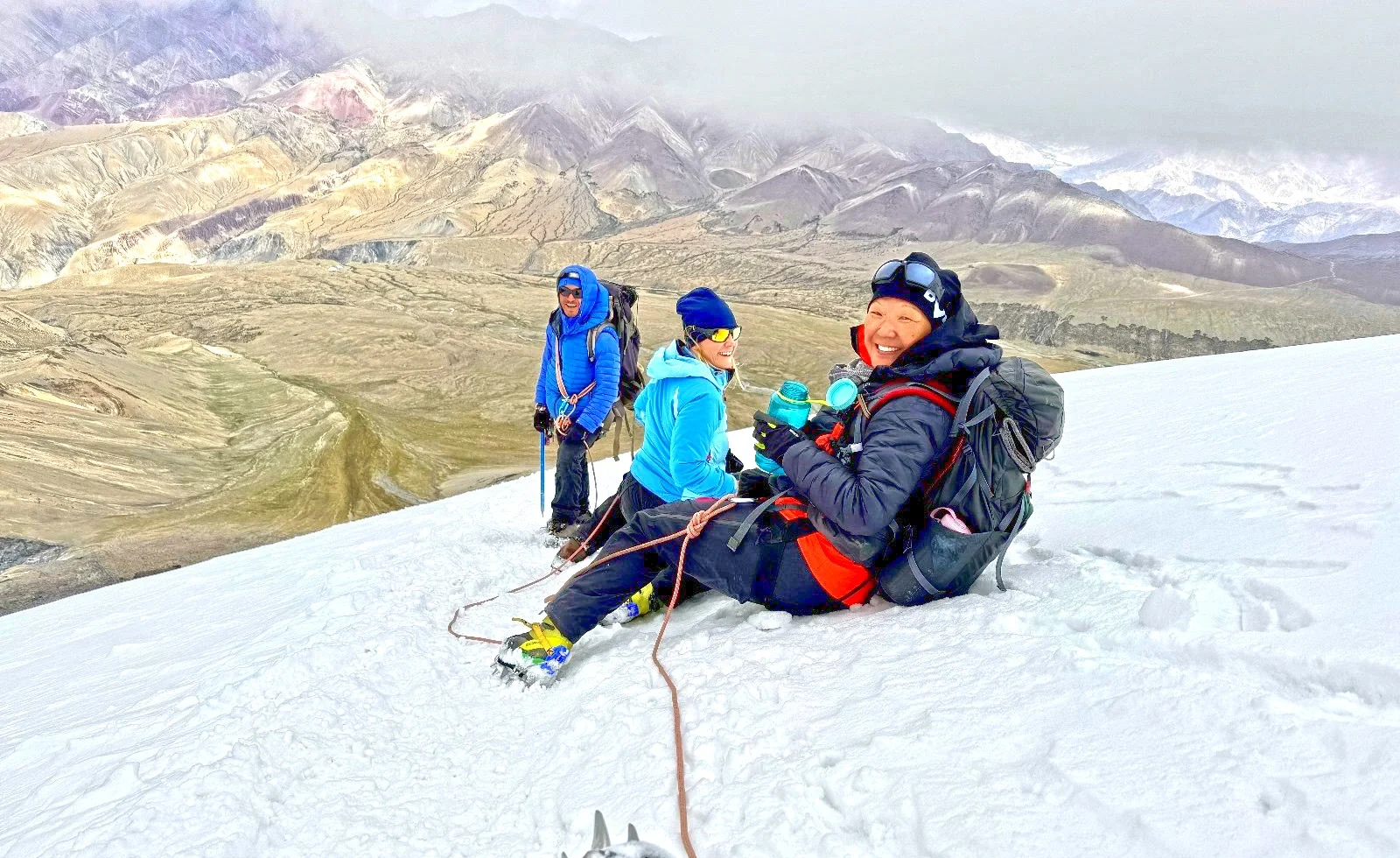
We start our push through the rugged moraine and loose scree at the base of the mountain. As we reach the glacier, we’ll move into rope teams. Your safety is our priority, and traveling roped-up allows us to navigate the snow and potential crevasses with total confidence.
Our path follows the North Face, winding along the Northwest Ridge until we reach the Kang Yatze Shoulder. From here, the final stretch to the summit is a steep, exhilarating climb.
The Summit: A 360-Degree Theater
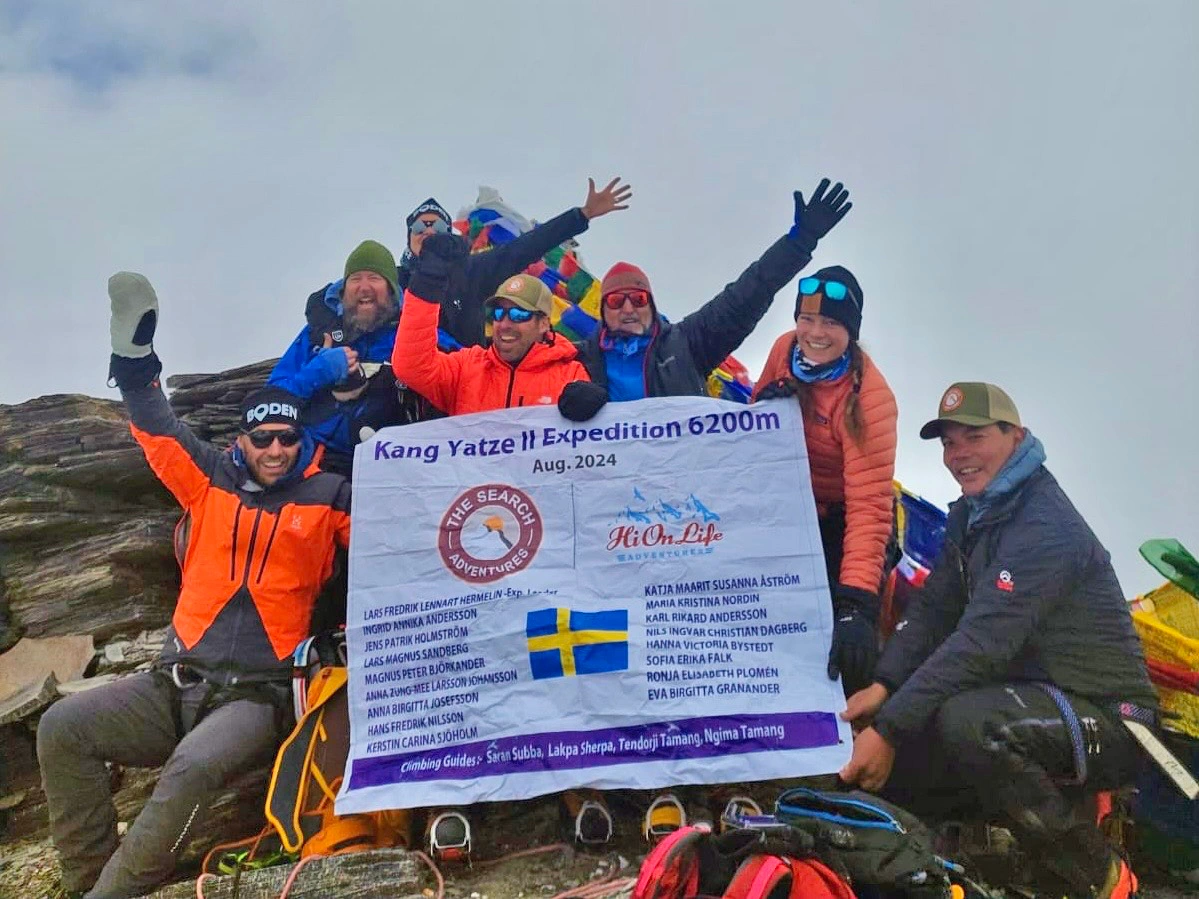
Reaching the 6,250m crest of Kang Yatse II is an unforgettable moment. You are surrounded by the jagged Zanskar range and the countless peaks of the Ladakh Himalayas. On a clear day, the horizon reveals the giants of the Karakoram, including the legendary K2 and Broad Peak, standing nearly 200km to the North. To the East, the vast, mysterious peaks of Tibet stretch out toward the morning sun.
The Journey Home
After a few victorious moments to soak in the views and take photographs, we begin our descent. While the summit is the goal, the journey isn't over until we are back at Base Camp. We’ll take the descent slowly and cautiously, moving mindfully over the scree and moraine.
By the time we reach camp, a warm meal and the deep satisfaction of a successful climb will be waiting for you.
Overnight Camping
Contingency day is to account for bad weather or other unforeseen circumstance.
- Elevation of Kongmaru La: 5200m
- Elevation of Chokgdo: 3900m
- Trek distance: 16 kms | Time: 7-8 hours
- Drive distance: 60 km | Time: 2 hrs
Today, we bid farewell to Kang Yatse and begin our journey back toward the valley, crossing one last spectacular threshold: the Kongmaru La. We trek down to Nimaling and then begin a steady, rhythmic climb toward the pass.
After soaking in the views from Kongmaru La, we begin a long, steady descent. The landscape shifts dramatically as we leave the high ridges and enter a deep, winding canyon. Here, the earth turns shades of deep red and purple, with gravity-defying rock formations and narrow passages that feel like a hidden world.
The trail follows the stream through this geological cathedral until we finally emerge into the welcoming greenery of Chogdo. Our cars will meet us here and we drive to Leh.
A Warm Welcome Back: Leh & Our Farewell Celebration
Upon arrival, we’ll check back into our hotel, where the greatest luxury of all awaits: a long, hot, well-deserved shower.
In the late afternoon, we’ll head to the vibrant Leh Market. You can take the last opportunity for shopping or just want to enjoy a coffee while watching the world go by.
The Farewell Ceremony
This is the heart of the expedition—a night of laughter, shared stories, and deep gratitude, as the entire Hi On Life family comes together for our final celebration dinner. This is the moment where we distribute the collected staff tips as a gesture of thanks for their incredible hard work and friendship.
- Fly Leh to Delhi: 1 hour 30 mins
We board an early morning flight from Leh back to New Delhi. It’s one last chance to see the Himalayan giants from above before we return to the vibrant energy of the plains.
Upon landing in Delhi, we’ll head straight to our hotel and freshen up.
Old Delhi tour
At around 3:00 PM, we meet our local guides from Delhi and we set out on a subway ride to explore Old Delhi. Prepare for a sensory explosion as we enter Chandni Chowk. We’ll take cycle rickshaws to navigate the legendary narrow lanes of the Chandni Chowk. We get off the rickshaw at Khari Baoli and take the guided sightseeing tour on foot.
Highlights of the tour:
Khari Baoli (The Spice Market): A world-famous hub where the air is thick with the intoxicating aromas of turmeric, cardamom, and chilies.
The Bride’s Market: A vibrant kaleidoscope of colors, overflowing with intricate jewelry and traditional wedding finery.
This is "Real India"—a place where history is alive, the noise is symphonic, and the energy is contagious. It’s a fascinating contrast to the quiet mountain trails we’ve just left behind.
After an afternoon of exploring, we’ll return to the hotel. In the evening we will meet for a last dinner in India.
Accommodation: Overnight at our Hotel in Aerocity.
You will be picked up from your hotel and driven to Indira Gandhi International airport 4 hours before departure time.
Cost
Cost Includes
- Arrival/ departure and all internal transportation while in Delhi in private vehicles
- Welcome dinner at Delhi’s finest Indian restaurant
- 2 nights hotel in Delhi at 5 star hotel
- ½ day sightseeing in Delhi with rickshaw ride through the narrow lanes of the Spice Market and Bride’s Market
- Round trip flight from Delhi / Leh/ Delhi
- 5 nights in Leh at tourist class hotel with all meals
- Transfers from airport/ hotel/ airport in Leh
- All Monastery fees.
- Wild life fee and Kang Yatze Expedition permit fees
- 1 English speaking guide
- 1 Experienced Climbing Sherpa from Nepal
- 1 Experienced Cook from Nepal
- Local kitchen helpers and mule herder with mules
- All meals while camping with all camping facilities
- Boiled and treated water 3 times a day
- Sleeping tent/ dining tent with comfortable tables and chairs/ kitchen tent/ toilet tent and shower tent
- Combination of Ridge mat and Exped 7 W Down Mattresses for sleeping in the tent
- Complimentary Hi On Life duffle bag (90 litres) to take away
- Use of 1 sleeping bag (-20C/ -4F) with fleece inner liner for sleeping bag
- Use of Hi On Life down jacket and rain poncho
- 15 kgs personal baggage allowance per member
- Bottled oxygen with mask & Regulator for Medical Use
- All personal climbing equipment except climbing boots and crampons
- Staffs Insurance/ wages and equipment allowance
- Extension: Transportation to Agra and back in private A/C car, Full day sightseeing in Agra (Taj Mahal and Agra fort), 1 night at 5 star hotel in Agra, 1 night at 5 star hotel in Delhi
Cost Excludes
- Insurance: Travel/Accident/Medical /emergency evacuation
- Private room accommodation in Delhi and Leh unless a single supplement is paid.
- Staff tipping
- Indian Visa
- Telephone, laundry, mineral water, soft drinks and alcoholic beverages.
- Emergency rescue evacuation cost if needed
- All other personal nature expenses.
Map
Markha valley trek
The Markha valley is part of the Hemis National Park, home to snow leopard and other wild animals.
The Markha valley trek is a very famous trek and all the villages in the valley offer homestay which is a nice opportunity for travellers to catch a glimpse of the daily lives of the villagers.
Optional Extension
Day 17: Drive to Agra and visit Agra Fort / Overnight hotel in Agra
Day 18. Early morning visit to Taj Mahal and drive back to Delhi / Overnight hotel in Delhi
Day 19: Trip ends- Departure
Recommended preparation:
To ensure you fully enjoy the majesty of the Himalayas and a maximum possibility to stand triumphantly on the summit, a good level of physical conditioning is essential. Success on a 6,000m peak is built on stamina, consistency, and prior altitude experience.
Our Recommended 6-Month Preparation Plan:
Aerobic Endurance: We recommend a consistent running routine of 45 to 60 minutes, at least twice weekly. To simulate mountain conditions, focus on undulating outdoor terrain or utilize a treadmill with a sustained incline.
Cardiovascular Variety: To build a robust heart and lung capacity, cross-training through cycling or swimming is highly encouraged as an excellent low-impact supplement.
The “Weekend Warrior” Routine: Nothing prepares the body for the trail better than the trail itself. Dedicate your weekends to long-distance day hikes in variable weather conditions, carrying a weighted day pack to build functional strength and mountain resilience.
Prerequisite Experience: Given the sustained nature of this expedition, previous experience trekking at high altitudes is a mandatory requirement for your safety and enjoyment.
A Day On Your Trek:
Life on the expedition follows a well-orchestrated rhythm designed to balance physical exertion with deep relaxation. While the pace of each day is naturally influenced by the weather and the group’s comfort, a typical day unfolds as follows:
A Gentle Awakening
The day begins between 6:00 and 6:30 AM with “bed tea” or coffee brought directly to your tent, followed by a bowl of warm water for your morning wash. While you enjoy the early mountain light, you’ll pack your duffel for our porters and prepare your daypack for the journey ahead.
The Morning Trek & Picnic
A hearty breakfast is served in the dining tent, after which we “hit the trail.” The morning walk typically lasts 3 to 4 hours, winding through Ladakh’s spectacular terrain. Around midday, we pause for a scenic picnic lunch. We allow an hour of rest here—a perfect time to hydrate, soak in the views, and recharge.
Afternoon & Camp Serenity
The afternoon walk continues for another 3 to 4 hours until we reach our next camp. Upon arrival, you’ll be greeted with fresh tea, coffee, and snacks. The remainder of the afternoon is yours to enjoy—explore a nearby village, capture photographs, or simply lose yourself in a book amidst the Himalayan silence.
Mountain Gastronomy & Hydration
We believe that high-altitude success begins in the kitchen. Our dedicated culinary team prepares a sophisticated, balanced diet designed to sustain your energy levels.
Breakfast: A nourishing start with eggs, cereals, and freshly baked breads.
Lunch: Nutrient-rich “tiffin” style meals, portable yet satisfying for the trail.
Dinner: A refined three-course meal served around 7:00 PM. Our chefs pride themselves on variety, serving everything from fresh local vegetables and pastas to surprise treats like mountain-baked pizzas and cakes.
Nutritional Balance: We ensure an optimal intake of carbohydrates, proteins, and vitamins to fuel your ascent. Our supplies include fresh produce, eggs, cereals, and quality canned meats and fish.
Pure Hydration: Water is the lifeblood of acclimatization. We provide boiled and treated water three times daily, ensuring you remain perfectly hydrated throughout the expedition.
High Altitude
On this expedition, we reach a peak of 6250m. At this height, understanding altitude is essential for your safety and success. The biggest risk is climbing too high, too fast. We have carefully designed our itinerary to prevent this. We move slowly and surely, giving your body the time it needs to adapt.
What to Expect
It is very common to feel a bit breathless or have a mild headache. This is normal and usually nothing to worry about. However, in rare cases, these symptoms can develop into Acute Mountain Sickness (AMS).
Your Guide is highly trained to spot the early signs of AMS, such as:
- Severe, persistent headaches
- Nausea or loss of appetite
- Extreme lethargy
- Shortness of breath even while resting
Your Safety is Our Priority
Our team keeps a close watch on everyone. If a trekker shows serious symptoms, they must descend to a safer altitude immediately. The Group Leader’s decision regarding safety and evacuation is final.
Tips for Success
Move Slow: A steady, “leisurely” pace is the secret to reaching the top.
Hydrate: Drink 3 to 4 liters of water every day.
Communicate: Never medicate yourself without talking to your guide first.
You will likely feel the thin air while climbing, but don’t let it worry you. Our expert team is with you every step of the way to ensure you are safe, healthy, and ready for the summit.
The Team Behind Your Journey
On every expedition, you are supported by a hand-picked crew who treat you like family. Here are the people who make the magic happen:
Your Guide: The Guardian of Your Experience
Your Guide is the most vital member of our staff and your primary point of contact. More than just a guide, they are highly trained specialists in high-altitude medicine, first aid, and emergency procedures. With a deep passion for conservation and local history, they don’t just lead the way—they bring the stories of the mountains to life while keeping your safety as their absolute priority.
The Sirdar: Our Master of Logistics
The Sirdar is the “engine room” of the trek. He manages the entire operation on the ground, from overseeing staff duties to selecting the perfect, most scenic campsites. His expertise ensures that the camp runs like clockwork, allowing you to relax the moment you arrive.
Our Sherpas: Your Pathfinders and Pillars
Sherpas are the backbone of the climbing industry. Our Sherpas are there to ensure you never have to worry about the trail. They lead the way, assist in managing the camp, and help with the pack animals. Most importantly, always by your side to offer a helping hand—or a steadying arm—whenever the terrain gets challenging.
On the mountain, they are your climbing buddy. They not only secure the climbing route and fix ropes but also guide you safely to the summit and back down.
The Horsemen & Their Team: Our Mountain Strength
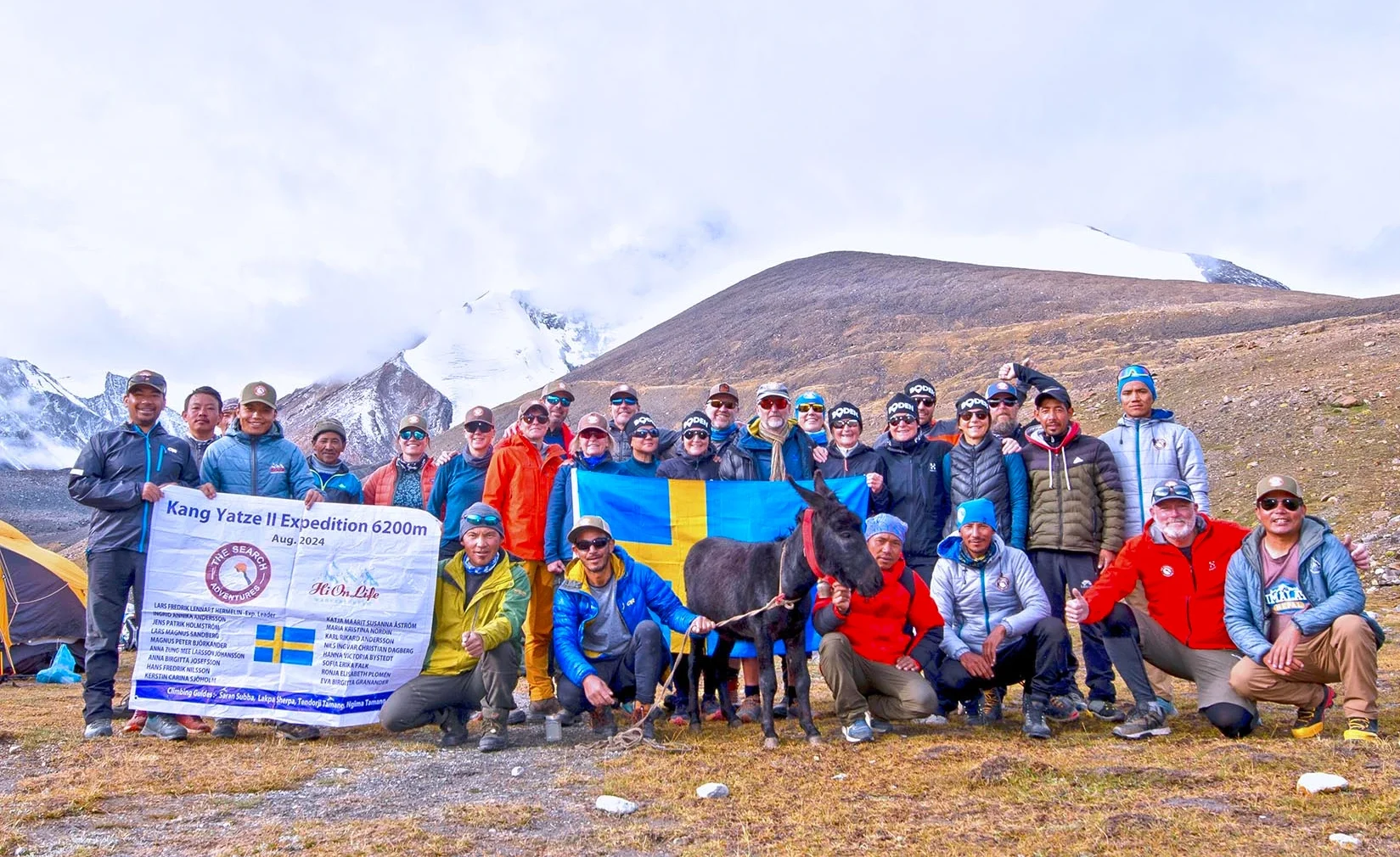
Behind the scenes, our skilled horsemen and their hardy teams of horses and mules carry the heavy luggage and equipment. These handlers have an intuitive bond with their animals and navigate the rugged passes with incredible grace, ensuring your gear arrives safely at every camp.
Please note: In our Ladakh trips, we do not use porters.
Weather
The ideal window for this expedition is June through August. During these summer months, Ladakh is lit in beautiful high-altitude sunlight. However, mountain weather is famous for its sudden shifts, and we want you to be prepared for every mood of the sky.
Daytime Warmth & Sun: In the valleys between 3500m to 4000m it can feel quite tropical, with temperatures reaching up to 28°C in the sun. Because the mountain air is thin, the sun’s rays are very strong—protection is key here. Above 4000m, daytime temperatures will be between 15C to 20C
Ladakh is a land of dramatic contrasts. You might be hiking in a T-shirt in 28°C+ heat, but as soon as the clouds roll in, you feel the temperature plunge below 10°C within the hour. Carrying a light layer in your daypack is the essential to staying comfortable.
Crisp Mountain Nights: Once we move above 4,500m, the air turns crisp. While the days remain pleasant, night-time temperatures can dip just below freezing.
The Rain Shadow: While Ladakh sits in the rain shadow protected by the Great Himalayas, we are trekking during the monsoon season. You might encounter a brief, refreshing mountain shower, but these are usually short-lived.
Summit Day: The Final Push begins around midnight. Expect true alpine conditions. Temperatures typically hover between -2°C and -5°C, but the wind-chill factor can make it feel much colder. We will guide you on exactly how to layer up so you stay warm and focused as you head toward the top.
Gear recommendations:
Head:
- Warm hat wool or synthetic that covers your ears
- Sunhat
- Glacier sunglasses with side shields
- Headlamp with extra batteries
- Bandana or head scarf, also useful for dusty conditions
Upper Body:
- 2 cotton t-shirts for warm days
- 2 polypropylene or wool mix long sleeve t-shirts
- 2 long sleeve thermal underwear shirts, lightweight preferably woolen
- 1 polar fleece pullovers medium weight or 1 heavy wool thermal underwear
- 1 polar fleece jacket, OR Primaloft/ Down light weight jacket
- Gore-Tex jacket with hood, waterproof and breathable
Please note: We provide 1 very warm goose-down jacket with hood for high altitude.
Hands:
- 1 pair light weight wind stopper gloves
- 1 pr. lightweight poly-liner gloves
- 1 pair mittens, consists of 1 Gore-tex over mitt matched with the warm polar Fleece mitt liner
Lower Body:
- 1 pair walking shorts
- 1 to 2 pair walking trousers for trekking
- 2 pair lightweight thermal bottoms
- 1 pair medium or expedition weight thermal bottoms
- 1 pair Primaloft OR light weight down trouser for evenings at Base Camp
- 1 pair Gore-Tex trousers, Waterproof/breathable with side zips
Feet:
- 1 pair trek/climb boot preferably for 6000m+
- 1 pair trainers (running shoes) and/or sandals for Delhi, Leh and in camp
- 2 pair med-heavy preferably wool socks
- 2 to 3 pair of liner socks. Polypropylene or wool
- 2 to 3 pair lightweight trekking socks, poly or wool
Sleeping:
We provide the following:
- 1 down sleeping bag (rated to – 20 Centigrade or -4 F )
- 1 polar fleece liner
- Exped Down 7W mattres and foam kari-mats.
Rucksack and Travel Bags:
Please note: We provide one Hi On Life Expedition (85 litres) duffle bags for each member.
- 1 medium rucksack (30-35 litres)
- Small padlocks for duffel kit bags.
Accessories:
- 1 small roll of repair tape, 1 sewing repair kit
- Nylon stuff sacks for food and gear storage, large Ziplocs are useful also
- 2 Water bottles (1 litre each)
- Books, playing cards, games etc
- Adequate amount of batteries, etc.
- Money belt
- Toiletries: Your essentials. We provide toilet papers
- Towel: Quick dry travel towel
- Penknife
- Disposable lighter
- Medical kit: As per your prescriptions.
Our guide carries a comprehensive medical kit at all times
This includes essential outdoor medicines, professional first aid supplies, and specialized high-altitude medications. We also carry medical oxygen to ensure your safety and well-being throughout the journey.
Optional
- Walking sticks ( highly recommended)
- Cameras
- Knee guard for those with bad knees.
- Daytime snack (chocolates/ dry fruit trail mix)
Healthy and trouble free holiday
Comprehensive Travel Insurance is mandatory
We require all guests to carry comprehensive travel insurance. Please ensure your policy covers baggage loss, flight delays, and medical expenses. Most importantly, it must include emergency evacuation at high altitudes.
Health & Vaccinations: We recommend consulting your doctor or a travel clinic at least two months before departure regarding vaccinations for Typhoid, Meningitis, Polio, and Hepatitis.
Prescriptions & High Altitude: If you are on any regular medication, please bring a sufficient supply for the entire journey. Some medications—including certain anti-malarials—can have side effects at high altitudes. We suggest discussing your trekking plans with your doctor to ensure your prescriptions are mountain-friendly.
A Note on Malaria: The trekking routes in Ladakh are mosquito-free, and there is no risk of malaria in the regions where we spend our time.
Personalized Nutrition: We take great pride in our mountain cuisine. If you have any allergies or specific dietary requirements, please let us know in advance. Whether you are vegan, gluten-free, or have a specific allergy, we will ensure your meals are both safe and delicious.
Managing Your Finances
Currency & Exchange: The most convenient currencies to bring are USD or Euro, which can be easily exchanged upon arrival in New Delhi or Leh. You will also find reliable ATMs in both cities if you prefer to withdraw Indian Rupees (INR) directly.
Current Reference Rate: $1 USD is approximately ₹90 INR (Please check for daily fluctuations).
Meal & Personal Expenses
Your expedition is nearly all-inclusive, but you should plan for a few meals in the city:
In Delhi: Please budget for one lunch and one dinner.
Optional Agra Extension: If you are joining us for the Taj Mahal visit, plan for two additional lunch and one dinner.
City Dining: Delhi and Agra offer everything from street food to fine dining. A good meal typically ranges from $10 to $20 USD, plus drinks.
City Transport: If you choose to explore the cities independently, we suggest budgeting $20 to $30 USD for taxis and local transport.
Pocket Money on the Trail: While there are very few places to spend money once we are in the mountains, you may occasionally pass a small trail-side tea shop selling chocolates or soft drinks. We recommend carrying about $5 to $10 USD per day in local currency for these small treats or for making modest donations at the monasteries we visit.
The Tradition of Tipping
Tipping is a heartfelt way to show appreciation for the hard-working team that supports your journey. While entirely optional, the following guidelines help ensure your gratitude reaches the right hands.
In the Cities: For bellboys, waiters, and hotel porters, a small gesture of ₹100 to ₹200 INR is customary.
On the Trek: It is a mountain tradition to thank the field staff at the end of the journey. We suggest a total tip of $200 to $250 USD per guest, depending on the group size.
Our “Farewell Ceremony” Process
To make this easy for you, your Guide will collect the total amount, divide it fairly based on each staff member’s responsibility, and place it in named envelopes. These envelopes are then handed back to you so you can personally present them to the crew during our traditional Farewell Ceremony.
Cultural Etiquette- Do’s and Don’ts
Ladakhi people treat visitors as special guests. Although they will never rebuke you publicly for unknowingly offending them, we must consider their culture. While in Ladakh please observe the following:
- Full or partial nudity is not accepted.
- Over display of affection between men and women, especially in temples and monasteries are discouraged.
- Please remove your shoes before entering monasteries and temples.
- Never point the soles of your feet at a person or shrine.
- Locals walk around the Mani walls and Stupas in a clockwise direction as a respect and they expect you to do the same although it is not compulsory.
- Please ask before taking pics of a person or his/her child
Some useful tips while traveling in Delhi and Agra
Dress code
Dress sensibly. For men- knee length shorts and t shirts and sandals are best to cope up with the heat but in some temple and mosques you need to wear long trousers. For women it would be wise to cover up and dress modestly to avoid unwanted advances. Light cotton trousers or knee length skirts are ideal. Avoid too high cut shorts and bare back dresses.
Personal space
The concept of personal space is almost nonexistent in almost all over India. Whether you’re standing in a queue or walking in a crowded Bazaar, get used to moving shoulder-to-shoulder.
People in North India tend to stare a lot
Please don’t be offended because most of them do this out of curiosity. Easy way to deal with this is to not make direct eye contact with strangers and passersby. Get used to it and don’t let this make you uncomfortable. Wearing sunglasses helps a lot ignore staring.
Bargaining skills
In shopping malls the prices are fixed and you cannot bargain. However, in rest of your shopping adventure, it is inevitable that you will be exploited to a certain degree. The simple fact is that most vendors know you have money. Skillful bartering takes practice- a beginner’s rule of thumb is to cut the starting price in half and then work your way to a middle ground.
Beware of Pickpockets
The streets of Delhi can become very crowded, exposing you up to a risk of being easily pick-pocketed. Keep your money in your money belt or in a forward facing backpack. If you need to take money out of your wallet, it is best to do it with least possible exposure of the wallet.
Beggars
You will likely see things that strike your emotional core, but it is important to realize that these are deep rooted problems with no easy fix. Moreover if you give money to one beggar, within seconds you will find yourself surrounded by a dozen other beggars from children to adults. Also keep in mind that beggar mafias control much of the inner city.
Street Hawkers
When you walk out of the sightseeing points you will meet several hawkers trying to sell you small souvenirs from pics and all sorts of things. Do not engage in a bargain or conversation unless you really want to buy them. They can be very pushy sometimes.
Go With the Flow
Despite the fact that the cities in India can be tiring with all the staring, crowded streets, beggars, pestering hawkers’ etc. try not to care about the small stuff. If you get caught up and stress about the little things, you will miss out on the bigger picture, which is that you are in one of the most distinctive and important cities in the world. The city will often come to feel like another planet entirely.