Manaslu Expedition- Climbing the “Mountain of the Spirit”
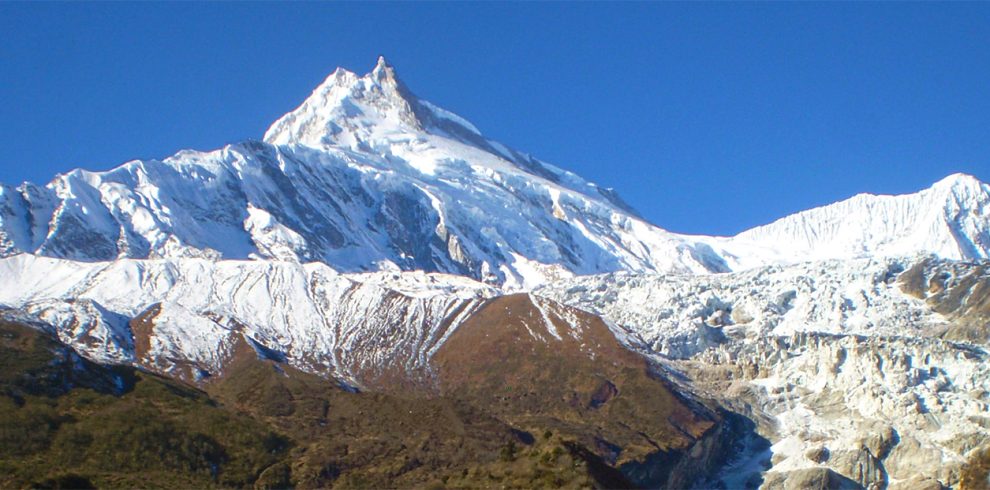
Manaslu, which translates to the “Mountain of the Spirit,” stands as the eighth-highest peak in the world at 8,163 metres (26,781 ft). This majestic mountain was first successfully climbed on May 9, 1956, by Toshio Imanishi and Gyalzen Norbu. Mt. Manaslu is known as the most accessible 8,000-meter peak in Nepal.
Climbing Mt Manaslu is technically not more demanding than Cho Oyu or Shisha Pangma. Manaslu is relatively easier than most other 8000m peaks in the Himalayas. Hi On Life Expeditions operates Manaslu expedition during the autumn climbing season for over 40 days.
The Scenic Trek to Manaslu Base Camp
Your adventure begins in Macha Khola. You will follow the winding Budhi Gandaki River through lush forests and terraced fields. The trail passes through small, traditional villages like Jagat, Deng, Namrung, and Samagaon. In these villages, locals live much like they have for centuries, offering a glimpse into a preserved way of life.
After reaching Samagaon, we spend a couple of days for essential rest and acclimatization. Once our Manaslu Expedition base camp is ready, we proceed to the base camp to begin the climbing phase.
Climbing the North East Face
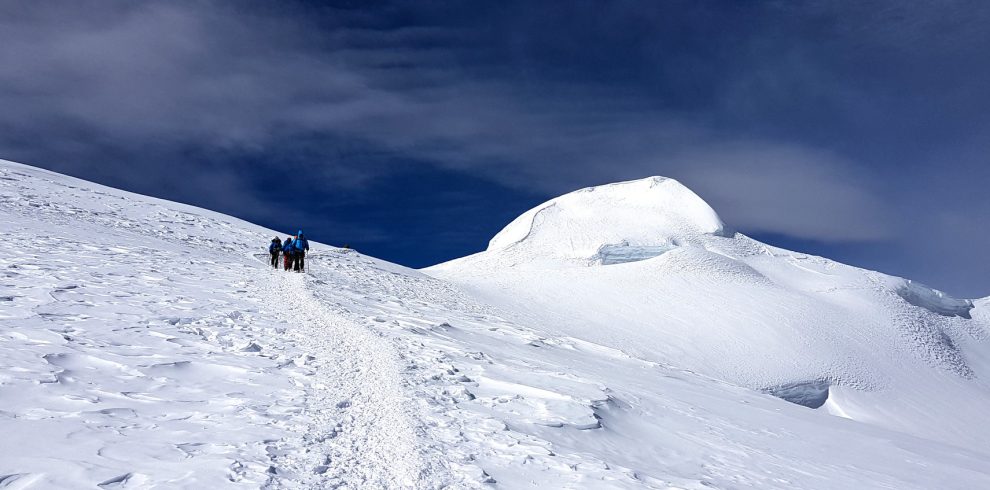
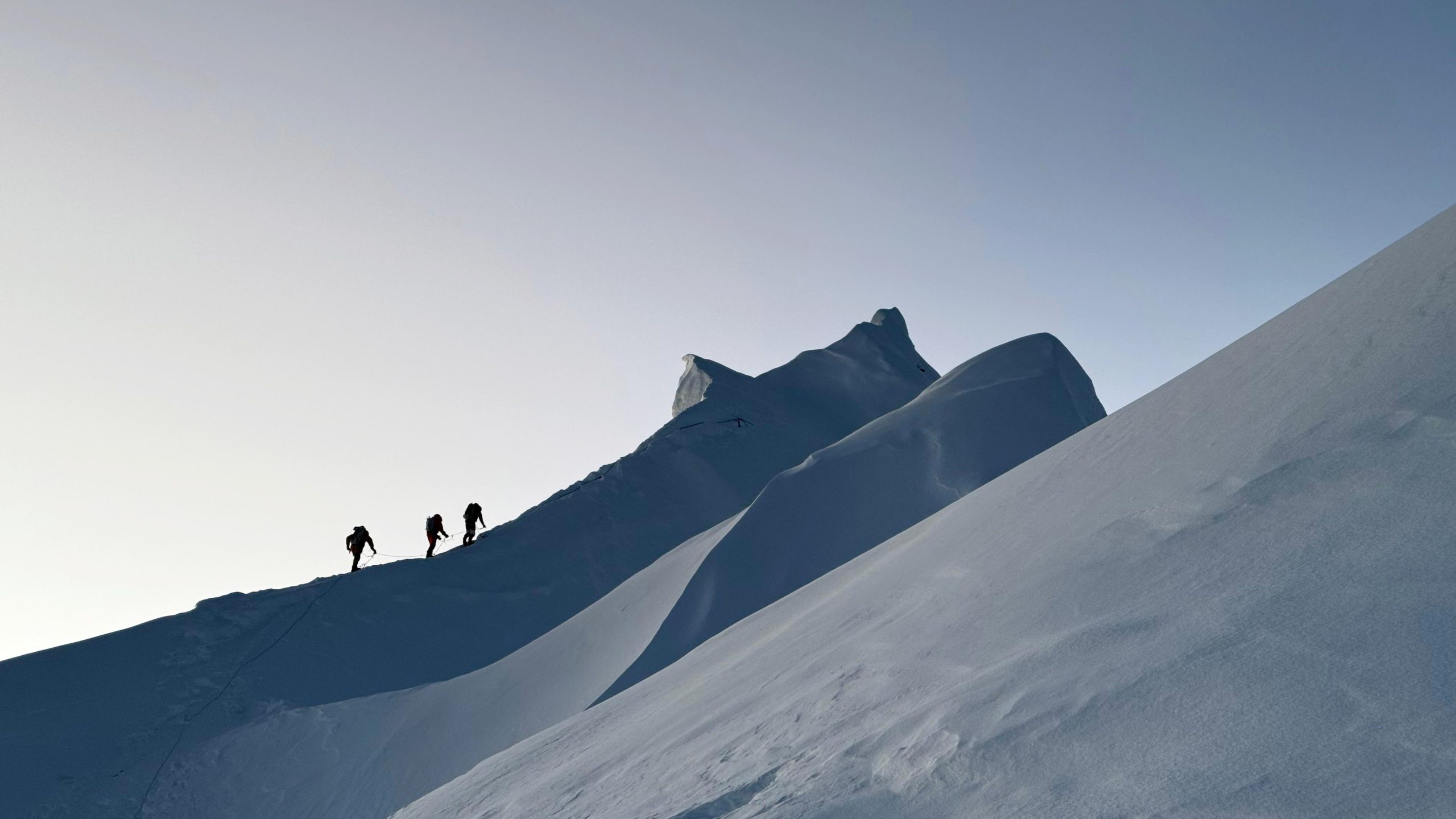
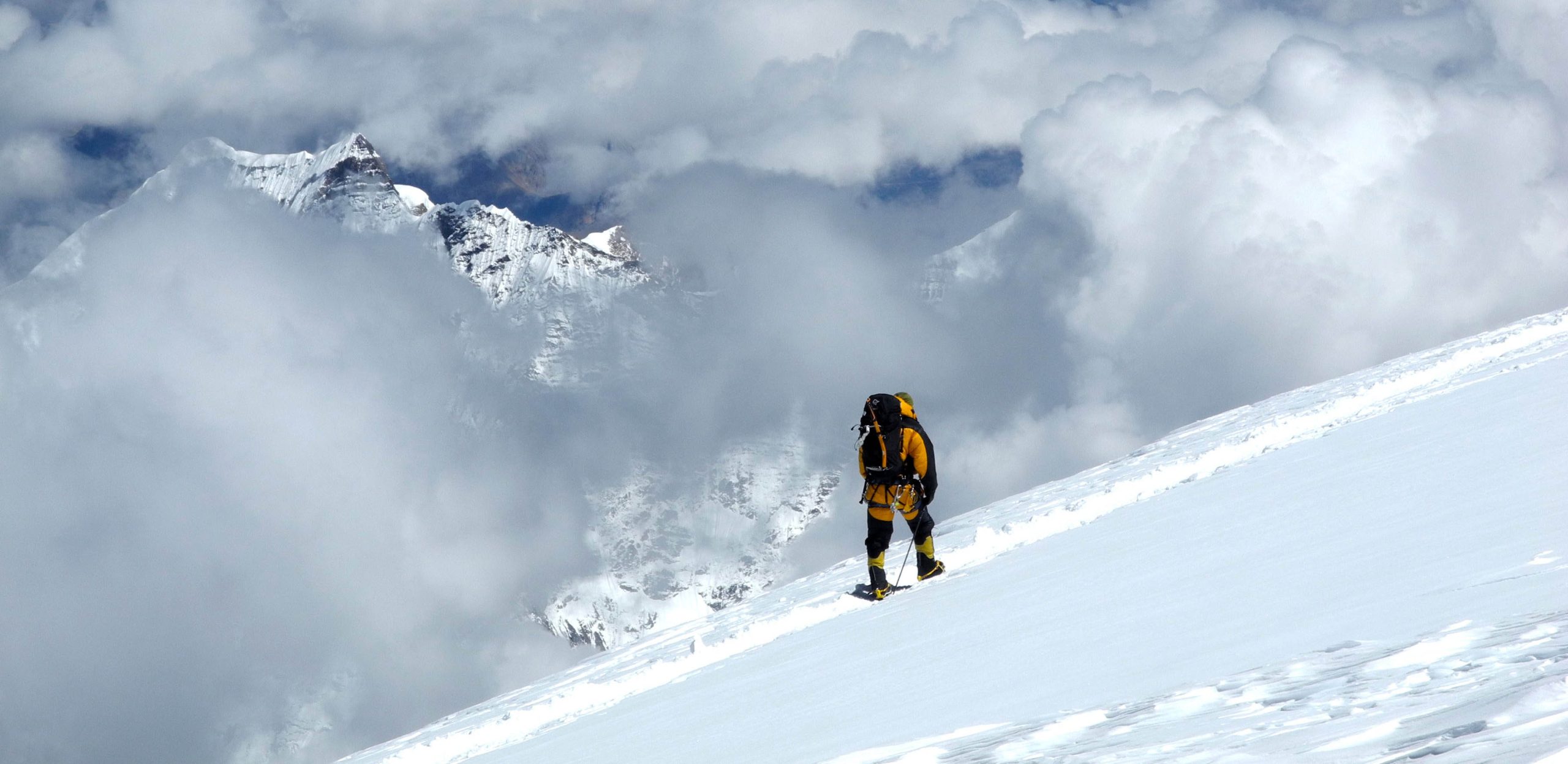
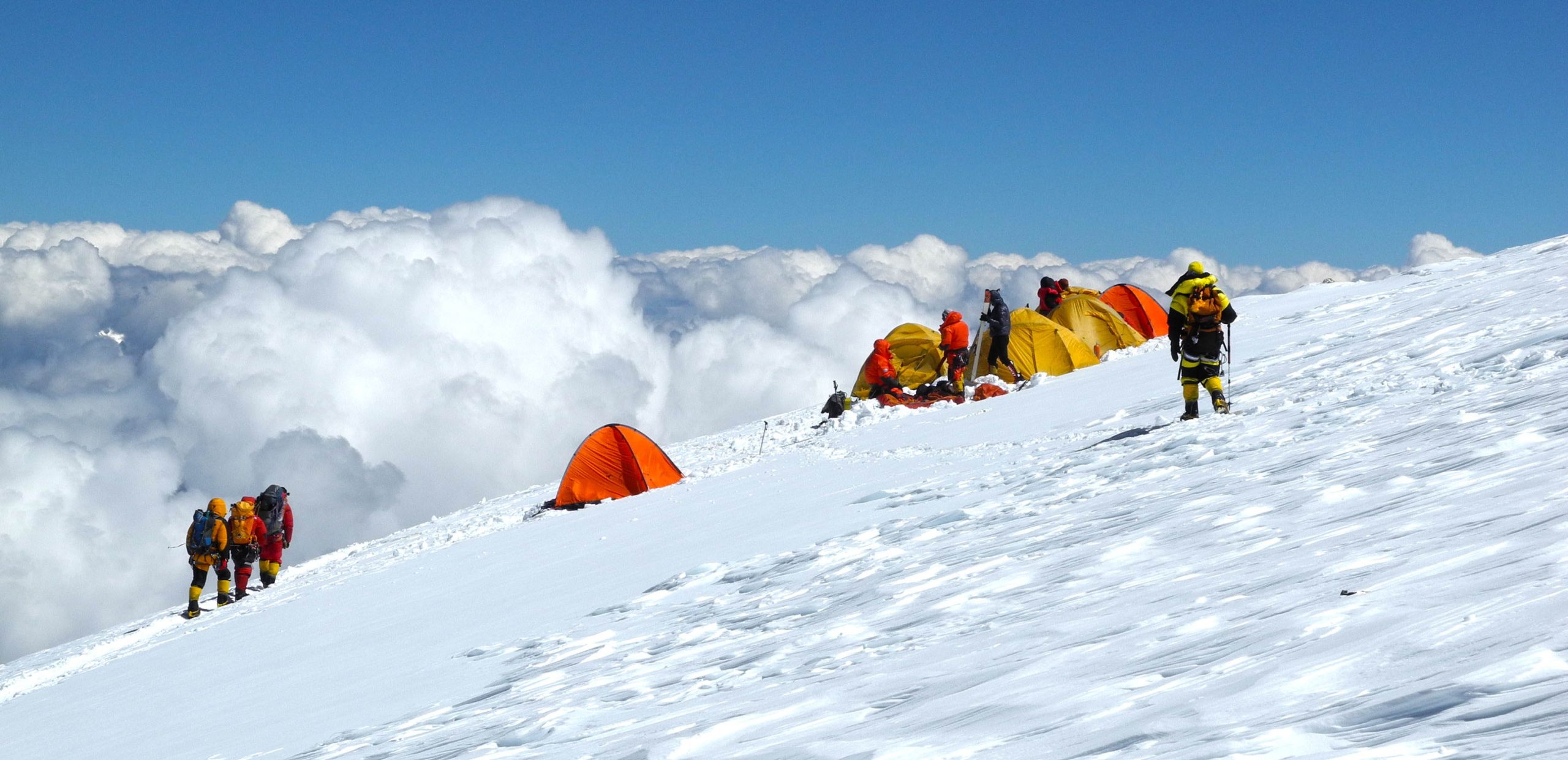
We ascend Mt. Manaslu via the North East Face by setting up four strategic camps. The climbing route involves moderately steep snow slopes. However, climbers must navigate one short, steep slope located just above Camp One.
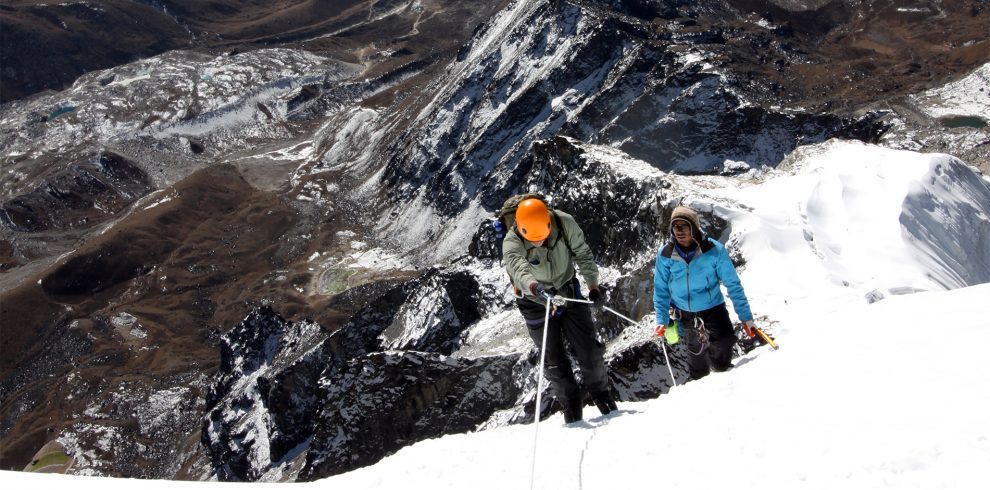
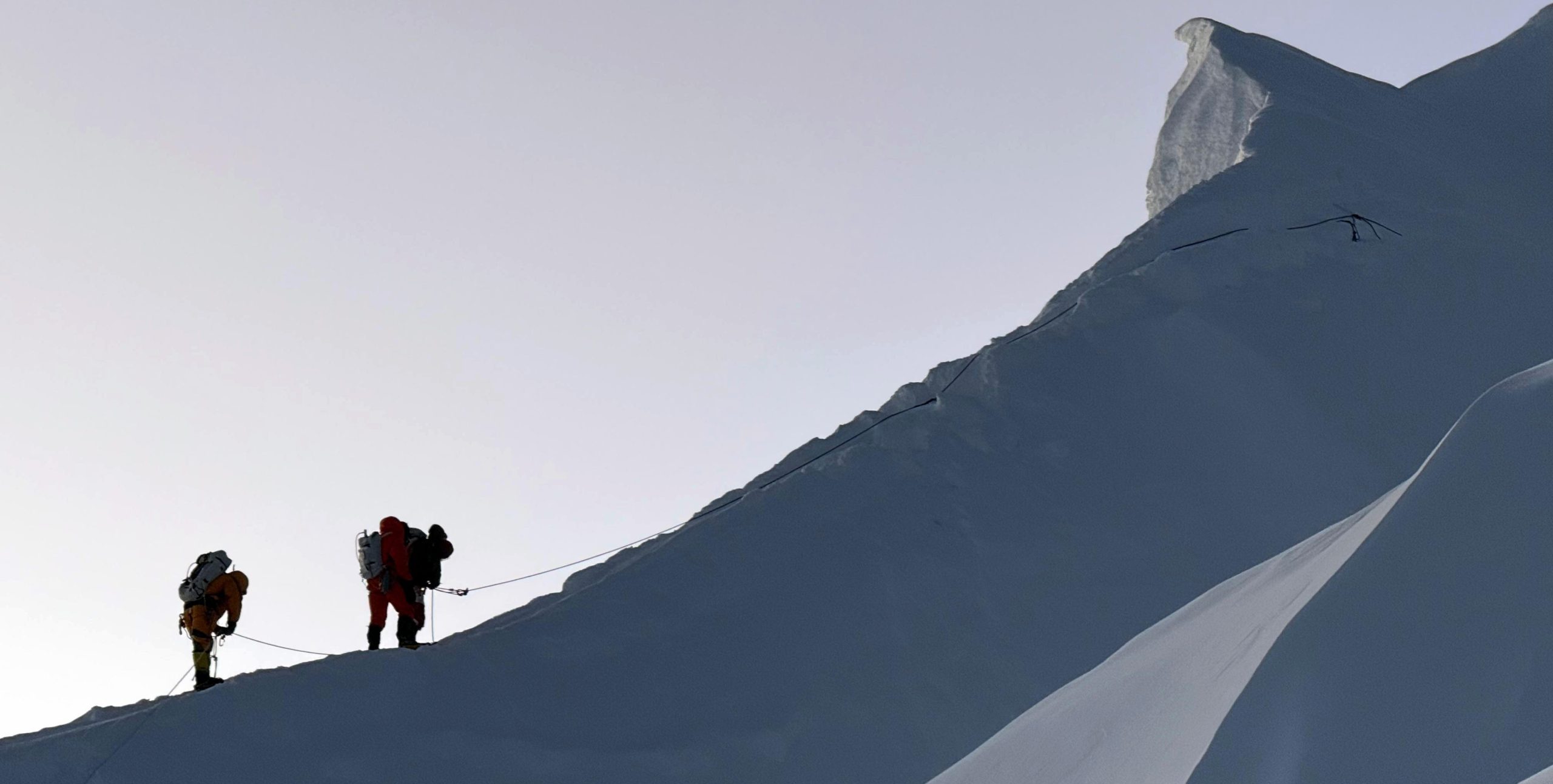
As you climb higher, the angle of inclination picks up toward Camp Four. We use fixed ropes to climb through a series of short, steep sections.
The Journey to the Summit of Manaslu
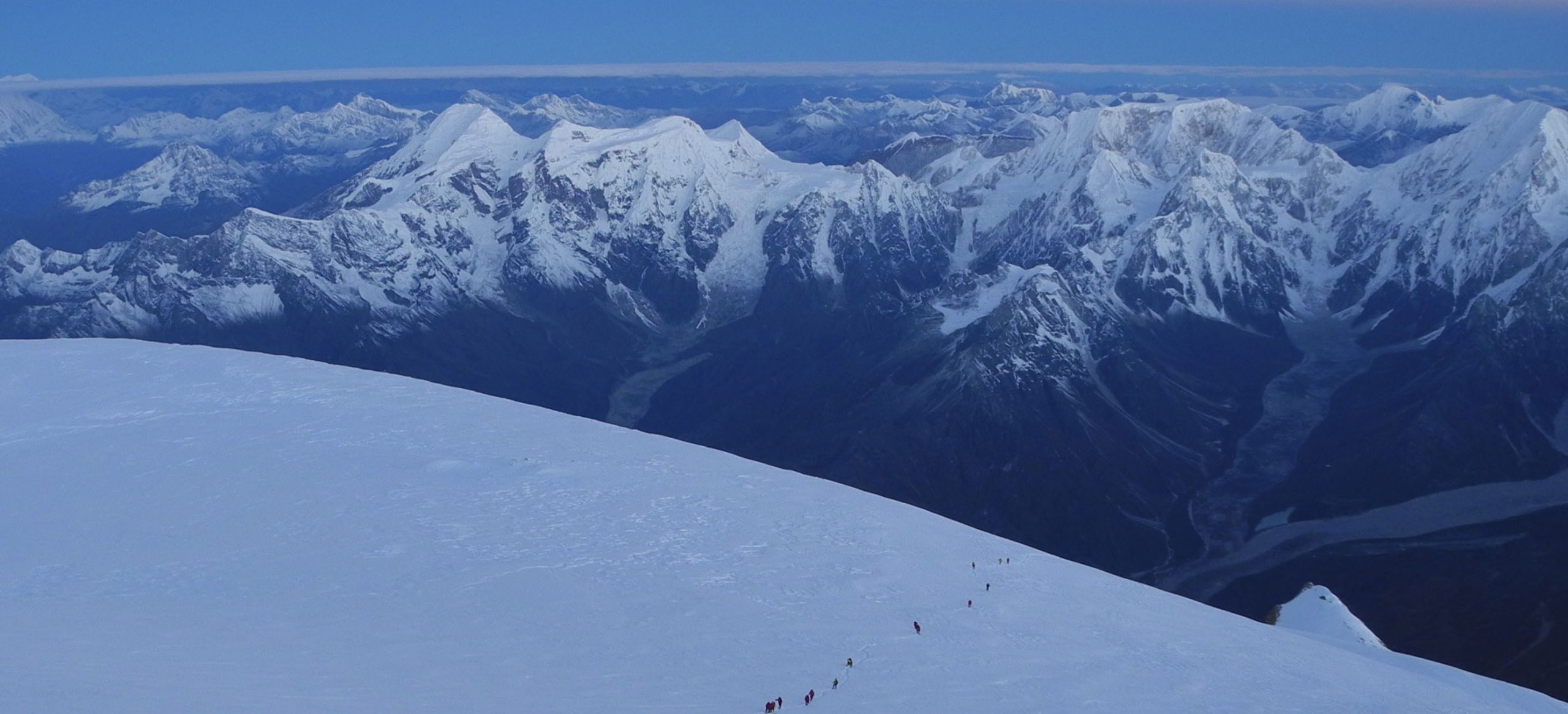
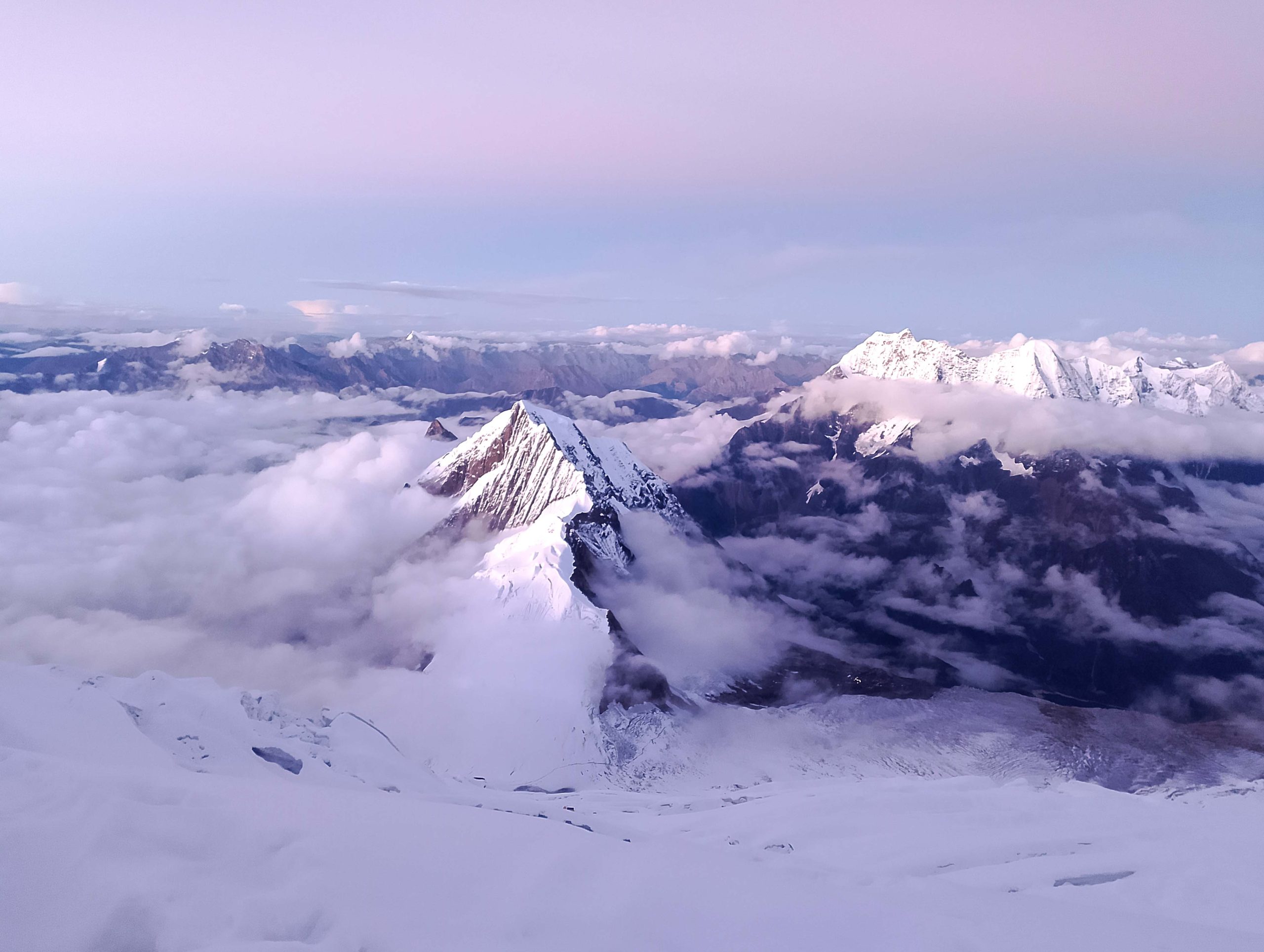
Summit day involves climbing through a series of moderately inclined snow slopes and high plateaus. The final 20 meters of the climb take you along a sharp, snowy ridge to the summit. The airy summit offers magnificent, panoramic views of the surrounding giants.
To ensure the best conditions, the summit attempt begins very early, usually around midnight and summit after sunrise.
Safe Descent and Expedition Timeline
After the summit celebration, we carefully descend back through the high camps to Base Camp. Subsequently, the team follows the trekking route back to Macha Khola. The entire Manaslu expedition lasts 40 days. This duration includes the trek in, vital acclimatization days, and the final summit push.
Overview
Picture yourself at the summit of Manaslu, the world’s eighth-highest peak, rising majestically above the Mansiri Himal. This climb is your chance to summit an 8,000-meter giant without extreme technical challenges, making it perfect for climbers who are aiming for Mt Everest. Trek through pristine Himalayan landscapes of the Manaslu valley. Autumn, especially September, is the best time—calm skies, favorable weather, and fewer climbers—so you can fully immerse yourself in this unforgettable journey.
This Expedition is graded III E. Please refer to our grading system Grading
Highlights of this Expedition
- Climb the world’s eighth highest mountain
- Acclimatization trek in an exceedingly scenic and restricted region of Manaslu
- Experience authentic local culture and traditions
- Guided expedition: Climb with our experienced Everest and other 8,000er summiteer guides and mountaineers
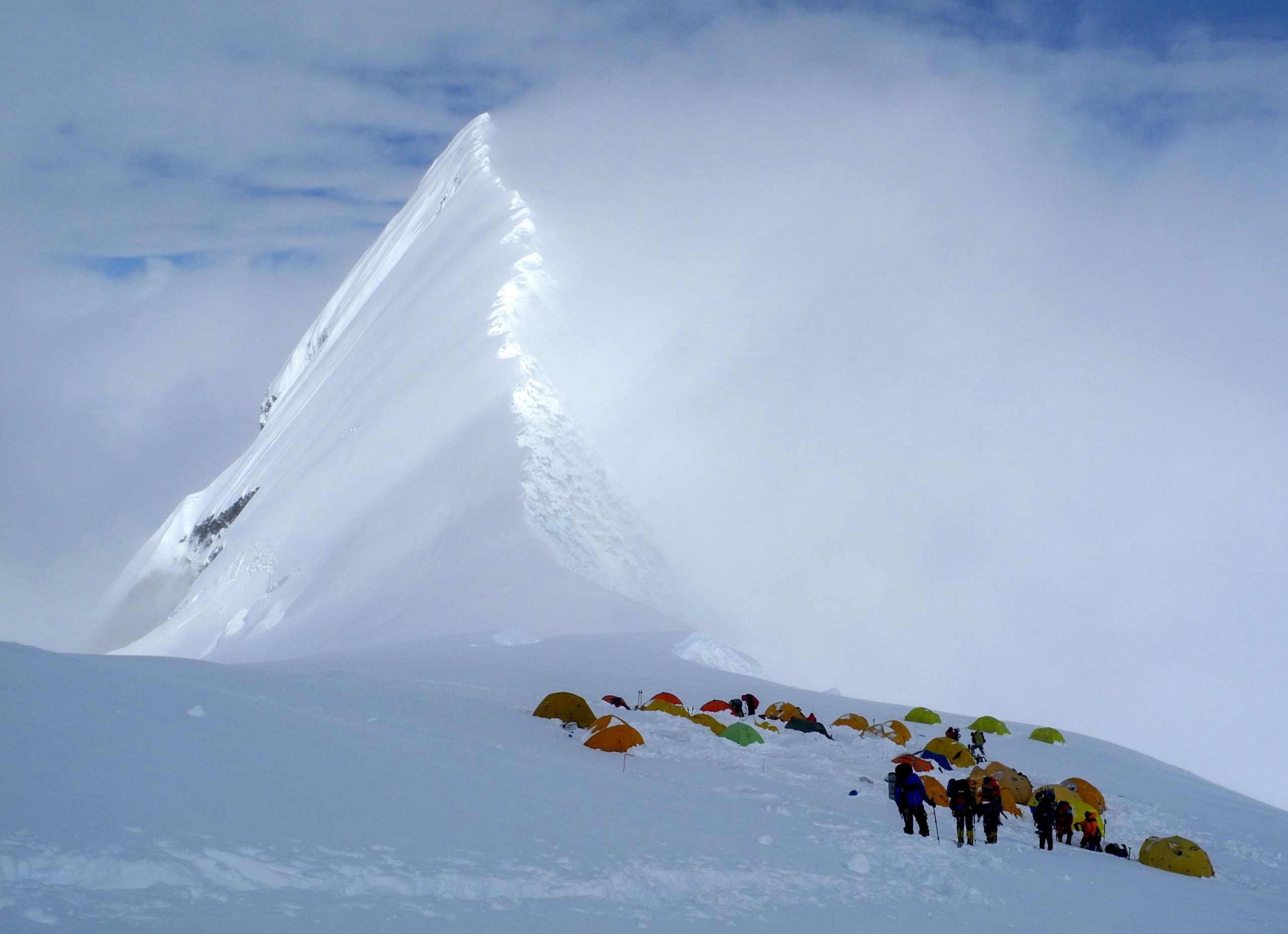
- One base camp and four higher camps provided which are set and supported our experienced guides
Itinerary
After arriving at Kathmandu Airport and finishing immigration and customs, you’ll step into a bustling pickup area full of taxis, porters, and hotel staff. Don’t worry—stay calm and look for the Hi On Life signboard. Once you spot it, walk over and we’ll guide you from there.
At the hotel, we’ll give you a warm welcome and a short briefing about your activities, local customs, and helpful tips for your stay. We’ll also collect a few documents, so please keep them handy.
- Original Pasport
- Travel/ Medical Insurance (photo copy)
- 2 passport size photos
In the evening we will go for a traditional Nepali dinner at Kathmandu’s finest Nepali restaurant to end the day.
After breakfast you will be taken for a half day city tour where you will be visiting some historical temples and monuments. You will end your sightseeing with a lunch. After your lunch you will visit the Department of Tourism to meet the Government official for a formal briefing. You will then return to your hotel and your Expedition Leader will give you your briefing and issue you your ‘trek pack’ consisting of 2 duffel bag, sleeping bag, inner liner for your sleeping bag. Your afternoon is free for you to do your packing and purchasing your last minute items for your expedition.
- Drive distance: 150 km, 8 to 9 hours
- Elevation of Machha Khola: 900m
An early start after breakfast to drive to Maccha Khola. There are beautiful views of the Nepalese countryside along with the mountain scenery. The drive from Kathmandu to Dhading Besi in generally on asphalt road. After Dhanding the drive is on rough gravel road.
On arrival to Machha Khola we check in to our lodge. Overnight lodge
- Trek Distance: 19 Kilometers
- Duration: 6-7 Hours
- Elevation of Jagat: 13400m
The trek winds along narrow mountain trails, with the stunning landscape. Soon, we reach a small hot spring in Tatopani. From there, we climb over a ridge and cross the Budhi Gandaki River on a suspension bridge.
The trail continues past a landslide area towards Doban, offering breathtaking views of Shringi Himal, Ganesh Himal, and Himal Chuli along the way. We follow the river, crossing it again, before descending to the charming village of Jagat, where we’ll stay at a cozy village resort with trout and turkey farms.
Overnight lodge
- Trek Distance: 19 Kilometers
- Duration: 6-7 Hours
- Elevation of Deng: 1,804m
After breakfast, we climb a rocky ridge to Salleri and descend to Sirdibas. Crossing Ghatta Khola via a suspension bridge, we reach Philim, a lively Gurung village. The trail passes millet fields, bamboo forests, and several crossings of the Budhi Gandaki, before arriving at the quiet village of Deng for an overnight stay.
- Trek Distance: 19 Kilometers
- Duration: 6-7 Hours
- Elevation of Namrung: 2,630m
After a short walk beyond Deng, we cross the Budhi Gandaki and climb to Rana (1,910 m). The trail winds west along the valley, passing forests, mani walls, and several gompas. We stop at Prok village, with a viewpoint overlooking Shringi Himal, then continue upstream, crossing the river at a dramatic gorge. The forest thins as we climb the final slope to Namrung, completing 6–7 hours of walking. Overnight in a cozy lodge.
- Trek Distance: 14 Kilometers
- Duration: 7 Hours
- Elevation of Namrung: 3500m
We start with a short descent before climbing into Lihi, a charming village dotted with stupas and barley terraces. The trail then dips into the side valley of Simnang Himal, with Ganesh Himal towering nearby. Passing a massive stone gate at Lho, we enjoy breathtaking views of Peak 29. After lunch in Lho Gaun, it’s a gentle 1½-hour walk to Shyala.
Overnight at Lodge
- Trek Distance: 6 Kilometers
- Duration: 5 Hours
- Elevation of Pyungen Gompa: 4000m
On a small hill near Shyala, Pungyen Gompa offers stunning glacier views. After a short steep climb and gentle yak-pasture trails, we explore the historic monastery—destroyed after early Japanese Manaslu attempts. After spending some time at the monastery, we will hike back to Shyala.
Overnight lodge.
- Trek Distance: 3 Kilometers
- Duration: 3 Hours
- Elevation of Samagaon: 3530m
Today is an easy and short day. The trek is mostly through yak pastures. The trek offers breathtaking views of Mt. Manaslu, Himal Chuli, Peak 29 (Ngadi Chuli), and nearby glaciers, surrounded by snow-capped peaks. The trek concludes at Sama-Gaon, where we stay for two nights in a comfortable lodge, perfect for rest and acclimatization.
Overnight lodge.
We take an acclimatization hike to a glacial lake called Birendra Tal (3700m) which lies just below Mt. Manaslu.
Overnight Lodge
We will utilize this day for final preparation- washing, rearranging gears, etc.
A Puja ceremony is held at base camp. Before the climb, climbers take part in the Puja which is a traditional Sherpa ritual. It’s a ceremony to seek the mountain’s blessings and ensure the safety of everyone on the expedition.
We will make a few acclimatization rotations between Base Camp and Camp III and rest days.
Acclimatization: This means gradually climbing to higher camps so your body can adjust to the altitude, helping prevent altitude sickness, which can be serious. Typically, climbers spend a few days at higher camps before returning to base camp.
Rest Days: These days are for recovery and preparation. Eating energy-rich foods, staying hydrated, and resting well are essential. Climbers need to be in peak physical and mental condition before attempting the final summit push.
We will wait for the best weather window. When it is right, your guide will lead the final climb to the summit. You will work together, always roped for safety, coordinating every step as you make your way to the top and achieve the expedition’s goal.
We will prepare to leave the base camp and trek back to Samagaon.
Usually we book a helicopter on request. You can also walk back to Machha Khola which will take 3 days of trekking and then take a jeep back to Kathmandu
We will drive you to the airport for your journey back home. Trip Ends!
Price Includes
- All internal transportation and airport transfer in private vehicle.
- 4 nights hotel accommodation on twin sharing with breakfast in Kathmandu at Hotel Manaslu
- Welcome dinner in Kathmandu
- Manaslu Climbing permit fees with Liaison officer fees
- Manaslu Restricted Area Permit
- Garbage deposit
- 13 nights full-board tea house accommodation on a twin-sharing basis while at Samagoan
- 22 nights full board accommodation in tents during the expedition
- 50 Kgs of Personal Baggage allowance
- 2 Hi On Life Expedition duffle bags
- Individual tent for each climber will be provided in Base Camp
- 1 Climbing Sherpa for 1 member.
- 3 X 4 liter Poisk Oxygen and Top Out regulator mask for every member.
- Culinary school graduate Nepalese cook and kitchen helpers at Base Camp.
- Equipment allowances, daily wages, insurance, food and tents for all Nepalese staff
- Insulated dining tent with tables and chairs, kitchen tent, toilet tent, store and communication tent and shower tent.
- Solar power panels and generators at Base Camp for light and charging batteries for camera and laptops.
- Gas heater for dining tent.
- High altitude freeze dried food, EPI gas and burners for above Advanced Base Camp.
- Satellite phone and radios.
- Daily Weather report
- Daily Social Media update for families and friends who follow the expedition
- Insurances for all Nepali staff
- All taxes and service charges
Price Excludes
- International flights
- Meals in Kathmandu.
- Personal climbing gear
- Personal insurance such as travel, accident, medical, emergency evacuation and lost luggage
- Expenses of personal nature such as drinks, laundry, postage, telephone and email, etc.
- Summit Bonus for Climbing Sherpa
- Tips to Base Camp staff
About Manaslu Expedition
Manaslu region
This region provides a rich variety of landscape and vegetation as it comprises sub-tropical Himalayan foothills to arid Trans-Himalayan high pastures bordering Tibet, covering six climatic zones. The Manaslu valley is also a sanctuary to many highly endangered animals, including Snow leopards and Pandas. Over 110 species of birds, 33 mammals, 11 butterflies and 3 reptiles have been recorded in this area. An estimated 1,500-2,000 plant species grow here of which many are valued as medicinal herbs and aromatic plants.
Program
Mt. Manaslu is the most accessible 8,000 meter peak in Nepal. Technically it is slightly more difficult than Cho Oyu, but relatively easier than any other 8000m peaks.
Hi On Life Expeditions operates Manaslu Expedition during the autumn climbing season, over a 40 day period.
The trip starts in Kathmandu where we spend a couple of nights, during which we will do a full kit check with the team, attend briefings at the Department of Tourism and a last minute shopping to buy any equipment that may still be needed.
From Kathmandu we take a jeep ride to Machha Khola and start a 10 day trek to Manaslu base Camp. At Samagaon we have a few days rest for acclimatization, while our crew ferries gears and set up our Base Camp. After being well acclimatized and rested, we head off to base Camp, which involves a 4-5 hour trek along a steep trail through a forest next to the hanging glaciers and ice falls.
The climb
We ascend via the North East Face, utilizing four camps along the way. During the entire climb from Base Camp to the summit our team of Sherpa guides will fix ropes, break trail and make every effort to assist the group with the objective to reach the summit.
From Base Camp to Camp 1: The trek from Base Camp to Camp 1 involves climbing over grassy slopes, rock slabs and moraine until we reach crampon point. From here we follow a crevassed glacier with small ice steps to Camp 1 at 5500m. We climb the last part of the climb to Camp 1 on fixed lines.
Camp 1 to Camp 2: Involves climbing through steep slopes on fixed lines and is expected to take between from 5 to 7 hours to arrive at Camp 2 at 6,300m. The views from camp 2 really are breath taking, and the peak of the mountain gets visibly closer.
Camp 2 to Camp 3: Straight forward climb snow slope with gentle gradient. It takes roughly 3 hours to reach Camp 3 which is at 6700m.
Camp 3 to Camp 4: Involves 550m of strenuous climbing on steep slopes relying on the fixed ropes which takes around 4 hours before you reach Camp 4 at 7,450m.
Camp 4 to Summit: Summit day will start around midnight and the climb should take about 6-7 hrs. The climbing itself is not technical. The first part of the climb in the dark ascends gradually with short head walls. Soon we reach the false summit where we take a good break, change Oxygen if required and then climb the last part to the summit on an exposed ridge. The views are unforgettable.
After the summit, we descend to Camp 2 and the following day to base Camp for a well-earned celebration. A day is spent packing up Base Camp then we trek down to Samagaon from where we take a helicopter back to Kathmandu.
On the Mountain
We have highly experienced Climbing Sherpas, and we provide one climbing Sherpa to one climbers. Our Sherpas will fix the route, set up the higher camps, as well as carry the group equipment, such as tents, stoves, food etc. They also help with high altitude equipment transport, carrying your extra weight both up and down the mountain. You do not need to carry a heavy rucksack during the climb.
Cooks and Food
Our skillful and hard working cooks prepare three hot meals each day with a very healthy diet of fresh vegetables, cheeses, eggs, and fresh meat as well, tinned fruits, tinned meats and fish (all meats and fish are prepared separately out of respect for the vegetarians in our midst) and a high dose of carbohydrates from breads, rice and pastas. We have weatherproof kitchens and heated dining tents, with comfortable chairs and tables.
Recommendations for things you should bring:
Clothing:
Head
- Warm hat wool or synthetic that covers your ears
- Balaclava
- Sunhat
- Glacier sunglasses with side shields, 1 pair ski goggles
- Headlamp with extra batteries and bulbs
- Bandana or head scarf, also useful for dusty conditions
Upper Body
- 2 cotton t-shirts
- 2-3 polypropylene t-shirt
- 2-3 long sleeve thermal underwear shirts, medium weight
- 2 heavy thermal underwear
- 1 polar fleece jacket
- 1 thin light weight down or primaloft jacket
- 1 expedition weight polar fleece jacket (we provide)
- Gore-Tex jacket with hood, waterproof and breathable
- Down Suit
Hands
- 1 pair lightweight poly-liner gloves
- 1 pair medium weight gloves
- 1 pair down mittens
Lower Body
- 1 pair walking shorts
- 1 to 2 pair walking trousers for trekking and around camp
- 1 pair Gore-Tex trousers, Waterproof/breathable with side zips
- 2 pair lightweight thermal bottoms
- 2 pair heavy or expedition weight thermal bottoms
- 1 pair light weight down/ duvet trousers for Base Camp
Feet
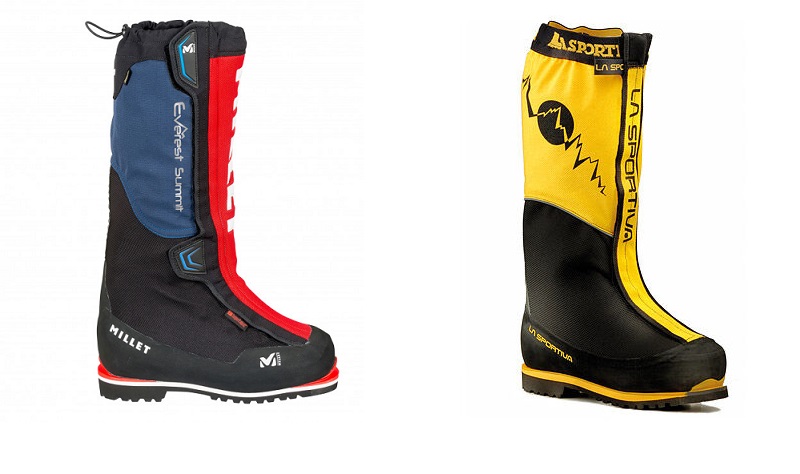
- 1 pair climbing boot for 8000m (you can also hire them in Kathmandu)
- 1 pair treking /walking boots with good ankle support
- 1 pair trainers, running shoes and/or sandals for Kathmandu and in camp;
- 1 pair down booties (optional)
- 3 pair heavy preferably wool socks
- 4 to 5 pair of liner socks. Polypropylene or wool
- 3 pair medium lightweight trekking socks, poly or wool
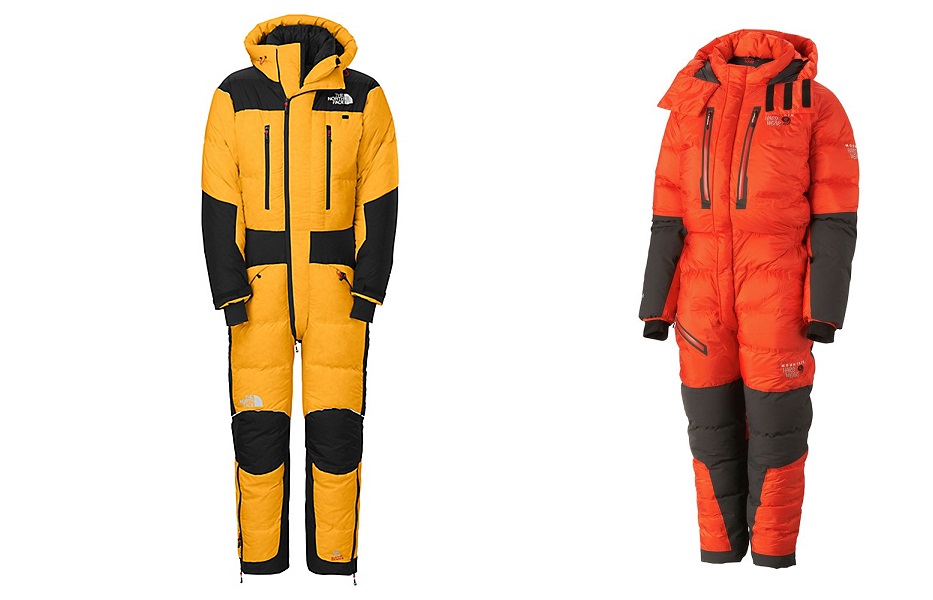
Down Suit
If you are not comfortable with down suits, you can bring separate expedition weight down jacket and down trouser set. However, we highly recommend you to bring down suit.
Sleeping
- We provide -30C North face Inferno sleeping bags. If you wish to use your own, you are welcome to bring your personal sleeping bag.
Please note: We provide Exped down mattress and kari mats (You dont need to bring your own)
Rucksack and Travel Bags
- 1 medium rucksack (50-70 litres)
- Small padlocks for duffel kit bags.
Please note: We provide you 2 big duffel bags.
Personal Food for camps beyond Advanced Base Camp.
We ask each member to bring their own imported daily snack and energy foods for higher camps. We recommend you to bring 8 to 10 packets of Turmat or equivalent quality freeze dried food of your choice of flavors. In addition, growing variety of imported foods such as cheeses, chocolates, biscuits, cookies, nuts, and power-bars are now available in Kathmandu, at realistic prices.
Accessories
- 1 small roll of repair tape, 1 sewing repair kit
- 1 compass or GPS (optional)
- Camera
- Nylon stuff sacks for food and gear storage, large Ziplocs are useful also
- 3 Water bottles (1 litre)
- 1 plastic cup and spoon
- 1 small folding knife
- Books, playing cards, ipod/mp3 player, games, musical instrument etc
- Adequate amount of batteries, etc.
Healthy and trouble free holiday
There are no compulsory vaccinations required for entering Nepal. However please consult a doctor for vaccination against Typhoid, Meningitis, polio, and hepatitis. If you have special dietary requirements or allergies, please through your agent, give us a list of what you can
and can’t eat so that we can provide proper food for you.
If you are undergoing a course of prescription medicine, please ensure that you have sufficient supplies for the entire holiday. Some types of drugs including antimalarials have side affects at high altitude; therefore please consult your doctors regarding these drugs. The places you trek are mosquito free and there has been no report on malaria in Kathmandu for the past couple of decades.
Insure yourself
Hi On Life Adventures strictly follow the policy, No Insurance= No expedition! We highly recommend you to take a comprehensive Personal Travel Insurance with Rescue before leaving home. It is mandatory that your insurance covers helicopter evacuation, even above 6000 m and incase of unforeseen incident they should cover long line rescues.
Money Matters
The ideal currency to bring with you is US$ or Euro. There are Atm machines in Kathmandu where you can draw money as per your bank limit.
In Kathmandu: Each meal will cost around 5 to 8 US$. Plus 10 to 20 US $ for your taxis if you wish to go around the city.
On trek: you will need around 5 to 6 US $ per day. This money is for your hot showers, chocolates, soft drinks and beers etc and also for small donations in the monasteries.
Tipping
Although tipping is entirely optional and personal matter the following is recommended as a guideline
In Kathmandu: for bellboys, waiters and airport porters- 100 Nepali Rupees
On the trek: At the end of the trek it is a customary to tip the field staff. The recommended amount is 250 to 300 US$ / member. Your Guide will organize that for you.
Please Note: Climbing Sherpa Bonus is mandatory which is 1500 USD as a summit bonus for your Sherpa who will accompany you to the summit, wether you summit or not.
Some Do’s and Don’ts
Nepalese people treat visitors as special guests. Although they will never rebuke you publicly for unknowingly offending them, we must consider their culture.
While in Nepal please observe the following:
- Full or partial nudity is not accepted.
- Over display of affection between men and women, especially in temples and monasteries are discouraged.
- Please remove your shoes before entering monasteries and temples.
- Never point the soles of your feet at a person or shrine.
- Many Hindu temples are closed to non-Hindus. Please ask before entering.
- Locals walk around the Mani walls and Stupas in a clockwise direction as a respect and they expect you to do the same although it is not compulsory.